
How to Stop Your Neighbor’s Loud AC Unit from Ruining Your Quiet South Buffalo Evening
Nothing ruins a quiet South Buffalo evening like the constant drone of a neighbor’s rattling air conditioner. If you’re struggling to enjoy your backyard on a warm night or can’t keep your windows open without being blasted by mechanical noise, you’re not alone. Many South Buffalo homes sit close together, and older AC units can be especially disruptive. The good news is that you have options—from diplomatic conversations to technical fixes—that can help restore peace without starting a feud. Buffalo Police Department.
This guide walks you through everything you need to know about Buffalo’s noise regulations, how to identify whether the problem is a simple repair issue or just an aging unit, and what steps you can take to solve the problem. We’ll also explain when it’s time to call a local HVAC professional who understands the unique challenges of Western New York’s climate and housing stock. Buffalo City Code Chapter 293.
Identifying the Noise: Is it a Repair Issue or Just an Old Unit?
Before you knock on your neighbor’s door, it helps to understand what you’re hearing. Not all AC noise is created equal. A healthy unit should produce a steady hum that blends into background noise. But certain sounds can signal trouble:. Read more about Why You Should Clear Fallen Leaves Away from Your Outdoor AC Unit in Larkinville.
- Grinding or metal-on-metal sounds often indicate failing bearings in the fan motor or compressor
- Squealing noises can point to worn belts or motor issues
- Rattling might mean loose parts or debris in the unit
- Thumping or banging could signal a failing compressor or imbalanced fan blades
If the noise is new or getting worse, your neighbor might not realize their system needs attention. A simple tune-up could dramatically reduce the sound while also preventing a costly breakdown. Older units (10+ years) tend to be noisier simply due to wear and less advanced technology.
Buffalo’s humid summers and freeze-thaw winters put extra stress on outdoor equipment. Units that sit on narrow South Buffalo lots often lack proper vibration isolation, which amplifies sound transmission through shared walls or fences. A technician can check for loose mounting brackets, worn rubber feet, or debris buildup that might be contributing to the problem. HVAC Buffalo.
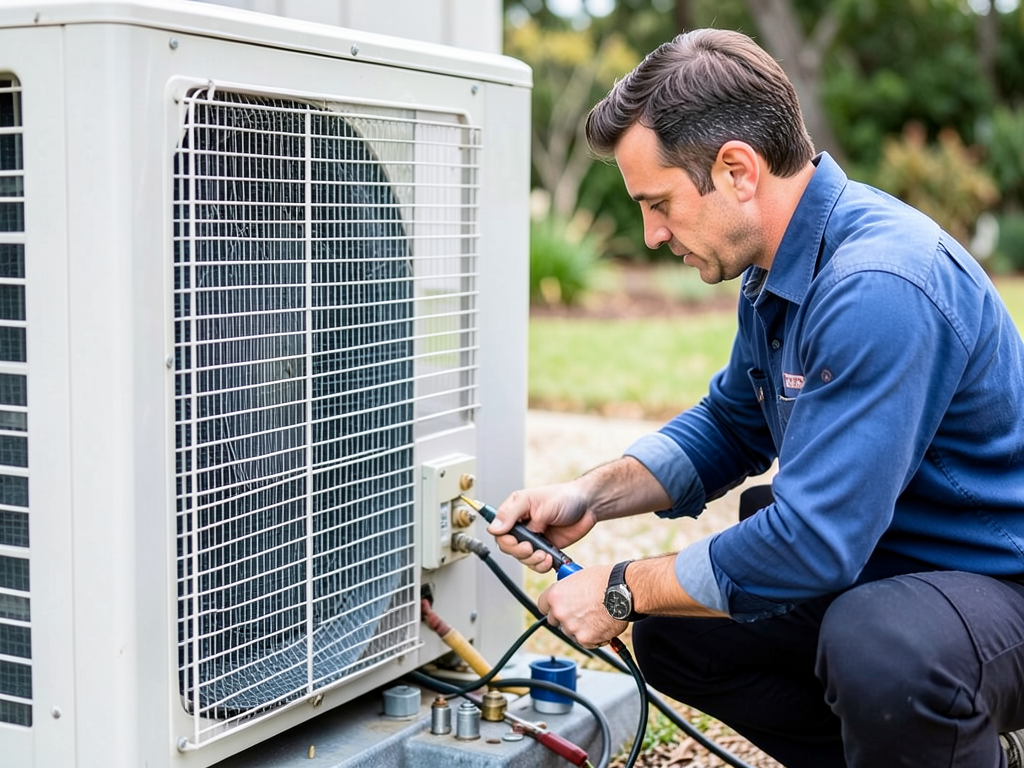
Photo of a technician inspecting an outdoor AC unit, checking for loose components and vibration issues
Buffalo Noise Ordinances: What the Law Says About Loud HVAC Systems
Buffalo’s noise regulations fall under Chapter 293 of the City Code, which sets specific limits on mechanical equipment like air conditioners. During nighttime hours (typically 10 PM to 7 AM), mechanical noise at property lines should not exceed 50-55 decibels—about the sound of a quiet conversation or light rainfall.
Daytime standards are slightly higher but still require that HVAC equipment not create “unreasonable noise” that disturbs the peace. The ordinance considers factors like the time of day, duration of noise, and whether it’s continuous or intermittent. If a unit consistently exceeds these levels, it may be considered a violation.
Erie County also has guidelines that apply to multi-family buildings and commercial properties. For residential areas like South Buffalo, the focus is on protecting quality of life in close-knit neighborhoods where homes often sit just feet apart. If you’re unsure whether the noise violates local codes, you can contact the Buffalo Police Department’s non-emergency line or the city’s code enforcement office for guidance. Emergency Furnace Repair in Amherst When Your Heat Goes Out at Night.
Keep in mind that enforcement typically requires documented evidence. If you decide to file a complaint, note the dates, times, and decibel levels if possible. Smartphone apps can help measure noise, though professional readings are more credible for official complaints.
How to Talk to Your Neighbor Without Starting a Feud
Approaching your neighbor about their noisy AC requires diplomacy. Most people want to be good neighbors but may not realize their equipment is causing problems. Here’s how to handle the conversation:
- Choose the right time—avoid weekends or evenings when they might be relaxing
- Start with empathy: “I’ve noticed your AC has been running a lot lately”
- Focus on the impact, not blame: “I’m having trouble enjoying my backyard in the evenings”
- Offer solutions rather than demands: “Would you be open to having it checked?”
- Be prepared to share information about local noise ordinances if they’re unaware
If direct conversation feels uncomfortable, consider writing a friendly note. Here’s a simple template you can adapt:
Hi [Neighbor’s Name],
I hope you’re doing well. I wanted to mention that I’ve been hearing some noise from your AC unit in the evenings, especially when we’re outside. I know these units can get loud as they age. If you’re interested, I’d be happy to share some information about local noise guidelines and potential solutions that might help both of us enjoy our outdoor spaces more. No pressure at all—just thought I’d reach out.
Thanks for understanding,
[Your Name] Outdoor Unit Not Spinning.
This approach keeps the tone collaborative rather than confrontational. Many neighbors appreciate being informed and will take steps to address the issue, especially if it could save them from a bigger repair bill later.
Technical Solutions to Quiet a Noisy AC Unit
If your neighbor is receptive, several technical solutions can dramatically reduce AC noise:
Sound Barriers and Enclosures
Sound blankets or compressor covers can reduce noise by 2-5 decibels—enough to make a noticeable difference. These specially designed wraps fit around the compressor without blocking airflow. For more significant reduction, a three-sided acoustic barrier placed a few feet from the unit can deflect sound away from your property.
Vibration Isolation
Many noise problems stem from vibration transmission through the concrete pad or mounting brackets. Installing anti-vibration pads under the unit or replacing worn rubber mounts can eliminate buzzing that carries through walls and fences.
Fan and Compressor Upgrades
Newer AC models feature variable-speed compressors and ECM fan motors that operate much more quietly than older single-speed units. While a full replacement is a bigger investment, it eliminates noise at the source and often reduces energy bills by 20-40%.
Strategic Landscaping
Planting dense evergreen shrubs or installing a decorative fence panel between properties can help absorb and deflect sound. Choose plants that thrive in Buffalo’s climate zone (6a) and maintain them at appropriate heights to avoid blocking airflow around the unit.
For South Buffalo’s narrow lots, even small improvements can make a big difference. The key is addressing both the noise source and how sound travels between properties.
When to Call a Buffalo HVAC Professional
While some fixes are DIY-friendly, certain situations call for professional help. Contact a local HVAC contractor if:
- The unit is making unusual mechanical sounds that could indicate failing components
- Your neighbor is open to repairs but unsure where to start
- You want an expert assessment of whether the noise violates local ordinances
- You’re considering soundproofing solutions that require technical knowledge
Buffalo HVAC professionals understand local housing stock and can recommend solutions that work for the area’s climate and building styles. They can perform a sound assessment, check for code compliance, and suggest upgrades that balance cost with effectiveness.
Look for contractors who are NATE-certified and familiar with modern high-efficiency systems. Many offer free estimates for noise reduction consultations. Some even provide before-and-after sound measurements so you can quantify the improvement.
United HVAC Buffalo serves South Buffalo and surrounding areas with 24/7 emergency service. Their technicians can diagnose whether your neighbor’s unit needs simple maintenance or would benefit from a modern replacement. Call (716) 317-7757 to schedule an assessment.

Technician installing vibration isolation pads under an outdoor AC unit to reduce noise transmission
Summary: Your Step-by-Step Action Plan
Here’s your complete roadmap to addressing a noisy neighbor’s AC:
- Document the noise—note when it occurs and how it affects you
- Identify the type of sound—grinding, rattling, or steady hum
- Review Buffalo’s noise ordinances—check Chapter 293 limits
- Talk to your neighbor—use the friendly template provided
- Suggest solutions—maintenance, sound barriers, or professional assessment
- Consider professional help—if the problem persists or involves repairs
Remember that most noise issues have practical solutions. Whether it’s a simple tune-up, a sound blanket, or a strategic landscaping change, you don’t have to suffer through another summer of disrupted evenings. The key is approaching the situation with patience and focusing on solutions that benefit everyone involved.
If you’re ready to take the next step, United HVAC Buffalo is here to help. Our local technicians understand the unique challenges of South Buffalo homes and can recommend solutions that restore your peace without straining neighbor relations. Call (716) 317-7757 today to schedule your noise assessment.
Before and after comparison showing sound reduction after professional AC maintenance and vibration isolation installation
Frequently Asked Questions
How loud is too loud for a neighbor’s AC unit?
In Buffalo, nighttime noise from mechanical equipment should not exceed 50-55 decibels at property lines. If you can hear the unit clearly from inside your home with windows closed, it’s likely too loud. Daytime standards are slightly higher but still require that noise not be “unreasonable” or disturbing.
Can I call the police about a noisy AC?
Yes, you can contact the Buffalo Police Department’s non-emergency line to report noise violations. However, they typically require documentation of the problem. Start with a conversation with your neighbor first, as most people are willing to address the issue once they’re aware of it.
Will a new AC unit really be quieter?
Modern AC units are significantly quieter than those from 10+ years ago. High-efficiency models with variable-speed compressors can operate at noise levels as low as 50-60 decibels, compared to 70-80+ for older units. The difference is substantial—like comparing a normal conversation to a vacuum cleaner.
How much does it cost to reduce AC noise?
Simple solutions range from $50-200 for sound blankets or vibration pads. Professional sound barriers cost $300-800. A full system upgrade runs $3,000-7,000 but eliminates noise at the source while improving efficiency. Many contractors offer free assessments to recommend the most cost-effective approach.
Can landscaping really help with AC noise?
Yes, strategic landscaping can reduce perceived noise by 3-5 decibels. Dense evergreen shrubs planted 3-5 feet from the unit help absorb sound, while a solid fence or wall can deflect noise away from your property. The key is maintaining proper airflow around the equipment.
What if my neighbor refuses to do anything?
If direct conversation and friendly suggestions don’t work, you can file a formal complaint with Buffalo code enforcement. Document the noise with dates, times, and decibel readings if possible. As a last resort, small claims court is an option for persistent noise violations, though most cases resolve through communication.
How long do AC units typically last in Buffalo?
In Buffalo’s climate, AC units typically last 12-15 years with proper maintenance. The freeze-thaw cycles and high humidity can accelerate wear on outdoor components. If your neighbor’s unit is over 10 years old and noisy, it may be nearing the end of its effective life.
Does regular maintenance really reduce noise?
Absolutely. Annual maintenance can reduce AC noise by 2-4 decibels by tightening loose components, lubricating moving parts, cleaning debris, and ensuring proper refrigerant levels. Many noise problems stem from simple issues that a technician can fix in under an hour.
Should I offer to pay for noise reduction solutions?
This depends on your relationship with your neighbor and the severity of the problem. For simple fixes like sound blankets ($50-100), offering to split the cost can be a goodwill gesture. For major repairs or replacements, it’s typically the owner’s responsibility, though you might suggest cost-sharing if you’re both affected.
What’s the fastest way to get relief from AC noise?
The quickest solution is often a sound blanket or compressor cover, which can be installed in under an hour and reduces noise immediately. If the unit needs repairs, a simple tune-up addressing loose parts or worn components can provide relief within a day. For the most dramatic improvement, a modern replacement unit will eliminate the problem at the source.
Ready to Restore Your Peace and Quiet?
Don’t let another summer evening be ruined by a noisy neighbor’s AC. Whether you need help approaching your neighbor, want to understand your options, or need a professional assessment, United HVAC Buffalo is here to help. Our local technicians understand South Buffalo’s unique housing challenges and can recommend solutions that work for your specific situation.
Call (716) 317-7757 today to schedule your free noise assessment. We’ll evaluate the problem, explain your options, and help you find the most effective solution—whether that’s a simple repair, a sound reduction system, or a modern replacement that benefits both you and your neighbor.
Pick up the phone and call (716) 317-7757 before the next warm evening arrives. Your quiet backyard is just a phone call away.
{
“@context”: “https://schema.org”,
“@type”: “BlogPosting”,
“headline”: “How to Stop Your Neighbor’s Loud AC Unit from Ruining Your Quiet South Buffalo Evening”,
“description”: “Fed up with a noisy neighbor’s AC in South Buffalo? Learn Buffalo’s noise ordinances, how to talk to your neighbor, and technical fixes to restore your peace.”,
“wordCount”: 2134,
“datePublished”: “2026-05-19T09:22:00.000Z”,
“dateModified”: “2026-05-19T09:22:00.000Z”,
“inLanguage”: “en-US”,
“mainEntityOfPage”: {
“@type”: “WebPage”,
“@id”: “https://unitedhvacbuffalo.com”
},
“publisher”: {
“@type”: “LocalBusiness”,
“name”: “United HVAC Buffalo”,
“url”: “https://unitedhvacbuffalo.com”
},
“author”: {
“@type”: “Organization”,
“name”: “United HVAC Buffalo”,
“url”: “https://unitedhvacbuffalo.com”
},
“image”: {
“@type”: “ImageObject”,
“url”: “https://unitedhvacbuffalo.com/wp-content/uploads/2026/03/how-to-stop-your-neighbor-s-loud-ac-unit-from-ruin-1.png”
}
}
{
“@context”: “https://schema.org”,
“@type”: “HVACBusiness”,
“name”: “United HVAC Buffalo”,
“url”: “https://unitedhvacbuffalo.com”,
“address”: {
“@type”: “PostalAddress”,
“addressLocality”: “Buffalo”
},
“areaServed”: {
“@type”: “City”,
“name”: “Buffalo”
}
}
{
“@context”: “https://schema.org”,
“@type”: “FAQPage”,
“mainEntity”: [
{
“@type”: “Question”,
“name”: “Identifying the Noise: Is it a Repair Issue or Just an Old Unit?”,
“acceptedAnswer”: {
“@type”: “Answer”,
“text”: “Before you knock on your neighbor’s door, it helps to understand what you’re hearing. Not all AC noise is created equal. A healthy unit should produce a steady hum that blends into background noise. But certain sounds can signal trouble:”
}
},
{
“@type”: “Question”,
“name”: “How loud is too loud for a neighbor’s AC unit?”,
“acceptedAnswer”: {
“@type”: “Answer”,
“text”: “In Buffalo, nighttime noise from mechanical equipment should not exceed 50-55 decibels at property lines. If you can hear the unit clearly from inside your home with windows closed, it’s likely too loud. Daytime standards are slightly higher but still require that noise not be “unreasonable” or disturbing.”
}
},
{
“@type”: “Question”,
“name”: “Can I call the police about a noisy AC?”,
“acceptedAnswer”: {
“@type”: “Answer”,
“text”: “Yes, you can contact the Buffalo Police Department’s non-emergency line to report noise violations. However, they typically require documentation of the problem. Start with a conversation with your neighbor first, as most people are willing to address the issue once they’re aware of it.”
}
},
{
“@type”: “Question”,
“name”: “Will a new AC unit really be quieter?”,
“acceptedAnswer”: {
“@type”: “Answer”,
“text”: “Modern AC units are significantly quieter than those from 10+ years ago. High-efficiency models with variable-speed compressors can operate at noise levels as low as 50-60 decibels, compared to 70-80+ for older units. The difference is substantial—like comparing a normal conversation to a vacuum cleaner.”
}
},
{
“@type”: “Question”,
“name”: “How much does it cost to reduce AC noise?”,
“acceptedAnswer”: {
“@type”: “Answer”,
“text”: “Simple solutions range from $50-200 for sound blankets or vibration pads. Professional sound barriers cost $300-800. A full system upgrade runs $3,000-7,000 but eliminates noise at the source while improving efficiency. Many contractors offer free assessments to recommend the most cost-effective approach.”
}
},
{
“@type”: “Question”,
“name”: “Can landscaping really help with AC noise?”,
“acceptedAnswer”: {
“@type”: “Answer”,
“text”: “Yes, strategic landscaping can reduce perceived noise by 3-5 decibels. Dense evergreen shrubs planted 3-5 feet from the unit help absorb sound, while a solid fence or wall can deflect noise away from your property. The key is maintaining proper airflow around the equipment.”
}
},
{
“@type”: “Question”,
“name”: “What if my neighbor refuses to do anything?”,
“acceptedAnswer”: {
“@type”: “Answer”,
“text”: “If direct conversation and friendly suggestions don’t work, you can file a formal complaint with Buffalo code enforcement. Document the noise with dates, times, and decibel readings if possible. As a last resort, small claims court is an option for persistent noise violations, though most cases resolve through communication.”
}
},
{
“@type”: “Question”,
“name”: “How long do AC units typically last in Buffalo?”,
“acceptedAnswer”: {
“@type”: “Answer”,
“text”: “In Buffalo’s climate, AC units typically last 12-15 years with proper maintenance. The freeze-thaw cycles and high humidity can accelerate wear on outdoor components. If your neighbor’s unit is over 10 years old and noisy, it may be nearing the end of its effective life.”
}
},
{
“@type”: “Question”,
“name”: “Does regular maintenance really reduce noise?”,
“acceptedAnswer”: {
“@type”: “Answer”,
“text”: “Absolutely. Annual maintenance can reduce AC noise by 2-4 decibels by tightening loose components, lubricating moving parts, cleaning debris, and ensuring proper refrigerant levels. Many noise problems stem from simple issues that a technician can fix in under an hour.”
}
},
{
“@type”: “Question”,
“name”: “Should I offer to pay for noise reduction solutions?”,
“acceptedAnswer”: {
“@type”: “Answer”,
“text”: “This depends on your relationship with your neighbor and the severity of the problem. For simple fixes like sound blankets ($50-100), offering to split the cost can be a goodwill gesture. For major repairs or replacements, it’s typically the owner’s responsibility, though you might suggest cost-sharing if you’re both affected.”
}
},
{
“@type”: “Question”,
“name”: “What’s the fastest way to get relief from AC noise?”,
“acceptedAnswer”: {
“@type”: “Answer”,
“text”: “The quickest solution is often a sound blanket or compressor cover, which can be installed in under an hour and reduces noise immediately. If the unit needs repairs, a simple tune-up addressing loose parts or worn components can provide relief within a day. For the most dramatic improvement, a modern replacement unit will eliminate the problem at the source.”
}
},
{
“@type”: “Question”,
“name”: “Ready to Restore Your Peace and Quiet?”,
“acceptedAnswer”: {
“@type”: “Answer”,
“text”: “Don’t let another summer evening be ruined by a noisy neighbor’s AC. Whether you need help approaching your neighbor, want to understand your options, or need a professional assessment, United HVAC Buffalo is here to help. Our local technicians understand South Buffalo’s unique housing challenges and can recommend solutions that work for your specific situation.”
}
}
]
}
{
“@context”: “https://schema.org”,
“@type”: “HowTo”,
“name”: “How to Talk to Your Neighbor Without Starting a Feud”,
“step”: [
{
“@type”: “HowToStep”,
“position”: 1,
“name”: “Choose the right time—avoid weekends or evenings w”,
“text”: “Choose the right time—avoid weekends or evenings when they might be relaxing”
},
{
“@type”: “HowToStep”,
“position”: 2,
“name”: “Start with empathy: “I’ve noticed your AC has been”,
“text”: “Start with empathy: “I’ve noticed your AC has been running a lot lately””
},
{
“@type”: “HowToStep”,
“position”: 3,
“name”: “Focus on the impact, not blame: “I’m having troubl”,
“text”: “Focus on the impact, not blame: “I’m having trouble enjoying my backyard in the evenings””
},
{
“@type”: “HowToStep”,
“position”: 4,
“name”: “Offer solutions rather than demands: “Would you be”,
“text”: “Offer solutions rather than demands: “Would you be open to having it checked?””
},
{
“@type”: “HowToStep”,
“position”: 5,
“name”: “Be prepared to share information about local noise”,
“text”: “Be prepared to share information about local noise ordinances if they’re unaware”
}
],
“image”: “https://unitedhvacbuffalo.com/wp-content/uploads/2026/03/how-to-stop-your-neighbor-s-loud-ac-unit-from-ruin-1.png”
}
{
“@context”: “https://schema.org”,
“@type”: “BreadcrumbList”,
“itemListElement”: [
{
“@type”: “ListItem”,
“position”: 1,
“name”: “Home”,
“item”: “https://unitedhvacbuffalo.com”
},
{
“@type”: “ListItem”,
“position”: 2,
“name”: “Blog”,
“item”: “https://unitedhvacbuffalo.com/blog”
},
{
“@type”: “ListItem”,
“position”: 3,
“name”: “How to Stop Your Neighbor’s Loud AC Unit from Ruining Your Quiet South Buffalo Evening”
}
]
}
{
“@context”: “https://schema.org”,
“@type”: “Service”,
“serviceType”: “HVAC”,
“provider”: {
“@type”: “LocalBusiness”,
“name”: “United HVAC Buffalo”,
“url”: “https://unitedhvacbuffalo.com”
},
“areaServed”: {
“@type”: “City”,
“name”: “Buffalo”
},
“description”: “Fed up with a noisy neighbor’s AC in South Buffalo? Learn Buffalo’s noise ordinances, how to talk to your neighbor, and technical fixes to restore your peace.”
}