menu

Commercial Heating Services in Buffalo – Industrial-Grade Solutions That Keep Your Business Running

United HVAC Buffalo delivers commercial heating solutions engineered for Buffalo's industrial facilities, warehouses, and multi-tenant buildings. We minimize downtime, maximize efficiency, and ensure code compliance across every commercial heating system we service.

Slider Image 1
Slider Image 2
Slider Image 3
Slider Image 4
Slider Image 5
Slider Image 7
Slider Image 8
Slider Image 9
Slider Image 10
Slider Image 11

Buffalo's Commercial Heating Challenges: Why Your System is Critical to Business Continuity

Buffalo winters hit commercial facilities harder than most owners anticipate. When lake-effect snow buries the city and temperatures drop below zero for weeks, your commercial heating system becomes your most critical infrastructure asset. A failed boiler in a 50,000-square-foot warehouse does not just create discomfort. It halts production, risks frozen inventory, and exposes you to employee safety violations.

Buffalo's commercial buildings face unique thermal stress. The freeze-thaw cycling between November and March strains boiler components, expands and contracts ductwork joints, and challenges steam distribution systems in ways mild climates never experience. Add the city's aging commercial building stock, much of it constructed before modern efficiency standards, and you have heating systems working overtime to compensate for poor insulation and outdated HVAC infrastructure.

Commercial heating contractors who understand Buffalo know that your facility cannot afford experimentation. When your heating system fails during a January cold snap, you need commercial HVAC heating services that respond immediately, diagnose accurately, and repair correctly the first time. The cost of downtime in manufacturing, warehousing, or retail far exceeds any repair bill. Frozen pipes, idled production lines, and lost revenue compound quickly.

Industrial heating services in Buffalo require specialized knowledge. Your 500,000 BTU rooftop unit behaves differently at negative temperatures than the residential furnaces most technicians service. Commercial heating companies must understand load calculations for warehouse ceiling heights, zone control for mixed-use buildings, and the combustion efficiency requirements that keep your fuel costs manageable. Generic HVAC service fails commercial clients when technical complexity exceeds residential experience.

Buffalo's Commercial Heating Challenges: Why Your System is Critical to Business Continuity
How United HVAC Buffalo Delivers Commercial Heating Solutions Built for Reliability

How United HVAC Buffalo Delivers Commercial Heating Solutions Built for Reliability

We approach commercial heating services differently because commercial stakes are higher. Residential clients tolerate a few hours of cold. Your business cannot. Our commercial heating solutions start with redundancy planning. We map your entire heating infrastructure, identify single points of failure, and recommend backup protocols before emergency situations force reactive decisions.

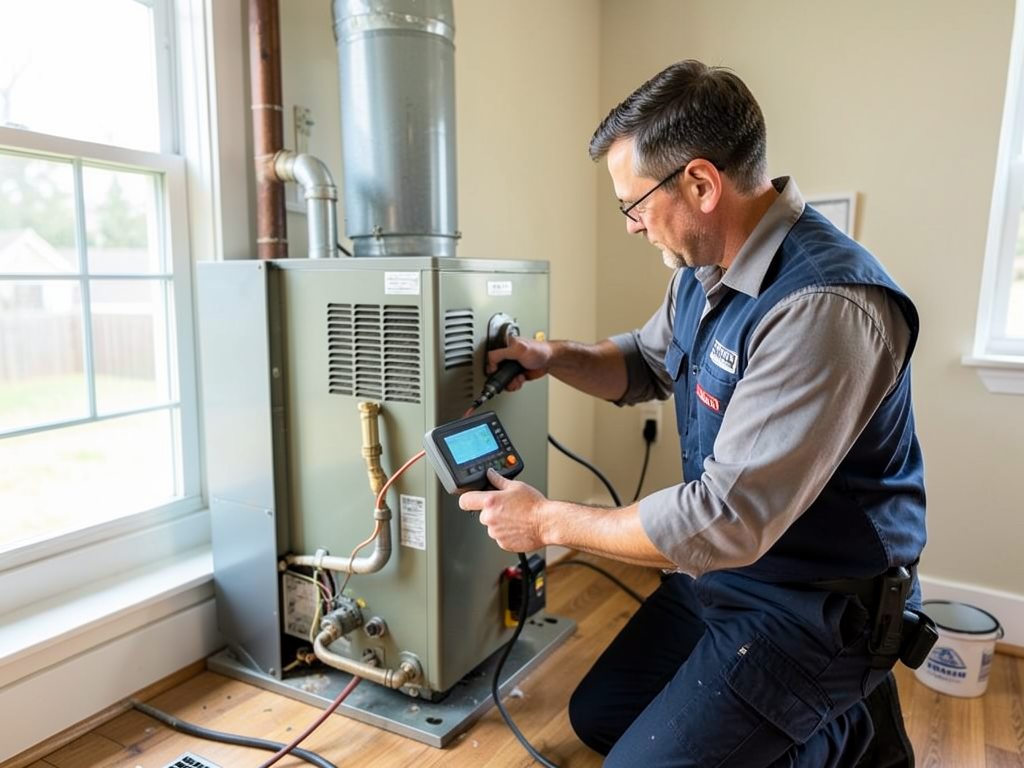
Our diagnostic process uses commercial-grade combustion analyzers, thermal imaging cameras, and pressure testing equipment that residential contractors rarely carry. When we assess your boiler system, we measure flue gas composition, verify heat exchanger integrity, and calculate actual versus rated efficiency. These metrics tell us whether your system will survive this winter or fail during your peak operational period.

For industrial heating services, we focus on three performance indicators that matter to your bottom line. First, fuel efficiency. A poorly tuned commercial boiler wastes thousands in annual heating costs. We optimize air-fuel ratios, clean heat exchangers, and calibrate controls to manufacturer specifications. Second, distribution balance. Uneven heating creates hot and cold zones that waste energy and trigger comfort complaints. We measure supply air temperatures at every zone, adjust dampers, and verify control sequences. Third, safety compliance. Commercial heating systems operate under ASME codes and local fire marshal requirements that residential systems never face. We document pressure relief valve testing, verify emergency shutoff functionality, and maintain combustion safety records that satisfy insurance auditors.

United HVAC Buffalo stocks commercial-grade parts for the Weil-McLain boilers, Lochinvar water heaters, and Reznor unit heaters common in Buffalo's industrial buildings. When your system fails at 2 AM on a Saturday, we arrive with the replacement ignition control or circulator pump your specific model requires. No waiting for Monday parts orders while your facility sits cold.

What Happens When You Call United HVAC Buffalo for Commercial Heating Service

Commercial Heating Services in Buffalo – Industrial-Grade Solutions That Keep Your Business Running
01

Emergency Response Assessment

Within 90 minutes of your call, our commercial team arrives with diagnostic equipment and common repair parts. We assess safety risks first, restoring heat to critical areas while we diagnose the root cause. You receive an immediate verbal assessment of system status, estimated repair duration, and temporary heat options if your primary system requires extended repair. We prioritize business continuity over convenience.
02

Comprehensive System Diagnosis

We test every component in the heating sequence: thermostat signals, zone valves, circulator pumps, ignition systems, flame sensors, gas valves, and safety controls. Commercial heating systems fail from multiple simultaneous issues that residential diagnostics miss. Our technicians carry manometers for gas pressure testing, multimeters for electrical diagnosis, and manufacturer service manuals for proper specifications. You get accurate diagnosis, not guesswork.
03

Documented Repair and Prevention Plan

After repairs restore your system, you receive written documentation including parts replaced, test results, and efficiency measurements. We photograph deficiencies that need future attention and provide a prioritized maintenance plan. Your invoice includes component serial numbers and warranty information. For insurance claims or audit trails, you have complete repair records. We also schedule your next preventive maintenance visit before leaving the site.

Why Buffalo Businesses Trust United HVAC Buffalo for Commercial Heating Reliability

Commercial heating service requires more than technical skill. It requires understanding that your business depends on our work. When a warehouse in Cheektowaga loses heat, inventory damage and employee safety become immediate concerns. When a retail store in Elmwood Village runs cold, customers leave and revenue drops. We respond to commercial calls with the urgency your business situation demands, not the convenience our schedule prefers.

Buffalo's commercial buildings vary dramatically. The 1920s brick warehouses along the Buffalo River house modern manufacturing operations in buildings designed for coal-fired gravity heating. The newer suburban office parks in Amherst run variable air volume systems with complex digital controls. The mixed-use buildings downtown combine ground-floor retail with upper-floor offices, creating zoning challenges that require sophisticated HVAC design. United HVAC Buffalo services all these building types because we have invested in the training, tools, and parts inventory that commercial work requires.

We maintain relationships with Buffalo building inspectors, understand New York State commercial building codes, and know the specific requirements for certificate of occupancy renewals. When your heating system needs replacement or major modification, we handle permit applications, coordinate inspections, and ensure your project passes first-time. Your property manager or facility director does not chase paperwork or reschedule failed inspections.

Our commercial clients include manufacturing facilities that cannot shut down production, cold storage warehouses where temperature control protects inventory value, and medical offices where patient comfort affects practice reputation. These clients stay with United HVAC Buffalo because we prevent problems better than we fix them. Our preventive maintenance programs catch bearing wear, detect combustion drift, and replace aging components before they fail during peak heating season. Prevention costs less than emergency repairs and eliminates the business disruption that unplanned downtime creates.

What to Expect When United HVAC Buffalo Services Your Commercial Heating System

Rapid Commercial Response Times

Commercial heating emergencies receive priority dispatch. We maintain on-call technicians specifically for commercial accounts who respond within 90 minutes across Erie County. For clients on our preventive maintenance programs, response time drops to under 60 minutes. We understand that every hour your facility runs cold costs money in lost productivity, damaged goods, or closed operations. Our commercial team carries fully stocked service vehicles equipped for the most common commercial heating repairs. We arrive ready to fix your system, not diagnose and return later with parts. After-hours and weekend service costs the same as business hours because heating failures do not respect your calendar.

Thorough Commercial System Assessment

Our commercial assessment goes beyond the immediate failure. We evaluate your entire heating infrastructure to identify vulnerabilities that could cause future downtime. This includes measuring supply temperatures at all zones, testing safety controls, analyzing combustion efficiency, inspecting ductwork and piping for deterioration, and reviewing control sequences. You receive a written report with photos documenting current conditions, immediate repair needs, and recommended preventive measures. For multi-system facilities, we prioritize repairs by business impact. Critical production areas get attention before administrative spaces. Your facility manager gets the information needed to budget appropriately and schedule repairs during low-impact periods.

Code-Compliant Commercial Repairs

Every commercial heating repair meets manufacturer specifications and New York State mechanical codes. We use OEM parts for equipment under warranty and commercial-grade aftermarket components for older systems. Our technicians are EPA-certified for refrigerant handling, trained in low-pressure boiler operation, and experienced with the building automation systems that control modern commercial HVAC. Repairs include proper testing and startup procedures. We do not just replace the failed part and leave. We verify system operation across all zones, document performance metrics, and test safety controls. Your facility gets a heating system that operates as designed, not just one that runs temporarily until the next component fails.

Preventive Maintenance Programs That Reduce Downtime

Our commercial maintenance agreements provide scheduled service before heating season, priority emergency response, and discounted repair rates. Preventive visits include combustion analysis, heat exchanger inspection, control calibration, belt and bearing service, filter replacement, and safety testing. We track maintenance history, component age, and performance trends to predict failures before they occur. Clients on maintenance programs experience 80 percent fewer emergency calls because we catch problems during scheduled service. You also receive detailed service reports documenting system condition, test results, and recommended actions. These records satisfy insurance requirements, support capital planning, and provide documentation for property transactions. Maintenance scheduling works around your operation. We service third-shift facilities during day hours and retail locations during closed hours.

Frequently Asked Questions

You Have Questions,
We Have Answers

What is the $5000 rule for HVAC? +

The $5000 rule helps you decide whether to repair or replace your commercial HVAC system. Multiply the repair cost by your system's age in years. If the total exceeds $5000, replacement makes more financial sense than repair. For example, a $400 repair on a 15-year-old unit equals $6000, which signals replacement. Buffalo commercial facilities often face accelerated wear from freeze-thaw cycles and corrosive road salt exposure, making this calculation particularly relevant. Consider your system's efficiency, remaining lifespan, and business continuity needs when applying this rule to your facility.

What is the most common commercial HVAC system? +

The packaged rooftop unit (RTU) dominates Buffalo commercial HVAC installations. These self-contained systems combine heating, cooling, and ventilation in one weatherproof cabinet mounted on the roof. RTUs work well for Buffalo's climate because they conserve valuable indoor space, simplify maintenance access, and handle heavy snow loads when properly installed. They range from 3 to 50 tons and serve retail stores, offices, restaurants, and warehouses throughout the greater Buffalo metro. Split systems and variable refrigerant flow (VRF) systems serve specific applications, but RTUs remain the workhorse for most commercial buildings.

How much do HVAC installers charge per hour? +

Commercial HVAC installers in Buffalo typically charge $75 to $150 per hour, depending on system complexity and technician expertise. Commercial work commands higher rates than residential service because it requires specialized training, commercial licensing, and liability coverage. Complex installations involving building automation systems, multiple zones, or rooftop crane work fall at the higher end. Labor represents roughly 30 to 40 percent of total installation costs. Most commercial projects quote flat-rate pricing based on scope rather than hourly billing, which protects your budget and ensures predictable project costs for business planning.

How often should a commercial HVAC be serviced? +

Commercial HVAC systems in Buffalo require professional servicing quarterly at minimum. High-use facilities like restaurants, medical offices, or manufacturing spaces need monthly maintenance to prevent downtime. Buffalo's humid summers and harsh winters accelerate wear on compressors, heat exchangers, and controls. Quarterly visits include filter changes, refrigerant checks, electrical testing, and calibration. This schedule reduces emergency breakdowns by up to 70 percent and maintains warranty compliance. Many Buffalo businesses schedule service before cooling season (April), mid-summer (July), before heating season (October), and mid-winter (January) to align with peak demand periods and minimize business disruption.

How much does a HVAC system cost for 4000 square feet? +

A commercial HVAC system for 4000 square feet in Buffalo typically costs $20,000 to $40,000 installed, depending on building use and system type. Office spaces with standard ceiling heights and moderate occupancy fall toward the lower range. Restaurants, medical facilities, or spaces with high ceilings require more capacity and cost more. Buffalo's cold climate necessitates robust heating capacity, which affects equipment selection. System complexity, ductwork modifications, zoning requirements, and code compliance all influence final costs. Efficiency ratings, building insulation quality, and window area also impact sizing and pricing for your specific facility.

Is a new HVAC system tax deductible in 2025? +

Commercial HVAC systems installed in 2025 qualify for Section 179 immediate expensing, allowing you to deduct the full cost in the purchase year rather than depreciating over time. The 2025 limit is $1,220,000 for qualifying equipment. Energy-efficient systems may also qualify for additional tax credits under the Inflation Reduction Act, including the 179D commercial buildings energy efficiency deduction. Consult your tax advisor about specific eligibility for your Buffalo facility. These incentives significantly reduce your net investment and improve ROI, making 2025 a strategic year for commercial HVAC upgrades.

How much does a new commercial HVAC cost? +

New commercial HVAC systems in Buffalo range from $15,000 for small office units to $200,000-plus for large industrial installations. A typical 10-ton rooftop unit for a 5000-square-foot retail space costs $25,000 to $45,000 installed. Costs include equipment, labor, ductwork modifications, electrical upgrades, permits, and startup. Buffalo's building codes require specific ventilation rates and energy efficiency standards that affect equipment selection. Factors influencing cost include tonnage requirements, efficiency ratings, brand selection, rooftop access challenges, and integration with existing building automation systems. Request detailed proposals comparing lifecycle costs, not just upfront investment.

What is the life expectancy of a commercial HVAC system? +

Commercial HVAC systems last 15 to 20 years with proper maintenance in Buffalo's climate. Rooftop units face harsher conditions from snow, ice, and temperature swings, which can reduce lifespan without protective measures. Well-maintained systems with quarterly service often exceed 20 years. Neglected systems fail at 10 to 12 years. Heat exchangers, compressors, and electronic controls typically need replacement around year 12 to 15. Buffalo's road salt accelerates corrosion on outdoor components, making protective coatings and regular cleaning important. Plan replacement budgets when systems reach 15 years, even if still operational, to avoid emergency failures during peak seasons.

What is better, 13 seer or 16 seer? +

For commercial applications in Buffalo, 16 SEER systems deliver better ROI than 13 SEER despite higher upfront costs. The efficiency difference reduces cooling costs by roughly 20 percent annually. Buffalo's humid summers create significant cooling loads in retail, office, and medical facilities. A 16 SEER system typically pays back its premium in 4 to 6 years through energy savings. Higher efficiency also qualifies for utility rebates and tax incentives. However, focus on total system performance, not just SEER ratings. Proper sizing, installation quality, and ductwork condition impact efficiency more than SEER ratings alone.

What is the highest HVAC hourly pay? +

Commercial HVAC technicians in Buffalo earn $25 to $45 per hour, with master technicians and specialty roles reaching $50 to $60 per hour. Industrial refrigeration specialists and building automation programmers command the highest rates. Union shops typically pay more than non-union contractors. Overtime, emergency call rates, and prevailing wage projects increase effective hourly compensation. Lead technicians with EPA Universal certification, NATE credentials, and 10-plus years of commercial experience earn top rates. Buffalo's strong commercial sector and aging building stock create consistent demand for skilled technicians, supporting competitive wages throughout the greater Buffalo metro area.

How Buffalo's Lake-Effect Snow and Aging Building Stock Affect Commercial Heating Reliability

Buffalo receives more annual snowfall than any major U.S. city, with lake-effect bands dumping feet of snow in hours. This extreme weather strains commercial heating systems beyond normal design parameters. Rooftop HVAC units buried in snow lose combustion air intake and exhaust venting, causing unsafe operating conditions. Ice dams block condensate drains, triggering high-limit switches that shut systems down. The constant thermal cycling between subzero nights and moderately cold days fatigues metal components, causing premature heat exchanger cracks and expansion joint failures. Commercial heating contractors in Buffalo must understand these weather-specific failure modes that milder climates never encounter. Industrial heating services here require snow-cleared roof access, knowledge of cold-weather combustion adjustments, and parts inventory for weather-accelerated component wear.

Buffalo's commercial building inventory includes thousands of pre-1970 structures originally heated with oversized boilers designed for minimal insulation and single-pane windows. As building owners improved envelopes and added insulation, these heating systems became grossly oversized, causing short-cycling, poor efficiency, and premature wear. United HVAC Buffalo has serviced commercial heating systems across Buffalo's Hydraulics District warehouses, the medical corridor along Main Street, and the industrial facilities in Riverside for years. We know which buildings run steam heat, which have converted to forced air, and which still operate original cast-iron radiator systems. This local knowledge means we arrive with correct parts and appropriate expertise. Commercial heating companies without Buffalo experience waste your time learning building-specific quirks that local contractors already know.
HVAC Services in The Buffalo Area

We are proud to serve the entire Buffalo area and its surrounding communities with our expert HVAC services. Our centrally located team allows us to respond quickly to your needs, whether you are in the city or a nearby suburb. We are committed to being your local, trusted resource for all things heating and cooling, and we look forward to serving you right where you are.

Address:
United HVAC Buffalo, 360 Delaware Ave, Buffalo, NY, 14202

Additional Services We Offer

Our news updates

Latest Articles & News from The Blogs

Managing Excessive Dust in Your South Buffalo Home During High Wind Events South Buffalo homes face unique dust challenges when…

Managing Excessive Dust in Your South Buffalo Home During High Wind Events

Managing Excessive Dust in Your South Buffalo Home During High Wind Events South Buffalo homes face unique dust challenges when…

Is it Better to Pay for a Monthly HVAC Maintenance Plan or Just Call When Something Breaks?

Is it Better to Pay for a Monthly HVAC Maintenance Plan or Just Call When Something Breaks? When your furnace…

The Homeowners Guide to Buying a New HVAC System for a Rental Property in University Heights

The Homeowners Guide to Buying a New HVAC System for a Rental Property in University Heights University Heights landlords face…

Contact Us

Your business cannot wait for heating repairs. Call United HVAC Buffalo now at (716) 317-7757 for same-day commercial service. Our technicians respond within 90 minutes with the parts and expertise your facility needs. Keep your business running regardless of the weather.