
How to Clean Up Your Buffalo Home Air After a Major Kitchen or Bathroom Renovation
Construction dust from drywall tile and paint creates microscopic particles that standard cleaning misses. Your HVAC system then circulates these contaminants throughout your Buffalo home for months. Professional air quality cleaning removes construction debris from ductwork coils and blower motors while protecting your family from health risks like respiratory irritation and allergic reactions. HVAC Buffalo.
Why Standard Cleaning Won’t Fix Post-Renovation Air Quality
Regular house cleaning only addresses surface dust. Renovation particles settle deep in your HVAC system where standard vacuums cannot reach. Drywall dust contains silica that damages blower motors. Sawdust clogs air filters within days. Paint VOCs off-gas for weeks through ductwork. These construction-specific pollutants require specialized equipment and techniques that general cleaning services don’t provide.
Understanding Construction Dust and Your Health
Renovation dust isn’t just annoying—it’s hazardous. Drywall particles contain crystalline silica that can cause silicosis when inhaled over time. Wood dust from cutting boards and trim triggers asthma attacks. New flooring adhesives and paint release volatile organic compounds that cause headaches and dizziness. In Buffalo’s older homes renovation can also disturb lead-based paint particles from pre-1978 construction.
According to the EPA’s Indoor Air Quality guidelines fine particulate matter under 2.5 microns penetrates deep into lungs and bloodstream. Construction dust often measures 0.5 to 10 microns—well within the dangerous range.
The Professional Post-Renovation Air Cleaning Process
Professional cleaning follows specific steps that target construction debris throughout your entire HVAC system. This isn’t just duct cleaning—it’s comprehensive air quality restoration.
- Initial Air Quality Assessment
Technicians test your home’s air using particle counters to measure PM2.5 and PM10 levels. This establishes baseline contamination and identifies problem areas. High readings near return vents often indicate ductwork contamination.
- Negative Pressure Air Scrubbing
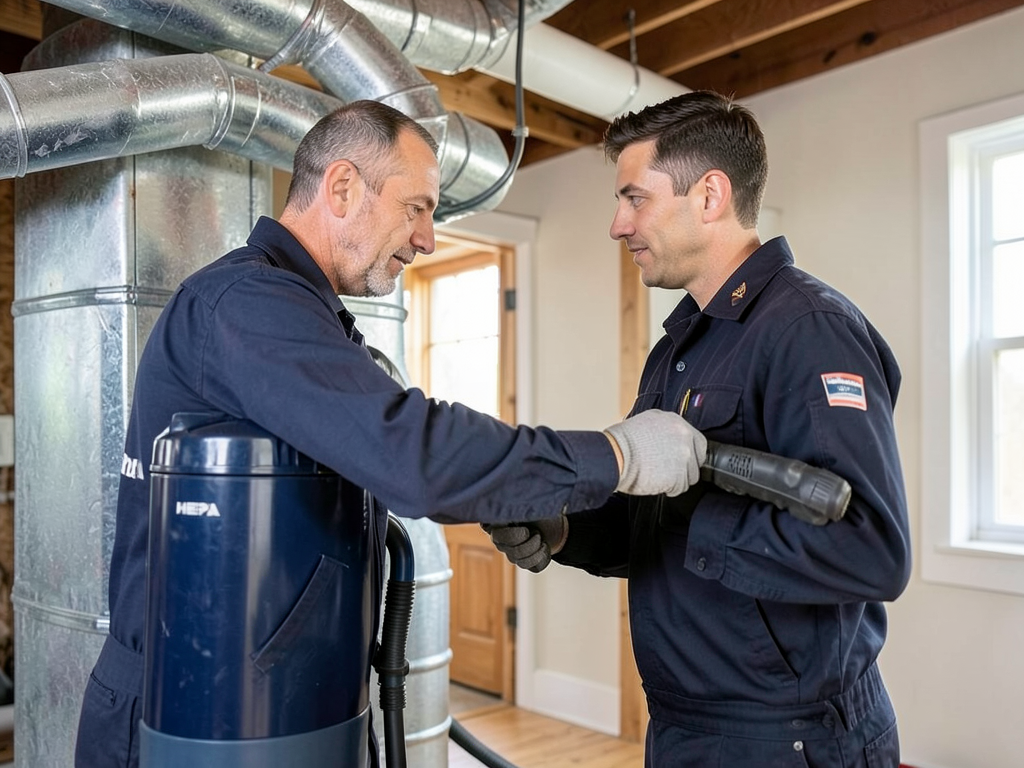
Industrial HEPA air scrubbers create negative pressure that pulls contaminated air through multiple filtration stages. This prevents dust from spreading to clean areas during the cleaning process.
- HEPA-Level Ductwork Cleaning
Specialized truck-mounted vacuums with HEPA filtration remove construction debris from supply and return ducts. Rotary brush systems dislodge stuck particles while powerful suction removes them completely.
- HVAC Coil and Blower Motor Cleaning
Construction dust accumulates on evaporator coils and blower wheels reducing efficiency by up to 30%. Professional cleaning restores proper heat exchange and airflow.
- Sanitization and Odor Neutralization
EPA-registered antimicrobials eliminate mold spores and bacteria that thrive in construction dust. Activated carbon filters neutralize chemical odors from new materials.
Buffalo-Specific Air Quality Challenges
Western New York’s climate creates unique post-renovation air quality issues. Buffalo’s high humidity during summer construction projects causes dust to clump and stick to surfaces. Winter renovations keep windows closed trapping VOCs indoors. The region’s lake-effect weather patterns create rapid pressure changes that force construction particles deeper into building cavities.
Older Buffalo homes in neighborhoods like Allentown and the Elmwood Village often have balloon-frame construction that allows dust to travel between walls and floors. Many homes built before 1950 contain asbestos in floor tiles or pipe insulation that becomes airborne during demolition.
According to the New York State Uniform Fire Prevention and Building Code homes undergoing major renovations must maintain proper ventilation to prevent indoor air quality hazards. Professional cleaning ensures compliance with these requirements.
DIY vs. Professional Air Quality Assessment
Before deciding on professional cleaning homeowners can perform basic air quality checks. Here’s how to assess your situation:
| Test Method | DIY Capability | Professional Results |
|---|---|---|
| Visual Dust Check | Easy – check vents and filters | Detailed – uses particle counters |
| Filter Inspection | Basic – look for discoloration | Comprehensive – measures airflow restriction |
| Air Sampling | Limited – home test kits available | Lab analysis of specific contaminants |
| System Performance | Basic – check temperature differences | Technical – measures static pressure and efficiency |
| Odor Detection | Basic – smell near vents | Lab analysis of VOCs |
If you notice visible dust around vents experience increased allergy symptoms or your HVAC system seems less efficient after renovation professional cleaning is likely necessary.
Protecting Your HVAC System During Future Renovations
Prevention saves money and protects your health. Before your next renovation take these steps:
- Seal supply and return vents with plastic sheeting and painter’s tape
- Change air filters weekly during construction
- Run your HVAC system on fan-only mode during active construction
- Ask contractors to use dust containment barriers
- Schedule pre-renovation HVAC inspection to identify vulnerable components
These simple steps can reduce post-renovation cleaning costs by up to 60% and prevent damage to expensive HVAC components.
Choosing the Right Post-Renovation Air Cleaning Service
Not all air cleaning services are created equal. Look for these qualifications:
| Qualification | Why It Matters | Red Flag |
|---|---|---|
| NADCA Certification | Ensures proper duct cleaning techniques | No industry certifications |
| HEPA Filtration Equipment | Removes 99.97% of particles | Standard shop vacuums |
| Air Quality Testing | Provides before/after data | No testing equipment |
| Insurance Coverage | Protects your home | Uninsured contractors |
| Local Experience | Knows Buffalo’s building codes | No Western NY references |
Professional services should provide written guarantees and before/after air quality reports. Ask about their experience with post-construction cleaning specifically—general duct cleaning doesn’t address renovation-specific contaminants.
Cost Factors for Post-Renovation Air Cleaning
Several factors affect cleaning costs in Buffalo homes:
- Home size and number of HVAC zones
- Extent of renovation work performed
- Age of home and presence of asbestos or lead
- Accessibility of ductwork and equipment
- Urgency of service needed
Most Buffalo homeowners spend between $800 and $2500 for comprehensive post-renovation cleaning. The investment typically pays for itself through improved HVAC efficiency and reduced health risks.
Frequently Asked Questions
How long after renovation should I schedule air cleaning?
Schedule cleaning within 30 days of completing major renovation work. This prevents construction dust from permanently settling in your HVAC system and reduces the risk of component damage.
Can I stay in my home during the cleaning process?
Yes professional cleaning uses containment procedures that allow you to remain in your home. However sensitive individuals may want to stay elsewhere during the most intensive cleaning phases.
Will air cleaning remove construction odors?
Professional cleaning eliminates most construction odors by removing the source materials and using activated carbon filtration. Some strong chemical odors may require additional odor neutralization treatments.
Buffalo’s Unique Renovation Challenges
Buffalo’s older housing stock creates specific air quality challenges after renovation. Homes in zip codes 14201 14203 and 14207 often contain balloon-frame construction that allows dust to travel between walls and floors. The city’s clay-rich soil creates higher humidity levels that cause construction dust to clump and stick to surfaces.
Many Buffalo homes built before 1950 contain asbestos in floor tiles or pipe insulation that becomes airborne during demolition. The city’s harsh winters mean most renovations occur in summer or fall creating ideal conditions for dust accumulation before heating season begins.
According to Erie County Public Health guidelines homes undergoing major renovations must maintain proper ventilation to prevent indoor air quality hazards. Professional cleaning ensures compliance with these requirements while protecting your family’s health.
Golden Nuggets About Buffalo Air Quality
Buffalo’s lake-effect climate creates unique air quality challenges. The city’s average relative humidity of 72% during summer construction projects causes dust to clump and stick to surfaces. Lake-effect weather patterns create rapid pressure changes that force construction particles deeper into building cavities.
The city’s clay-rich soil in neighborhoods like South Buffalo and West Seneca creates higher humidity levels that cause construction dust to clump and stick to surfaces. Many Buffalo homes built before 1950 contain asbestos in floor tiles or pipe insulation that becomes airborne during demolition.
Buffalo’s older housing stock often features balloon-frame construction that allows dust to travel between walls and floors. This construction method common in zip codes 14201 through 14207 creates pathways for construction dust to spread throughout entire homes.
Call Today for Your Post-Renovation Air Quality Assessment
Don’t let construction dust compromise your family’s health or damage your HVAC system. United HVAC Buffalo provides comprehensive post-renovation air quality cleaning using industrial-grade HEPA equipment and NADCA-certified technicians.
Our local experts understand Buffalo’s unique climate challenges and older home construction issues. We serve homeowners throughout Erie County including Amherst Orchard Park and Tonawanda. Orchard Park Homeowners’ Guide to Replacing an Aging Heat Pump.
Call (716) 317-7757 today to schedule your post-renovation air quality assessment. Our technicians will test your air identify contamination sources and provide a clear plan to restore your home’s air quality. Don’t wait until construction dust causes expensive HVAC damage or health problems.
Pick up the phone and call (716) 317-7757 before the next storm hits. Your family deserves clean healthy air after your renovation investment.
{
“@context”: “https://schema.org”,
“@type”: “BlogPosting”,
“headline”: “How to Clean Up Your Buffalo Home Air After a Major Kitchen or Bathroom Renovation”,
“description”: “Professional air quality cleaning removes construction dust from Buffalo HVAC systems. Learn how to protect your family from renovation contaminants with local expertise.”,
“wordCount”: 1410,
“datePublished”: “2026-06-07T08:38:00.000Z”,
“dateModified”: “2026-06-07T08:38:00.000Z”,
“inLanguage”: “en-US”,
“mainEntityOfPage”: {
“@type”: “WebPage”,
“@id”: “https://unitedhvacbuffalo.com”
},
“publisher”: {
“@type”: “LocalBusiness”,
“name”: “United HVAC Buffalo”,
“url”: “https://unitedhvacbuffalo.com”
},
“author”: {
“@type”: “Organization”,
“name”: “United HVAC Buffalo”,
“url”: “https://unitedhvacbuffalo.com”
},
“image”: {
“@type”: “ImageObject”,
“url”: “https://unitedhvacbuffalo.com/wp-content/uploads/2026/03/how-to-clean-up-your-buffalo-home-air-after-a-majo-1.png”
}
}
{
“@context”: “https://schema.org”,
“@type”: “HVACBusiness”,
“name”: “United HVAC Buffalo”,
“url”: “https://unitedhvacbuffalo.com”,
“address”: {
“@type”: “PostalAddress”,
“addressLocality”: “Buffalo”
},
“areaServed”: {
“@type”: “City”,
“name”: “Buffalo”
}
}
{
“@context”: “https://schema.org”,
“@type”: “FAQPage”,
“mainEntity”: [
{
“@type”: “Question”,
“name”: “How long after renovation should I schedule air cleaning?”,
“acceptedAnswer”: {
“@type”: “Answer”,
“text”: “Schedule cleaning within 30 days of completing major renovation work. This prevents construction dust from permanently settling in your HVAC system and reduces the risk of component damage.”
}
},
{
“@type”: “Question”,
“name”: “Can I stay in my home during the cleaning process?”,
“acceptedAnswer”: {
“@type”: “Answer”,
“text”: “Yes professional cleaning uses containment procedures that allow you to remain in your home. However sensitive individuals may want to stay elsewhere during the most intensive cleaning phases.”
}
},
{
“@type”: “Question”,
“name”: “Will air cleaning remove construction odors?”,
“acceptedAnswer”: {
“@type”: “Answer”,
“text”: “Professional cleaning eliminates most construction odors by removing the source materials and using activated carbon filtration. Some strong chemical odors may require additional odor neutralization treatments.”
}
}
]
}
{
“@context”: “https://schema.org”,
“@type”: “HowTo”,
“name”: “Professional Post-Renovation Air Cleaning Process”,
“step”: [
{
“@type”: “HowToStep”,
“position”: 1,
“name”: “Initial Air Quality Assessment”,
“text”: “Technicians test your home’s air using particle counters to measure PM2.5 and PM10 levels. This establishes baseline contamination and identifies problem areas. High readings near return vents often indicate ductwork contamination.”
},
{
“@type”: “HowToStep”,
“position”: 2,
“name”: “Negative Pressure Air Scrubbing”,
“text”: “Industrial HEPA air scrubbers create negative pressure that pulls contaminated air through multiple filtration stages. This prevents dust from spreading to clean areas during the cleaning process.”
},
{
“@type”: “HowToStep”,
“position”: 3,
“name”: “HEPA-Level Ductwork Cleaning”,
“text”: “Specialized truck-mounted vacuums with HEPA filtration remove construction debris from supply and return ducts. Rotary brush systems dislodge stuck particles while powerful suction removes them completely.”
},
{
“@type”: “HowToStep”,
“position”: 4,
“name”: “HVAC Coil and Blower Motor Cleaning”,
“text”: “Construction dust accumulates on evaporator coils and blower wheels reducing efficiency by up to 30%. Professional cleaning restores proper heat exchange and airflow.”
},
{
“@type”: “HowToStep”,
“position”: 5,
“name”: “Sanitization and Odor Neutralization”,
“text”: “EPA-registered antimicrobials eliminate mold spores and bacteria that thrive in construction dust. Activated carbon filters neutralize chemical odors from new materials.”
}
],
“image”: “https://unitedhvacbuffalo.com/wp-content/uploads/2026/03/how-to-clean-up-your-buffalo-home-air-after-a-majo-1.png”
}
{
“@context”: “https://schema.org”,
“@type”: “BreadcrumbList”,
“itemListElement”: [
{
“@type”: “ListItem”,
“position”: 1,
“name”: “Home”,
“item”: “https://unitedhvacbuffalo.com”
},
{
“@type”: “ListItem”,
“position”: 2,
“name”: “Blog”,
“item”: “https://unitedhvacbuffalo.com/blog”
},
{
“@type”: “ListItem”,
“position”: 3,
“name”: “How to Clean Up Your Buffalo Home Air After a Major Kitchen or Bathroom Renovation”
}
]
}
{
“@context”: “https://schema.org”,
“@type”: “Service”,
“serviceType”: “HVAC”,
“provider”: {
“@type”: “LocalBusiness”,
“name”: “United HVAC Buffalo”,
“url”: “https://unitedhvacbuffalo.com”
},
“areaServed”: {
“@type”: “City”,
“name”: “Buffalo”
},
“description”: “Professional air quality cleaning removes construction dust from Buffalo HVAC systems. Learn how to protect your family from renovation contaminants with local expertise.”
}