
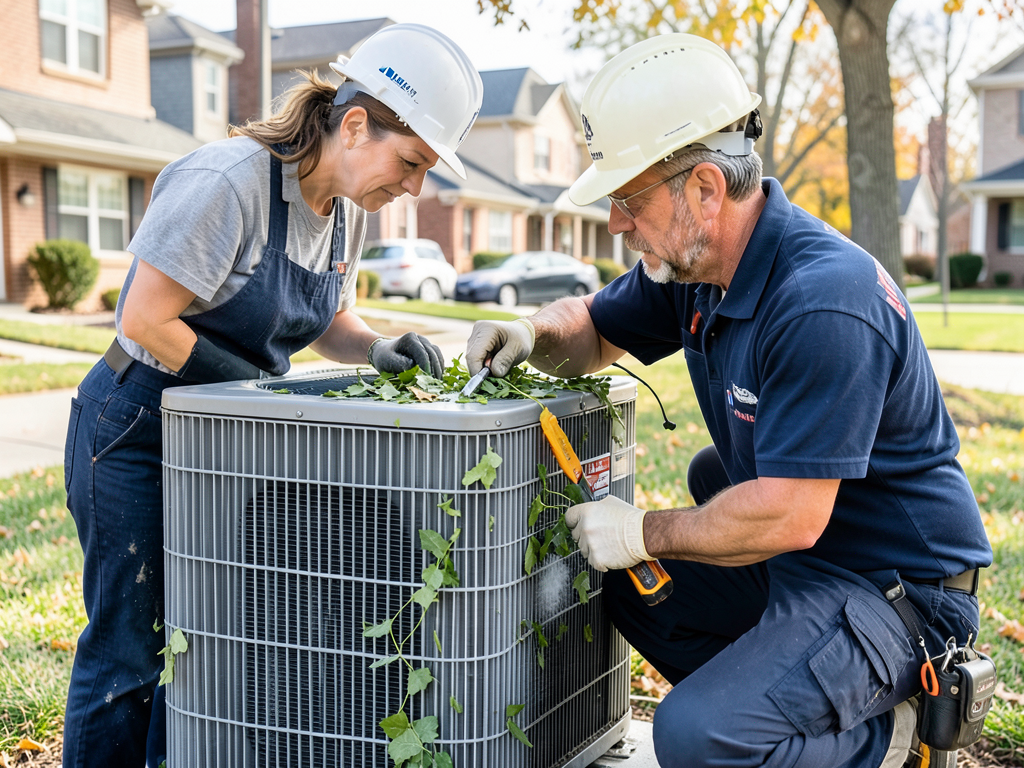
Why You Should Clear Fallen Leaves Away from Your Outdoor AC Unit in Larkinville
Fallen leaves accumulating around your outdoor AC unit in Larkinville can silently sabotage your cooling system’s performance. When leaves pile up against the condenser coils, they block airflow and trap moisture against metal surfaces. This creates the perfect environment for rust, mold growth, and electrical component failure. The restricted airflow forces your compressor to work harder, increasing energy consumption by up to 15% while reducing cooling capacity. In Larkinville’s dense tree canopy along South Park Avenue and around Cazenovia Park, this seasonal maintenance becomes critical before winter arrives. Outdoor Unit Not Spinning.
Understanding How Leaves Damage Your AC System
Leaves create multiple failure points for outdoor AC units. When they accumulate on the condenser coils, they act like a blanket, preventing heat from dissipating properly. This forces the compressor to run longer cycles, increasing wear on bearings and electrical connections. Moisture trapped by leaf debris accelerates corrosion on the aluminum fins and copper tubing. In Larkinville’s climate, where fall temperatures fluctuate between warm days and freezing nights, this trapped moisture can freeze and expand, causing microscopic cracks in the coils. These cracks eventually lead to refrigerant leaks, which require expensive repairs and reduce system efficiency by up to 30%.
Safety First: Powering Down Before Cleaning
Before removing any debris from your AC unit, always disconnect power at the main electrical panel. Locate the dedicated 240-volt circuit breaker for your outdoor condenser unit and switch it to the OFF position. Many Larkinville homes have older electrical panels that may not be clearly labeled, so if you’re unsure which breaker controls your AC, turn off the main power switch. This prevents accidental startup while you’re working near the fan blades and electrical components. After shutting off power, verify the unit is dead by checking that the thermostat display is blank and the unit makes no humming sounds when you stand nearby.
Essential Tools for Safe AC Cleaning
Cleaning your AC unit requires specific tools to avoid damage. You’ll need a wet-dry shop vacuum with a brush attachment for removing loose debris from the coils and base pan. A garden hose with adjustable spray nozzle works for gentle rinsing, but never use a pressure washer as the high pressure can bend the delicate aluminum fins. A fin comb helps straighten bent coils after cleaning. Wear work gloves to protect your hands from sharp edges on the metal housing and coil fins. Safety glasses prevent debris from getting into your eyes while vacuuming or rinsing the unit.
Step-by-Step Cleaning Process for Your Larkinville AC Unit
- Remove the Top Fan Cage
Unscrew the top panel using a nut driver or screwdriver. Most Larkinville homes have units with standard 1/4-inch hex screws. Lift the fan assembly straight up, being careful not to strain the electrical wires connecting it to the base unit.
- Vacuum Loose Debris
Use the shop vacuum to remove leaves, twigs, and dirt from the interior compartment. Pay special attention to the base pan where water collects, as this area often harbors mold growth and small animals seeking winter shelter.
- Clean the Coils
Starting from the inside of the unit, spray water through the coils using a gentle spray pattern. Work from inside to outside to push debris away from the unit rather than deeper into the coil fins. This method prevents clogging the coil passages.
- Straighten Bent Fins
Inspect the aluminum fins between the coil tubes. Use a fin comb to carefully straighten any bent sections. Bent fins reduce airflow by up to 40%, forcing your system to work harder and increasing energy costs.
Common Problems Found During AC Cleaning in Larkinville
During routine cleaning, technicians often discover issues specific to Larkinville’s older homes and tree-lined streets. Many units show signs of rodent damage, with chewed wires or nesting material in the electrical compartment. The high water table in South Buffalo areas can cause the concrete pad beneath units to settle unevenly, creating stress on refrigerant lines. Older homes near McKinley Parkway frequently have units with corroded electrical disconnects that pose safety hazards. Some units develop ice buildup on the coils during fall temperature swings, indicating potential refrigerant charge issues that require professional diagnosis. HVAC Buffalo.
When to Call a Professional HVAC Technician
Certain AC problems require professional expertise beyond basic cleaning. Call a technician if you notice bent or crushed coil fins that cannot be straightened with a fin comb, as these may indicate internal damage. Strange noises like grinding, squealing, or clicking when the unit runs suggest failing bearings or electrical issues. If you see oil stains on the concrete pad or notice the unit runs constantly without reaching the set temperature, you may have a refrigerant leak. Electrical problems manifest as tripped breakers, warm electrical disconnects, or visible corrosion on terminals. These issues pose safety risks and can cause complete system failure if left unaddressed.
Preventing Future Leaf Buildup Around Your AC Unit
Strategic landscaping can significantly reduce leaf accumulation around your AC unit. Maintain at least two feet of clearance on all sides by trimming back shrubs and removing low-hanging tree branches within six feet of the unit. Consider installing a decorative screen or lattice barrier that allows airflow while blocking leaves. In Larkinville’s mature neighborhoods, where oak and maple trees dominate, installing a simple mesh cover over the top of the unit during fall can prevent leaf entry while still allowing moisture to drain. However, never cover the sides of the unit, as this restricts necessary airflow for the fan operation.
Impact on Energy Efficiency and Utility Costs
A clean AC unit operates significantly more efficiently than a debris-covered one. The Department of Energy reports that dirty condenser coils can increase energy consumption by 30% or more. For a typical Larkinville home using a 3-ton AC system, this translates to an additional $25-40 per cooling month in electricity costs. Beyond direct energy waste, restricted airflow causes the compressor to run hotter, reducing its lifespan by 2-3 years on average. Replacing a compressor costs $1,200-2,500, making preventive cleaning a cost-effective investment that pays for itself within one cooling season through energy savings alone. Department of Energy AC maintenance guide.
Local Building Code Requirements for AC Maintenance
Buffalo’s building code requires accessible disconnects for all outdoor HVAC equipment. Per the New York State Uniform Fire Prevention and Building Code Section 1105.6, the disconnect switch must be within sight of the equipment or installed in a locked enclosure. This ensures emergency shutdown capability for maintenance and safety. Additionally, all electrical connections must be protected from the elements per NEC Article 440.4, which governs air conditioning and refrigeration equipment. Many older Larkinville homes built before 1980 may not meet these current standards, creating potential safety hazards that require professional evaluation and possible upgrades. New York State Building Code requirements.
Climate Considerations for Western New York AC Systems
Larkinville’s location in South Buffalo exposes AC units to unique climate challenges. The area experiences lake-effect moisture that accelerates corrosion on outdoor equipment. Fall temperature fluctuations common to Western New York can cause condensation to form on coils during warm days and freeze at night, expanding microscopic cracks in the tubing. The region’s clay soil, prevalent in older South Buffalo neighborhoods, retains moisture and can cause concrete pads to shift during freeze-thaw cycles, stressing refrigerant lines and electrical connections. These local conditions make regular maintenance particularly important for preventing premature system failure.. Read more about Is it Better to Pay for a Monthly HVAC Maintenance Plan or Just Call When Something Breaks?.
Comparing DIY Cleaning vs. Professional Service
| Aspect | DIY Cleaning | Professional Service |
|---|---|---|
| Cost | $0-50 for tools | $150-300 per visit |
| Time Required | 2-3 hours | 45-60 minutes |
| Safety Considerations | Electrical shock risk | Proper safety equipment |
| Diagnostic Capability | Basic visual inspection | Full system evaluation |
| Tools Available | Consumer-grade equipment | Professional-grade tools |
| Warranty Impact | No documentation | Service records provided |
Frequently Asked Questions
How often should I clean leaves from my AC unit?
Clean your outdoor AC unit at least twice yearly – once in spring before cooling season and again in fall after leaves drop. In Larkinville’s heavily wooded areas, monthly checks during fall may be necessary to prevent excessive buildup.
Can I use a leaf blower to clean my AC unit?
Avoid using leaf blowers as they can force debris deeper into the coil fins and potentially damage the delicate aluminum structures. A shop vacuum with a brush attachment provides better control and gentler cleaning action.
What happens if I don’t clean my AC unit before winter?
Leaves left on the unit over winter trap moisture against metal surfaces, accelerating rust and corrosion. Ice formation can bend coil fins and crack tubing. Rodents often nest in debris-filled units, chewing wires and creating fire hazards that may not be discovered until spring startup.
Take Action Before Winter Arrives
Don’t wait until your AC unit fails during next summer’s heatwave. The time to address leaf buildup and potential problems is now, before freezing temperatures make outdoor work difficult. A simple cleaning today can prevent costly emergency repairs when you need cooling most. Many Larkinville homeowners discover too late that their neglected AC units developed serious problems over the winter months. Emergency Furnace Repair in Amherst When Your Heat Goes Out at Night.
Call (716) 317-7757 today to schedule your professional AC cleaning and inspection. Our experienced technicians understand the specific challenges facing Larkinville homes and can identify potential issues before they become expensive repairs. We’ll ensure your system is ready for next season while protecting your investment with our thorough maintenance service.
Pick up the phone and call (716) 317-7757 before the next storm hits. Don’t let fallen leaves cost you hundreds in wasted energy or thousands in premature system replacement. Your comfort and safety are worth the preventive call today.
{
“@context”: “https://schema.org”,
“@type”: “BlogPosting”,
“headline”: “Why You Should Clear Fallen Leaves Away from Your Outdoor AC Unit in Larkinville”,
“description”: “Fall leaves can damage your AC unit. Learn why clearing debris from your Larkinville outdoor condenser is essential for efficiency, longevity, and avoiding costly repairs.”,
“wordCount”: 1620,
“datePublished”: “2026-05-31T07:49:00.000Z”,
“dateModified”: “2026-05-31T07:49:00.000Z”,
“inLanguage”: “en-US”,
“mainEntityOfPage”: {
“@type”: “WebPage”,
“@id”: “https://unitedhvacbuffalo.com”
},
“publisher”: {
“@type”: “LocalBusiness”,
“name”: “United HVAC Buffalo”,
“url”: “https://unitedhvacbuffalo.com”
},
“author”: {
“@type”: “Organization”,
“name”: “United HVAC Buffalo”,
“url”: “https://unitedhvacbuffalo.com”
},
“image”: {
“@type”: “ImageObject”,
“url”: “https://unitedhvacbuffalo.com/wp-content/uploads/2026/03/why-you-should-clear-fallen-leaves-away-from-your-1.png”
}
}
{
“@context”: “https://schema.org”,
“@type”: “HVACBusiness”,
“name”: “United HVAC Buffalo”,
“url”: “https://unitedhvacbuffalo.com”,
“address”: {
“@type”: “PostalAddress”,
“addressLocality”: “Buffalo”
},
“areaServed”: {
“@type”: “City”,
“name”: “Buffalo”
}
}
{
“@context”: “https://schema.org”,
“@type”: “FAQPage”,
“mainEntity”: [
{
“@type”: “Question”,
“name”: “How often should I clean leaves from my AC unit?”,
“acceptedAnswer”: {
“@type”: “Answer”,
“text”: “Clean your outdoor AC unit at least twice yearly – once in spring before cooling season and again in fall after leaves drop. In Larkinville’s heavily wooded areas, monthly checks during fall may be necessary to prevent excessive buildup.”
}
},
{
“@type”: “Question”,
“name”: “Can I use a leaf blower to clean my AC unit?”,
“acceptedAnswer”: {
“@type”: “Answer”,
“text”: “Avoid using leaf blowers as they can force debris deeper into the coil fins and potentially damage the delicate aluminum structures. A shop vacuum with a brush attachment provides better control and gentler cleaning action.”
}
},
{
“@type”: “Question”,
“name”: “What happens if I don’t clean my AC unit before winter?”,
“acceptedAnswer”: {
“@type”: “Answer”,
“text”: “Leaves left on the unit over winter trap moisture against metal surfaces, accelerating rust and corrosion. Ice formation can bend coil fins and crack tubing. Rodents often nest in debris-filled units, chewing wires and creating fire hazards that may not be discovered until spring startup.”
}
}
]
}
{
“@context”: “https://schema.org”,
“@type”: “HowTo”,
“name”: “How to Clean Your AC Unit”,
“step”: [
{
“@type”: “HowToStep”,
“position”: 1,
“name”: “Remove the Top Fan Cage”,
“text”: “Unscrew the top panel using a nut driver or screwdriver. Most Larkinville homes have units with standard 1/4-inch hex screws. Lift the fan assembly straight up, being careful not to strain the electrical wires connecting it to the base unit.”
},
{
“@type”: “HowToStep”,
“position”: 2,
“name”: “Vacuum Loose Debris”,
“text”: “Use the shop vacuum to remove leaves, twigs, and dirt from the interior compartment. Pay special attention to the base pan where water collects, as this area often harbors mold growth and small animals seeking winter shelter.”
},
{
“@type”: “HowToStep”,
“position”: 3,
“name”: “Clean the Coils”,
“text”: “Starting from the inside of the unit, spray water through the coils using a gentle spray pattern. Work from inside to outside to push debris away from the unit rather than deeper into the coil fins. This method prevents clogging the coil passages.”
},
{
“@type”: “HowToStep”,
“position”: 4,
“name”: “Straighten Bent Fins”,
“text”: “Inspect the aluminum fins between the coil tubes. Use a fin comb to carefully straighten any bent sections. Bent fins reduce airflow by up to 40%, forcing your system to work harder and increasing energy costs.”
}
],
“image”: “https://unitedhvacbuffalo.com/wp-content/uploads/2026/03/why-you-should-clear-fallen-leaves-away-from-your-1.png”
}
{
“@context”: “https://schema.org”,
“@type”: “BreadcrumbList”,
“itemListElement”: [
{
“@type”: “ListItem”,
“position”: 1,
“name”: “Home”,
“item”: “https://unitedhvacbuffalo.com”
},
{
“@type”: “ListItem”,
“position”: 2,
“name”: “Blog”,
“item”: “https://unitedhvacbuffalo.com/blog”
},
{
“@type”: “ListItem”,
“position”: 3,
“name”: “Why You Should Clear Fallen Leaves Away from Your Outdoor AC Unit in Larkinville”
}
]
}
{
“@context”: “https://schema.org”,
“@type”: “Service”,
“serviceType”: “HVAC”,
“provider”: {
“@type”: “LocalBusiness”,
“name”: “United HVAC Buffalo”,
“url”: “https://unitedhvacbuffalo.com”
},
“areaServed”: {
“@type”: “City”,
“name”: “Buffalo”
},
“description”: “Fall leaves can damage your AC unit. Learn why clearing debris from your Larkinville outdoor condenser is essential for efficiency, longevity, and avoiding costly repairs.”
}