
Choosing the Best Furnace Filter to Fight Off Buffalo Dust and Allergens
Your furnace works overtime in Buffalo’s six-month heating season and the right filter makes all the difference between clean air and a system that struggles to keep up. Lake-effect humidity and seasonal allergens from ragweed and mold spores mean your filter faces more than just dust. This guide breaks down MERV ratings, filter types, and local factors so you can choose the best furnace filter for your Western New York home. Choosing the Right HVAC Contractor for Your West Seneca Home Renovation.
Why Buffalo Winters Demand More From Your Furnace Filter
Buffalo’s heating season runs from October through April with your furnace running nearly non-stop during lake-effect snow events. That constant airflow means your filter traps more particles in one winter than many other regions see in a year. Homes in older neighborhoods like Elmwood Village or the West Side often have narrower return ducts that restrict airflow making filter selection critical for system performance. Emergency Furnace Repair in Amherst When Your Heat Goes Out at Night.
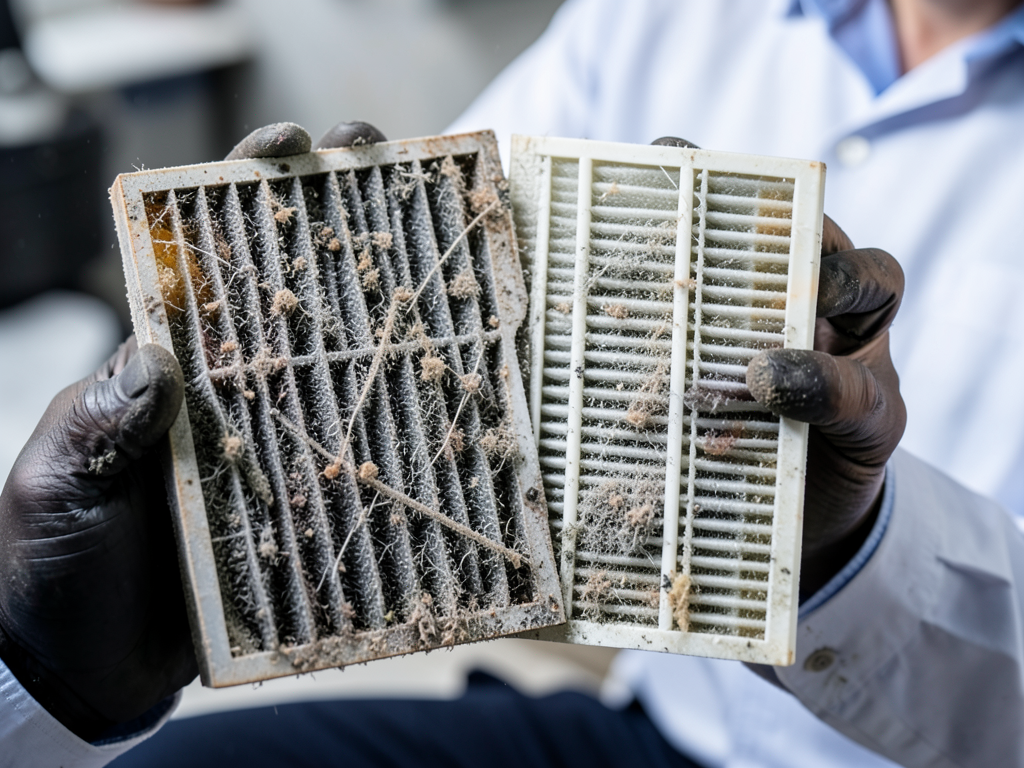
Photo of a technician holding a dirty furnace filter next to a clean one with visible dust and debris buildup from a Buffalo winter
Understanding MERV Ratings for WNY Climate
MERV stands for Minimum Efficiency Reporting Value and measures how well a filter captures particles between 0.3 and 10 microns. For Buffalo’s climate you need to balance filtration with airflow especially in older homes built before 1980. HVAC Buffalo.
MERV 8 captures dust mites and larger pollen particles. Good for basic protection but may miss smaller allergens during peak ragweed season in September and October.
MERV 11 captures pet dander mold spores and finer dust. Ideal for homes with pets or mild allergies. Most Buffalo homes built after 1990 can handle MERV 11 without airflow issues.
MERV 13 captures bacteria smoke and virus carriers. Best for severe allergies or homes near high-traffic areas like the Kensington Expressway. However older Buffalo bungalows with original ductwork may experience reduced airflow and increased strain on the blower motor.
The New York State Energy Research and Development Authority recommends MERV 11 as the optimal balance for most residential forced-air systems in the state’s climate zones.
Top 4 Filter Recommendations for Buffalo Residents
| Filter Type | Best For | MERV Rating | Change Frequency |
|---|---|---|---|
| Pleated Media | Allergies (Pollen/Lake Mold) | 11-13 | Every 30-45 days |
| Electrostatic Washable | Pet Owners | 8-10 | Every 60 days (wash) |
| Fiberglass | Older Buffalo Homes (Restricted Airflow) | 4-6 | Every 30 days |
| High-Efficiency Pleated | Best Value for High-Use Winters | 11 | Every 60 days |
The ‘Lake Effect’ Factor: How Humidity Impacts Filter Life
Lake-effect moisture creates unique challenges for furnace filters in Buffalo. When cold air moves across Lake Erie it picks up moisture that later falls as heavy snow. That moisture can condense inside your ductwork and make filters damp reducing their effectiveness and creating conditions for mold growth.
During January thaws when temperatures spike above freezing and then drop again moisture cycles through your system more rapidly. A damp filter becomes a breeding ground for bacteria and mold spores which then circulate through your home.
Buffalo’s average January humidity of 72% means filters in homes near the waterfront in areas like the Outer Harbor or Canalside may need changing every 30 days instead of the standard 60-90 day recommendation.
Infographic showing the Buffalo HVAC calendar with filter change recommendations for each month based on heating season demands
Where to Buy & When to Change Your Filter in Buffalo
Local hardware stores like Valu Home Centers and Ace Hardware locations across Erie County stock MERV 8-13 filters year-round. For specialty high-MERV filters Ferguson HVAC Supply on Union Road serves contractors and DIY homeowners alike.
Buffalo’s heating season demands a different schedule than national recommendations. Change your filter:
- October-November: When you first fire up the furnace
- December-January: Peak heating season, every 30 days
- February-March: Every 45 days as temperatures moderate
- April: Final heating season check
Never run your furnace without a filter even for a few hours. Buffalo’s fine dust from road salt and construction can damage your heat exchanger and void your warranty.
Impact of Thick Filters on Furnace Heat Exchangers
High-MERV filters create more resistance to airflow. In Buffalo’s older housing stock built before 1970 many systems weren’t designed for today’s thicker filters. When airflow drops your furnace runs longer cycles to heat your home.
Extended run times increase stress on the heat exchanger. A stressed heat exchanger can crack releasing carbon monoxide into your home. The International Fuel Gas Code requires proper airflow across heat exchangers to prevent this dangerous condition.
If you live in a pre-1950s home in Allentown or the Fruit Belt consider MERV 8 filters and more frequent changes rather than upgrading to MERV 13. Your system’s safety matters more than maximum filtration.
HEPA Filtration for Buffalo Allergy Seasons
True HEPA filters capture 99.97% of particles 0.3 microns or larger. While standard furnace filters max out around MERV 16 true HEPA isn’t compatible with most residential furnaces due to extreme airflow restriction. EPA guide to air cleaners and filters.
For severe allergy sufferers in Buffalo the solution is a whole-house HEPA system installed in the return duct or a standalone HEPA air purifier for bedrooms. These systems work alongside your furnace filter not as replacements.
Pollen counts in Western New York peak in late August through September when ragweed and late-summer mold spores are highest. During these weeks running a HEPA purifier can reduce allergy symptoms even if your furnace filter stays at MERV 11.
Carbon Filters for Eliminating Winter ‘Stale Air’ Odors
Buffalo winters mean sealed homes with minimal fresh air exchange. Cooking odors pet smells and the musty scent of closed-up houses can build up. Carbon-activated furnace filters absorb these odors while still providing basic particle filtration.
These filters typically max out at MERV 8 due to the carbon layer reducing airflow. For homes in tight neighborhoods like the Broadway-Fillmore area where cooking smells travel between houses carbon filters can make a noticeable difference.
Replace carbon filters every 30 days in winter since the carbon becomes saturated more quickly with continuous furnace operation.
Recommended Filter Change Frequency for WNY Winters
Buffalo’s extreme conditions require more frequent changes than the standard 90-day recommendation. Follow this schedule based on your home’s specific conditions:
- Check Monthly
Inspect your filter on the same day each month. Hold it up to a light source. If you can’t see light through at least 75% of the surface it’s time for a change.
- Change Based on Conditions
Homes with pets or near construction sites need changes every 30 days. Standard homes can go 45-60 days in winter.
- Document Changes
Write the installation date on the filter frame with a permanent marker. This prevents the common mistake of forgetting when you last changed it. Ductless AC Installation for Historical Homes in North Buffalo.
- Consider Seasonal Factors
After major snowstorms or during high pollen counts change your filter even if it hasn’t been 30 days.
Call (716) 317-7757 Today to Schedule Your Inspection
Don’t wait until your furnace struggles to keep up this winter. Our NATE-certified technicians understand Buffalo’s unique heating challenges and can recommend the perfect filter for your specific home and system. We’ll check your ductwork for proper airflow and ensure your heat exchanger isn’t under strain from the wrong filter choice.
Pick up the phone and call (716) 317-7757 before the next storm hits. Your family’s comfort and safety depend on a properly filtered heating system that can handle whatever Western New York throws at it this winter.
Frequently Asked Questions
What MERV rating is best for my Buffalo home?
MERV 11 works best for most Buffalo homes balancing filtration and airflow. Homes with severe allergies may use MERV 13 but should have a professional verify their ductwork can handle the restriction.
How often should I change my furnace filter in winter?
Change your filter every 30-45 days during peak heating season. Homes with pets or near construction sites need changes every 30 days. Never go beyond 60 days in winter.
Can I use a HEPA filter in my furnace?
Standard HEPA filters restrict too much airflow for most residential furnaces. Instead use MERV 13 filters or install a whole-house HEPA system alongside your existing furnace.
Where can I buy furnace filters in Buffalo?
Local hardware stores like Valu Home Centers and Ace Hardware stock MERV 8-13 filters. Ferguson HVAC Supply on Union Road offers specialty and bulk options for contractors and homeowners.
Why does my filter get dirty so quickly in Buffalo?
Lake-effect moisture, road salt dust, and seasonal allergens create more particles than many other regions. Buffalo’s six-month heating season also means continuous airflow pulling more debris through your system. For more information, visit Consumer Reports on furnace filter performance.
{
“@context”: “https://schema.org”,
“@type”: “BlogPosting”,
“headline”: “Choosing the Best Furnace Filter to Fight Off Buffalo Dust and Allergens”,
“description”: “Discover the best furnace filters for Buffalo’s harsh winters. Learn MERV ratings, filter types, and local tips to combat lake-effect dust, allergens, and humidity.”,
“wordCount”: 1470,
“datePublished”: “2026-03-17T11:56:00.000Z”,
“dateModified”: “2026-03-17T11:56:00.000Z”,
“inLanguage”: “en-US”,
“mainEntityOfPage”: {
“@type”: “WebPage”,
“@id”: “https://unitedhvacbuffalo.com”
},
“publisher”: {
“@type”: “LocalBusiness”,
“name”: “United HVAC Buffalo”,
“url”: “https://unitedhvacbuffalo.com”
},
“author”: {
“@type”: “Organization”,
“name”: “United HVAC Buffalo”,
“url”: “https://unitedhvacbuffalo.com”
},
“image”: {
“@type”: “ImageObject”,
“url”: “https://unitedhvacbuffalo.com/wp-content/uploads/2026/03/choosing-the-best-furnace-filter-to-fight-off-buff-1.png”
}
}
{
“@context”: “https://schema.org”,
“@type”: “HVACBusiness”,
“name”: “United HVAC Buffalo”,
“url”: “https://unitedhvacbuffalo.com”,
“address”: {
“@type”: “PostalAddress”,
“addressLocality”: “Buffalo”
},
“areaServed”: {
“@type”: “City”,
“name”: “Buffalo”
}
}
{
“@context”: “https://schema.org”,
“@type”: “FAQPage”,
“mainEntity”: [
{
“@type”: “Question”,
“name”: “What MERV rating is best for my Buffalo home?”,
“acceptedAnswer”: {
“@type”: “Answer”,
“text”: “MERV 11 works best for most Buffalo homes balancing filtration and airflow. Homes with severe allergies may use MERV 13 but should have a professional verify their ductwork can handle the restriction.”
}
},
{
“@type”: “Question”,
“name”: “How often should I change my furnace filter in winter?”,
“acceptedAnswer”: {
“@type”: “Answer”,
“text”: “Change your filter every 30-45 days during peak heating season. Homes with pets or near construction sites need changes every 30 days. Never go beyond 60 days in winter.”
}
},
{
“@type”: “Question”,
“name”: “Can I use a HEPA filter in my furnace?”,
“acceptedAnswer”: {
“@type”: “Answer”,
“text”: “Standard HEPA filters restrict too much airflow for most residential furnaces. Instead use MERV 13 filters or install a whole-house HEPA system alongside your existing furnace.”
}
},
{
“@type”: “Question”,
“name”: “Where can I buy furnace filters in Buffalo?”,
“acceptedAnswer”: {
“@type”: “Answer”,
“text”: “Local hardware stores like Valu Home Centers and Ace Hardware stock MERV 8-13 filters. Ferguson HVAC Supply on Union Road offers specialty and bulk options for contractors and homeowners.”
}
}
]
}
{
“@context”: “https://schema.org”,
“@type”: “HowTo”,
“name”: “How to Maintain Your Furnace Filter”,
“step”: [
{
“@type”: “HowToStep”,
“position”: 1,
“name”: “Check Monthly”,
“text”: “Inspect your filter on the same day each month. Hold it up to a light source. If you can’t see light through at least 75% of the surface it’s time for a change.”
},
{
“@type”: “HowToStep”,
“position”: 2,
“name”: “Change Based on Conditions”,
“text”: “Homes with pets or near construction sites need changes every 30 days. Standard homes can go 45-60 days in winter.”
},
{
“@type”: “HowToStep”,
“position”: 3,
“name”: “Document Changes”,
“text”: “Write the installation date on the filter frame with a permanent marker. This prevents the common mistake of forgetting when you last changed it. Ductless AC Installation for Historical Homes in North Buffalo.”
},
{
“@type”: “HowToStep”,
“position”: 4,
“name”: “Consider Seasonal Factors”,
“text”: “After major snowstorms or during high pollen counts change your filter even if it hasn’t been 30 days.”
}
],
“image”: “https://unitedhvacbuffalo.com/wp-content/uploads/2026/03/choosing-the-best-furnace-filter-to-fight-off-buff-1.png”
}
{
“@context”: “https://schema.org”,
“@type”: “BreadcrumbList”,
“itemListElement”: [
{
“@type”: “ListItem”,
“position”: 1,
“name”: “Home”,
“item”: “https://unitedhvacbuffalo.com”
},
{
“@type”: “ListItem”,
“position”: 2,
“name”: “Blog”,
“item”: “https://unitedhvacbuffalo.com/blog”
},
{
“@type”: “ListItem”,
“position”: 3,
“name”: “Choosing the Best Furnace Filter to Fight Off Buffalo Dust and Allergens”
}
]
}
{
“@context”: “https://schema.org”,
“@type”: “Service”,
“serviceType”: “HVAC”,
“provider”: {
“@type”: “LocalBusiness”,
“name”: “United HVAC Buffalo”,
“url”: “https://unitedhvacbuffalo.com”
},
“areaServed”: {
“@type”: “City”,
“name”: “Buffalo”
},
“description”: “Discover the best furnace filters for Buffalo’s harsh winters. Learn MERV ratings, filter types, and local tips to combat lake-effect dust, allergens, and humidity.”
}