
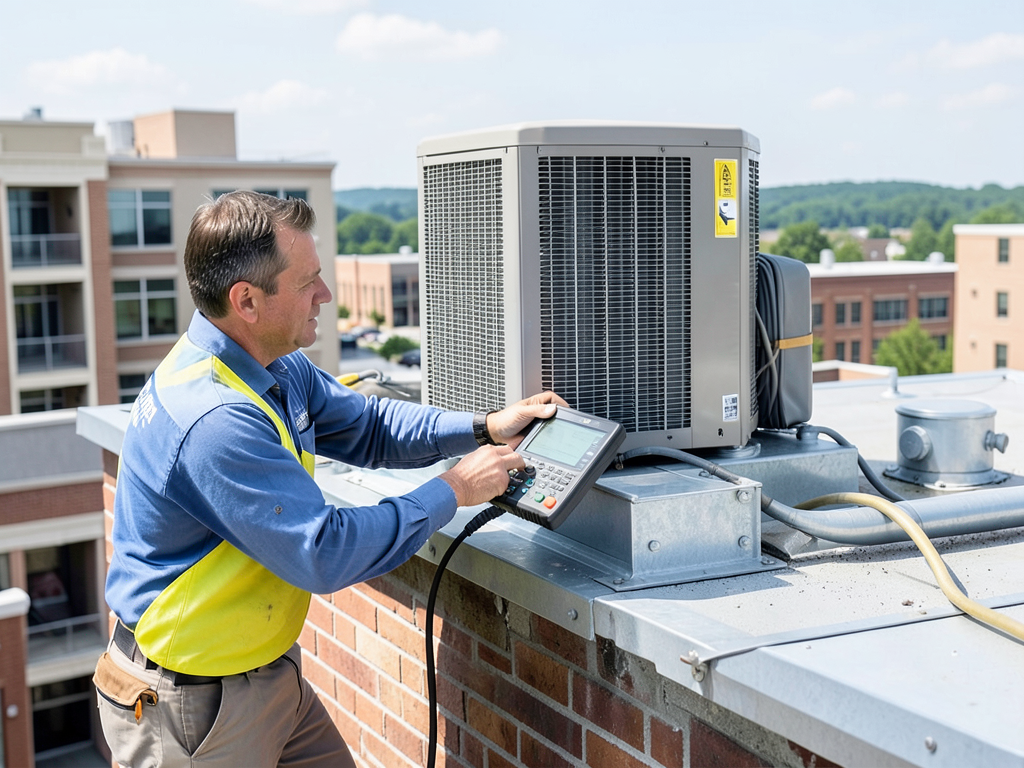
Replacing Your Commercial Rooftop HVAC Unit in North Tonawandra
Replacing a commercial rooftop HVAC unit in North Tonawandra requires specialized knowledge of local building codes, energy efficiency standards, and the unique challenges posed by Western New York’s climate. Business owners along Oliver Street, River Road, and in the city’s industrial corridor need reliable, experienced contractors who understand the specific demands of commercial HVAC systems in this region. Finding the Most Reliable Furnace Repair Services in Buffalo.
Commercial rooftop units (RTUs) serve as the backbone of heating and cooling for retail spaces, warehouses, and office buildings throughout North Tonawandra. These systems face constant stress from extreme temperature swings, high humidity levels, and heavy snow loads that can compromise performance and efficiency. Understanding when to replace versus repair an aging unit can save businesses thousands in energy costs and prevent costly downtime. EPA Section 608 Refrigerant Regulations.
Key Signs Your Commercial RTU Needs Replacement
Commercial HVAC systems typically last 15-20 years with proper maintenance, but North Tonawandra’s harsh climate often accelerates wear and tear. Facility managers should watch for specific warning signs that indicate replacement is more cost-effective than continued repairs.
Unusual noises from the rooftop unit often signal bearing failure or compressor issues. A grinding sound typically indicates failing bearings, while a loud banging may point to loose components or refrigerant line problems. These mechanical failures rarely improve without complete component replacement.
Rising energy bills without corresponding usage increases suggest declining efficiency. As rooftop units age, their SEER ratings drop significantly, forcing compressors to work harder to maintain set temperatures. Modern RTUs offer 30-40% better efficiency than units manufactured just a decade ago.
Frequent refrigerant leaks represent another critical indicator. Older RTU systems using R-22 refrigerant face increasing repair costs as this phased-out substance becomes scarce and expensive. Upgrading to units using R-410A or newer refrigerants provides better performance and environmental compliance.
Commercial HVAC Replacement Process in North Tonawandra
The commercial HVAC replacement process involves several critical steps that ensure compliance with Niagara County building codes and optimal system performance. Professional contractors follow a systematic approach to minimize business disruption and maximize return on investment.
Initial assessment begins with load calculations based on building square footage, occupancy patterns, and equipment heat generation. The Air Conditioning Contractors of America (ACCA) Manual J calculations determine exact cooling and heating requirements for the space. This prevents oversizing or undersizing that leads to inefficiency or inadequate comfort.
Building code compliance represents a crucial phase of the replacement process. Niagara County requires permits for commercial HVAC replacements, and systems must meet current energy efficiency standards. The New York State Energy Conservation Construction Code mandates specific insulation requirements and energy recovery ventilation for commercial buildings over 5,000 square feet.
Equipment selection involves choosing between various RTU configurations including single-zone, multi-zone, and variable air volume (VAV) systems. Single-zone units work well for open warehouse spaces, while VAV systems provide individual temperature control for office buildings with varying occupancy patterns. Choosing the Right HVAC Contractor for Your West Seneca Home Renovation.
Installation scheduling typically requires coordination with building operations to minimize business impact. Most commercial replacements occur during off-peak seasons or after business hours to avoid disrupting daily operations. Emergency replacement services remain available 24/7 for critical system failures. Ductless AC Installation for Historical Homes in North Buffalo.
Energy Efficiency and Cost Savings
Modern commercial rooftop units offer substantial energy savings through advanced technologies that were unavailable just a few years ago. Variable frequency drives (VFDs) adjust fan speeds based on actual cooling demand rather than cycling on and off, reducing energy consumption by up to 30%.
Demand-controlled ventilation systems monitor indoor air quality and occupancy levels to optimize fresh air intake. These systems reduce unnecessary heating and cooling of outside air, providing significant energy savings in spaces with variable occupancy patterns like conference rooms or retail showrooms.
Heat recovery options capture waste heat from refrigeration equipment or server rooms to supplement building heating. This technology can reduce overall energy consumption by 15-20% in facilities with significant internal heat generation.
NYSERDA incentives and federal tax credits make energy-efficient upgrades more affordable. Current programs offer rebates up to $1,000 per ton of cooling capacity for qualifying high-efficiency equipment. These incentives can reduce project costs by 15-25% while providing ongoing utility savings. NYSERDA Energy Efficiency Programs.
Commercial Building Codes and Compliance
North Tonawandra commercial HVAC replacements must comply with multiple layers of building codes and regulations. The New York State Uniform Fire Prevention and Building Code establishes minimum standards for equipment installation, ventilation requirements, and energy efficiency.
Mechanical code compliance requires proper sizing of gas lines, electrical service, and condensate drainage systems. The International Mechanical Code (IMC) Section 601 mandates specific clearances for rooftop equipment access and maintenance. Local inspectors verify compliance before final approval and occupancy.
Refrigerant handling follows EPA regulations under Section 608 of the Clean Air Act. Certified technicians must recover and recycle refrigerants during replacement, with documentation required for disposal of old equipment containing regulated substances.
Fire safety requirements include proper clearance from combustible materials, smoke detector integration, and emergency shutdown capabilities. The National Fire Protection Association (NFPA) 90A standards govern air conditioning and ventilating systems to prevent fire spread through ductwork. Emergency Furnace Repair in Amherst When Your Heat Goes Out at Night.
Commercial Rooftop Unit Types and Applications
Different commercial applications require specific RTU configurations to optimize performance and efficiency. Understanding these options helps business owners make informed decisions about their replacement investments.
Packaged RTUs combine heating, cooling, and ventilation components in a single rooftop unit. These systems work well for retail spaces, restaurants, and small office buildings where separate heating and cooling plants would be impractical or too expensive.
Split systems separate the condenser unit on the roof from the air handling unit inside the building. This configuration provides flexibility for buildings with limited rooftop space or where indoor equipment placement offers advantages for maintenance access.
Variable Refrigerant Flow (VRF) systems use refrigerant piping instead of ductwork to distribute heating and cooling. These high-efficiency systems excel in buildings with multiple zones requiring individual temperature control, such as hotels, medical offices, or mixed-use facilities.
Heat pump RTUs provide both heating and cooling using the same refrigeration cycle, eliminating the need for separate heating equipment. These systems work efficiently in moderate climates but may require supplemental heating in North Tonawandra’s extreme winter conditions.
Preventative Maintenance for Extended System Life
Regular maintenance significantly extends commercial HVAC system life while preventing costly emergency repairs. A comprehensive maintenance program includes quarterly inspections, seasonal tune-ups, and proactive component replacement.
Filter replacement schedules depend on building usage and air quality requirements. Medical facilities and restaurants typically need monthly filter changes, while standard office spaces can extend to quarterly intervals. Proper filtration prevents dirt buildup that reduces heat transfer efficiency.
Coil cleaning removes accumulated dirt and debris that insulates heat transfer surfaces. Dirty condenser coils can increase energy consumption by 30% and cause compressor overheating. Professional cleaning with appropriate chemicals restores original efficiency without damaging delicate fin surfaces.
Belt inspection and tension adjustment prevent premature bearing wear and maintain proper airflow. Loose belts slip and reduce fan efficiency, while overtightened belts stress bearings and shafts. Most commercial RTUs require belt replacement every 2-3 years under normal operating conditions.
Electrical component testing identifies failing capacitors, contactors, and relays before they cause system failures. Voltage and amperage readings reveal developing problems that allow scheduled replacement during planned maintenance rather than emergency service calls.
Emergency Commercial HVAC Services
Commercial HVAC emergencies require immediate response to prevent business disruption and protect sensitive equipment. North Tonawandra businesses need reliable emergency service providers who can respond quickly regardless of weather conditions.
24/7 emergency dispatch ensures technicians arrive promptly when critical systems fail. Response times typically range from 60-90 minutes for local service areas, with priority given to facilities housing vulnerable populations or critical operations.
Temporary cooling solutions provide immediate relief while permanent repairs or replacements are arranged. Portable air conditioning units can maintain critical spaces during RTU replacement, preventing product loss in restaurants or equipment damage in server rooms.
Emergency parts inventory allows for rapid repairs without waiting for special orders. Common failure components like capacitors, contactors, and fan motors are stocked on service vehicles to complete most repairs in a single visit.
System diagnostics use advanced testing equipment to identify root causes rather than just treating symptoms. This approach prevents recurring failures and ensures permanent solutions rather than temporary fixes.
Cost Factors and ROI Considerations
Commercial HVAC replacement costs vary significantly based on system size, efficiency ratings, and installation complexity. Understanding these factors helps businesses budget appropriately and evaluate different equipment options.
Equipment costs represent the largest expense, with prices ranging from $15 to $30 per square foot of conditioned space. High-efficiency units with advanced controls and communication capabilities cost more upfront but provide substantial long-term savings through reduced energy consumption.
Installation complexity affects labor costs significantly. Buildings requiring crane access, roof reinforcement, or extensive electrical upgrades will incur higher installation expenses. Simple replacements on accessible rooftops minimize labor costs and project duration.
Energy savings calculations help justify investment decisions. A 20% reduction in annual energy costs can provide payback periods of 3-5 years for high-efficiency equipment, after which the system generates pure savings for the remainder of its service life.
Maintenance costs decrease with newer equipment due to improved reliability and manufacturer warranties. Extended warranties covering major components can eliminate unexpected repair expenses for 5-10 years after installation.
Choosing the Right HVAC Contractor
Selecting a qualified commercial HVAC contractor requires evaluating experience, licensing, insurance, and local reputation. North Tonawandra businesses should verify credentials and request references from similar commercial projects.
State licensing ensures contractors meet minimum competency requirements and carry proper insurance coverage. New York State requires mechanical contractors to hold specific licenses for commercial HVAC work, with additional certifications for refrigerant handling and energy management systems.
Insurance coverage protects businesses from liability during installation and service work. Commercial contractors should carry general liability, workers’ compensation, and professional liability insurance with coverage limits appropriate for commercial projects.
Manufacturer certifications indicate specialized training and access to technical support. Factory-authorized dealers receive priority parts availability and extended warranty options that benefit building owners through faster service and better coverage.
Local experience matters significantly for commercial HVAC work. Contractors familiar with North Tonawandra’s building stock, utility requirements, and permit processes complete projects more efficiently and avoid costly mistakes from unfamiliarity with local conditions.
Frequently Asked Questions
How long does a commercial rooftop HVAC replacement take?
Most commercial RTU replacements require 2-4 days depending on system size and installation complexity. Simple replacements on accessible rooftops can complete in 1-2 days, while projects requiring crane service or extensive electrical work may extend to a full week.
What size RTU do I need for my commercial building?
RTU sizing depends on building square footage, insulation levels, window area, occupancy, and equipment heat gain. Professional load calculations using ACCA Manual J methodology determine exact requirements, typically ranging from 1 to 2 tons of cooling per 1,000 square feet for standard commercial spaces.
Are there rebates available for commercial HVAC upgrades?
Yes, NYSERDA offers rebates up to $1,000 per ton of cooling capacity for qualifying high-efficiency equipment. Federal tax credits and utility company incentives may also apply, potentially reducing project costs by 15-25% while providing ongoing energy savings.
How often should commercial HVAC systems be serviced?
Commercial HVAC systems require quarterly inspections and seasonal tune-ups to maintain efficiency and prevent failures. Filter changes occur monthly to quarterly depending on building usage, while major component inspections happen during spring and fall service visits.
Ready to Upgrade Your Commercial HVAC System?
Don’t let an aging rooftop unit compromise your business operations or energy efficiency. Our experienced technicians understand the unique challenges of commercial HVAC in North Tonawandra and can help you select the right system for your specific needs and budget.
We provide free consultations, detailed proposals, and transparent pricing with no hidden fees. Our team handles all permitting requirements and coordinates with building management to minimize disruption during installation.
Call (716) 317-7757 today to schedule your commercial HVAC assessment. We’ll evaluate your current system, discuss replacement options, and show you how modern equipment can reduce your energy costs while improving comfort and reliability.
Pick up the phone and call (716) 317-7757 before the next heat wave or cold snap leaves your business without proper climate control. Our 24/7 emergency service ensures you’re never without support when you need it most.
Don’t wait until your rooftop unit fails completely. Contact us now to learn about available rebates and financing options that make upgrading your commercial HVAC system more affordable than ever.
{
“@context”: “https://schema.org”,
“@type”: “BlogPosting”,
“headline”: “Replacing Your Commercial Rooftop HVAC Unit in North Tonawanda”,
“description”: “Need commercial rooftop HVAC replacement in North Tonawandra? Learn about RTU upgrades, energy rebates, and 24/7 emergency service from local experts. Call (716) 317-7757.”,
“wordCount”: 2111,
“datePublished”: “2026-04-17T12:09:00.000Z”,
“dateModified”: “2026-04-17T12:09:00.000Z”,
“inLanguage”: “en-US”,
“mainEntityOfPage”: {
“@type”: “WebPage”,
“@id”: “https://unitedhvacbuffalo.com”
},
“publisher”: {
“@type”: “LocalBusiness”,
“name”: “United HVAC Buffalo”,
“url”: “https://unitedhvacbuffalo.com”
},
“author”: {
“@type”: “Organization”,
“name”: “United HVAC Buffalo”,
“url”: “https://unitedhvacbuffalo.com”
},
“image”: {
“@type”: “ImageObject”,
“url”: “https://unitedhvacbuffalo.com/wp-content/uploads/2026/03/replacing-your-commercial-rooftop-hvac-unit-in-nor-1.png”
}
}
{
“@context”: “https://schema.org”,
“@type”: “HVACBusiness”,
“name”: “United HVAC Buffalo”,
“url”: “https://unitedhvacbuffalo.com”,
“address”: {
“@type”: “PostalAddress”,
“addressLocality”: “Buffalo”
},
“areaServed”: {
“@type”: “City”,
“name”: “Buffalo”
}
}
{
“@context”: “https://schema.org”,
“@type”: “FAQPage”,
“mainEntity”: [
{
“@type”: “Question”,
“name”: “How long does a commercial rooftop HVAC replacement take?”,
“acceptedAnswer”: {
“@type”: “Answer”,
“text”: “Most commercial RTU replacements require 2-4 days depending on system size and installation complexity. Simple replacements on accessible rooftops can complete in 1-2 days, while projects requiring crane service or extensive electrical work may extend to a full week.”
}
},
{
“@type”: “Question”,
“name”: “What size RTU do I need for my commercial building?”,
“acceptedAnswer”: {
“@type”: “Answer”,
“text”: “RTU sizing depends on building square footage, insulation levels, window area, occupancy, and equipment heat gain. Professional load calculations using ACCA Manual J methodology determine exact requirements, typically ranging from 1 to 2 tons of cooling per 1,000 square feet for standard commercial spaces.”
}
},
{
“@type”: “Question”,
“name”: “Are there rebates available for commercial HVAC upgrades?”,
“acceptedAnswer”: {
“@type”: “Answer”,
“text”: “Yes, NYSERDA offers rebates up to $1,000 per ton of cooling capacity for qualifying high-efficiency equipment. Federal tax credits and utility company incentives may also apply, potentially reducing project costs by 15-25% while providing ongoing energy savings.”
}
},
{
“@type”: “Question”,
“name”: “How often should commercial HVAC systems be serviced?”,
“acceptedAnswer”: {
“@type”: “Answer”,
“text”: “Commercial HVAC systems require quarterly inspections and seasonal tune-ups to maintain efficiency and prevent failures. Filter changes occur monthly to quarterly depending on building usage, while major component inspections happen during spring and fall service visits.”
}
},
{
“@type”: “Question”,
“name”: “Ready to Upgrade Your Commercial HVAC System?”,
“acceptedAnswer”: {
“@type”: “Answer”,
“text”: “Don’t let an aging rooftop unit compromise your business operations or energy efficiency. Our experienced technicians understand the unique challenges of commercial HVAC in North Tonawandra and can help you select the right system for your specific needs and budget.”
}
}
]
}
{
“@context”: “https://schema.org”,
“@type”: “BreadcrumbList”,
“itemListElement”: [
{
“@type”: “ListItem”,
“position”: 1,
“name”: “Home”,
“item”: “https://unitedhvacbuffalo.com”
},
{
“@type”: “ListItem”,
“position”: 2,
“name”: “Blog”,
“item”: “https://unitedhvacbuffalo.com/blog”
},
{
“@type”: “ListItem”,
“position”: 3,
“name”: “Replacing Your Commercial Rooftop HVAC Unit in North Tonawanda”
}
]
}
{
“@context”: “https://schema.org”,
“@type”: “Service”,
“serviceType”: “HVAC”,
“provider”: {
“@type”: “LocalBusiness”,
“name”: “United HVAC Buffalo”,
“url”: “https://unitedhvacbuffalo.com”
},
“areaServed”: {
“@type”: “City”,
“name”: “Buffalo”
},
“description”: “Need commercial rooftop HVAC replacement in North Tonawandra? Learn about RTU upgrades, energy rebates, and 24/7 emergency service from local experts. Call (716) 317-7757.”
}