
Choosing Between a Traditional Gas Fireplace and an Energy Efficient Heat Pump for Your Lancaster Living Room
Buffalo winters demand reliable heating solutions that balance comfort, efficiency, and cost. When your Lancaster living room feels drafty during those long Lake Effect snow events, you’re faced with a critical decision: should you install a traditional gas fireplace for supplemental warmth or upgrade to an energy efficient heat pump that handles both heating and cooling? Finding the Most Reliable Furnace Repair Services in Buffalo.
The choice between these systems affects not just your comfort but your monthly utility bills, your home’s resale value, and even your environmental footprint. Heat pumps have evolved dramatically in recent years, with cold climate models now capable of maintaining efficiency at temperatures well below zero. Meanwhile, modern gas fireplaces offer zone heating that can reduce your furnace runtime during milder winter days. Emergency Furnace Repair in Amherst When Your Heat Goes Out at Night.
Before making this investment, you need to understand how each system performs during a typical Buffalo winter, what installation requirements exist for your 1960s split-level home, and what financial incentives can offset your upfront costs. The answer depends on your specific needs, your home’s construction, and how you use your living space during those six months of heating season. Ductless AC Installation for Historical Homes in North Buffalo.
Core Functionality: Primary Heat vs. Supplemental Comfort
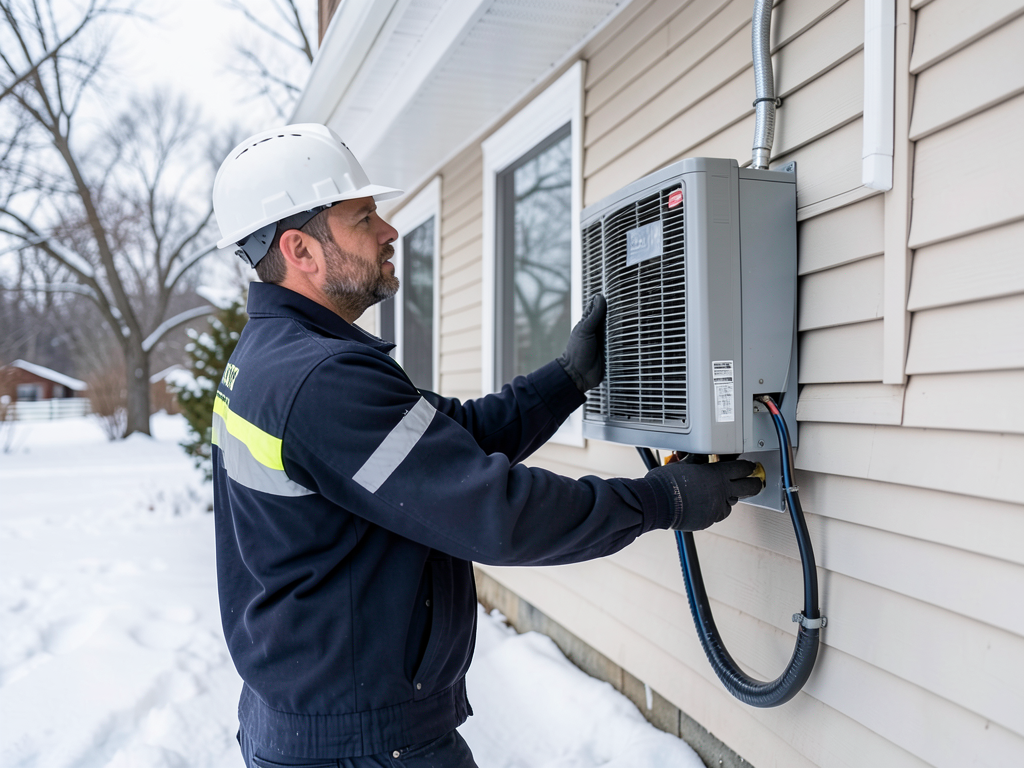
Understanding the fundamental difference between these heating systems is crucial for Lancaster homeowners. A heat pump serves as your primary heating and cooling system, capable of replacing your existing furnace and air conditioner with one integrated unit. When properly sized for your home, it maintains consistent temperatures throughout your entire house, not just your living room.
Heat pumps extract heat from outdoor air even in freezing conditions, using a refrigeration cycle similar to your air conditioner but operating in reverse during winter months. Modern cold climate heat pumps can extract usable heat from air as cold as -13°F, though they typically need electric resistance backup for the coldest Buffalo nights when temperatures plummet below zero. HVAC Buffalo.
Gas fireplaces, conversely, provide supplemental or zone heating. They create a warm gathering space but don’t replace your central heating system. When you’re watching the Bills game on a snowy Sunday, the fireplace creates a cozy atmosphere while your furnace continues cycling to heat the rest of your home. This zone heating approach can reduce your overall energy consumption if you spend most of your time in one area.
For Lancaster’s older housing stock, the installation requirements differ significantly. Heat pumps require adequate electrical service, typically 200 amps for whole-house systems, and may need ductwork modifications if your home has a boiler system. Gas fireplaces need proper venting through an exterior wall or existing chimney, plus a gas line connection. Your 1960s ranch home likely has the infrastructure for either option, but the electrical upgrade for a heat pump could add $1,500 to $3,000 to your project cost.. Read more about Comparing Electric Baseboard Heating and Cold Climate Heat Pumps for Buffalo Homes.
Operational Performance in Cold Climates
Buffalo’s climate presents unique challenges that directly impact system performance. During a typical January with average temperatures around 25°F, a modern cold climate heat pump operates at 250-300% efficiency, meaning it produces 2.5 to 3 units of heat for every unit of electricity consumed. This compares favorably to even the most efficient gas furnaces at 95-98% efficiency.
However, performance drops as temperatures fall. At 0°F, most cold climate heat pumps maintain about 200% efficiency, while at -10°F efficiency drops to 150-175%. This is why backup heating becomes necessary during extreme cold snaps. The heat pump doesn’t stop working at these temperatures; it just becomes less cost-effective than electric resistance heating or your existing furnace.
Gas fireplaces maintain consistent performance regardless of outdoor temperature, producing approximately 20,000 to 40,000 BTU per hour depending on the model. The key limitation is that they only heat the room they’re in, creating temperature stratification where your living room might be 75°F while bedrooms remain 60°F. This can actually increase your overall energy consumption as your furnace works harder to compensate for the temperature imbalance.
Humidity control represents another critical factor in Buffalo’s climate. Heat pumps naturally dehumidify during cooling mode and can help manage indoor humidity during winter’s freeze-thaw cycles. Gas fireplaces add moisture to the air through combustion, which can be beneficial during extremely dry periods but may contribute to condensation problems on windows during milder winter days.
Noise levels also differ significantly. Modern heat pumps operate at 50-60 decibels from outside your home, similar to light rainfall. Inside, you’ll hear the air handler cycling on and off. Gas fireplaces produce minimal operational noise but may have a slight whooshing sound from the gas burner. For bedrooms adjacent to mechanical rooms, the heat pump’s air handler noise might be a consideration.
Cost Analysis: Installation and Monthly Bills
Initial installation costs vary dramatically between these systems. A whole-house heat pump installation for a typical Lancaster home ranges from $8,000 to $15,000, including electrical upgrades and potential ductwork modifications. Cold climate models with higher efficiency ratings command premium prices, often $2,000 to $3,000 more than standard heat pumps.
Gas fireplace installation costs depend heavily on your home’s existing infrastructure. Direct vent models that exhaust through an exterior wall typically cost $3,000 to $5,000 installed. Traditional masonry fireplaces with gas inserts run $4,000 to $7,000, while adding a new gas line if one doesn’t exist can add $500 to $1,500 to your project.
Monthly operating costs tell a different story. Using current National Fuel gas rates around $0.90 per therm and National Grid electricity at $0.13 per kWh, a heat pump typically costs $80 to $120 per month to heat a 2,000 square foot home during winter. A gas fireplace used for supplemental heating adds approximately $30 to $60 monthly when operated several evenings per week.
The table below compares annual heating costs for different scenarios based on typical Buffalo winter conditions and a 2,000 square foot home:
| Heating Scenario | Annual Heating Cost | Installation Cost | Payback Period |
|---|---|---|---|
| Heat Pump Only | $900 – $1,200 | $10,000 – $15,000 | 8-12 years |
| Gas Furnace + Fireplace | $1,200 – $1,500 | $4,000 – $6,000 | |
| Dual Fuel System | $1,000 – $1,300 | $12,000 – $18,000 | 6-9 years |
Maintenance requirements also differ significantly. Heat pumps need annual professional maintenance costing $150 to $250, plus filter changes every 1-3 months. Gas fireplaces require annual cleaning and inspection at $175 to $300, with additional costs for thermocouple replacement every 3-5 years. Over a 15-year lifespan, heat pump maintenance typically costs $2,250 to $3,750, while gas fireplace maintenance runs $2,625 to $4,500.
Energy efficiency incentives can substantially reduce your net costs. The federal tax credit covers 30% of heat pump installation costs up to $2,000 through 2032. New York’s Clean Heat Program offers rebates of $4,000 to $7,000 for qualifying cold climate heat pumps, depending on efficiency ratings and your current heating fuel. Gas fireplace installations don’t qualify for these incentives, though high-efficiency models may qualify for local utility rebates of $100 to $300. Federal Energy Tax Credits.
Buffalo-Specific Incentives and Rebates
New York State’s Clean Heat Program represents the most significant financial opportunity for Lancaster homeowners considering heat pumps. Administered by NYSERDA, these rebates are available through participating contractors and vary based on your current heating system and the heat pump’s efficiency ratings. For homes currently heated with propane or oil, rebates can reach $7,000 for whole-house conversions. NYSERDA Clean Heat Program.
The federal Inflation Reduction Act extends substantial tax credits for energy efficient home improvements. Beyond the 30% heat pump tax credit, you may qualify for additional credits on electrical panel upgrades, insulation improvements, and smart thermostats. These credits are non-refundable but can be carried forward to future tax years if you don’t owe enough in the current year.
National Fuel Gas Company offers its own rebate programs that favor high-efficiency gas equipment. While these rebates don’t apply to heat pumps, they can reduce the cost of a high-efficiency furnace to $800 to $1,200, making the gas fireplace plus furnace combination more financially attractive in the short term.
Local utility providers National Grid and NYSEG offer time-of-use rates that can significantly reduce heat pump operating costs. By shifting 40-60% of your heating to off-peak hours, you can reduce your effective electricity rate from $0.13 to as low as $0.08 per kWh during winter months. This rate structure makes heat pumps even more cost-effective for homeowners who can program their systems accordingly.
Property tax considerations also matter for Lancaster homeowners. New York State offers a 15-year Real Property Tax exemption for solar and geothermal systems, though this doesn’t directly apply to air-source heat pumps. However, the increased home value from energy efficient upgrades often qualifies for reassessment exemptions in Erie County, potentially offsetting some of the increased property value from these improvements.
Financing options have expanded significantly for energy efficient home improvements. NYSERDA offers low-interest loans at 3.49% for heat pump installations, with terms up to 10 years. Many local credit unions provide similar financing specifically for energy upgrades. These programs can make the higher upfront costs of heat pumps manageable through monthly payments often lower than your current utility bills.
Pros and Cons Matrix for Lancaster Homes
Making the right choice requires weighing multiple factors specific to your situation. The following comparison highlights key considerations for typical Lancaster homes built between 1950 and 1980: Choosing the Right HVAC Contractor for Your West Seneca Home Renovation.
| Factor | Heat Pump | Gas Fireplace |
|---|---|---|
| Whole-House Heating | Yes | No |
| Cooling Capability | Yes | No |
| Backup Needed Below 0°F | Yes | No |
| Humidity Control | Excellent | Adds moisture |
| Power Outage Performance | None without generator | Works without power |
| Space Requirements | Indoor air handler plus outdoor unit | Wall or fireplace cavity |
| Aesthetic Impact | Minimal (vents through walls) | Visible fireplace |
| Lifespan | 15-20 years | 20-30 years |
| Resale Value Impact | Positive (energy efficient) | Neutral to positive |
| Carbon Footprint | 60% lower than gas | Standard gas emissions |
Installation timing can significantly impact your project’s success. Spring and fall offer the best combination of contractor availability and weather conditions for outdoor work. Summer installations may face delays due to high demand for cooling system replacements, while winter installations can be challenging if severe weather hits during your project.
Building permit requirements in Lancaster and Erie County are straightforward for both options. Heat pump installations require mechanical permits and electrical permits if upgrades are needed. Gas fireplaces require mechanical permits and possibly building permits if structural modifications are involved. Permit fees typically range from $100 to $300 depending on project scope.
Insurance considerations shouldn’t be overlooked. Some insurance companies offer premium discounts for homes with modern, high-efficiency heating systems. Heat pumps may qualify for these discounts, while gas fireplaces typically don’t affect rates. However, if your gas fireplace installation requires chimney modifications, you should notify your insurance company to ensure proper coverage.
Making Your Final Decision
Your ideal heating solution depends on your specific circumstances and priorities. If you’re planning to stay in your Lancaster home for more than five years and want to maximize energy savings while reducing your carbon footprint, a heat pump likely makes the most sense. The combination of utility savings, tax credits, and rebates can make the higher upfront cost surprisingly affordable.
For homeowners who prioritize immediate comfort and have budget constraints, a gas fireplace offers an attractive compromise. You’ll enjoy instant warmth and ambiance without the higher upfront investment of a heat pump system. This option works particularly well if you already have a relatively efficient furnace and want to reduce runtime during milder weather.
Consider a hybrid approach if you’re torn between these options. Install a heat pump as your primary system but add a gas fireplace for supplemental heating and ambiance. This configuration provides the best of both worlds: energy efficient whole-house heating with the comfort and reliability of gas heat during extreme cold or power outages.
Before making your final decision, schedule professional assessments of both your home’s heating needs and your electrical service capacity. A qualified HVAC contractor can perform a Manual J load calculation to properly size any new heating system and identify potential installation challenges specific to your Lancaster home’s construction.
Ready to upgrade your home’s heating system? Call (716) 317-7757 today to schedule your free consultation. Our local experts understand Buffalo’s unique climate challenges and can help you choose the perfect heating solution for your living room and your budget.
Frequently Asked Questions
Do heat pumps work in Buffalo’s extreme cold?
Yes, modern cold climate heat pumps work effectively in Buffalo’s winter conditions. They maintain efficiency down to about -13°F, though they typically need electric resistance backup for the coldest nights when temperatures drop below zero. Most homeowners find this hybrid approach provides reliable comfort throughout the entire heating season.
How much can I save by switching from a gas furnace to a heat pump?
Homeowners switching from propane or oil heating typically save $800 to $1,500 annually on energy costs. Those converting from natural gas might see smaller savings of $200 to $400 per year, but the environmental benefits and available rebates often make heat pumps worthwhile even with modest utility savings.. Read more about How to Heat a Small Accessory Dwelling Unit or Tiny Home in Williamsville.
What’s the difference between a heat pump and a mini-split system?
Heat pumps are the outdoor units that provide heating and cooling, while mini-splits refer to ductless indoor units connected to those heat pumps. You can have a whole-house heat pump system with ductwork, or use mini-split heads in specific rooms. Both options are available for Lancaster homes depending on your needs.
How long does installation take for each system?
Heat pump installation typically requires 2-3 days for whole-house systems, including electrical upgrades and testing. Gas fireplace installation usually takes 1-2 days, unless chimney modifications or gas line extensions are needed. Both installations can often be completed without requiring you to leave your home during the process.
Are there any tax credits available for gas fireplaces?
Standard gas fireplaces don’t qualify for federal tax credits or state rebates. However, high-efficiency direct vent models may qualify for local utility rebates of $100 to $300. Heat pumps qualify for a 30% federal tax credit up to $2,000 plus substantial NYSERDA rebates of $4,000 to $7,000 for qualifying systems.
What maintenance do these systems require?
Heat pumps need annual professional maintenance plus filter changes every 1-3 months, costing $150 to $250 annually. Gas fireplaces require annual cleaning and inspection at $175 to $300, plus occasional thermocouple replacements. Over 15 years, heat pump maintenance typically costs $2,250 to $3,750 while gas fireplace maintenance runs $2,625 to $4,500.
Can I install a heat pump if I have a boiler system?
Yes, but it requires additional work. You’ll need either a ducted air handler system with new ductwork, or a ductless mini-split system with heads in each room. The latter is often more cost-effective for homes with boiler systems, typically costing $8,000 to $12,000 compared to $12,000 to $18,000 for ducted conversions.
What happens during a power outage with these systems?
Heat pumps won’t operate without electricity, though they can work with whole-house generators. Gas fireplaces with standing pilot lights will continue operating during outages, providing reliable heat independent of the electrical grid. This reliability during winter storms is a key advantage of gas fireplaces for emergency heating.
How do I know what size system I need?
Professional load calculations using Manual J methodology determine proper sizing based on your home’s square footage, insulation levels, window efficiency, and local climate data. Guessing at sizing leads to inefficient operation and comfort problems. A qualified contractor should always perform this calculation before recommending any heating system.
What’s the environmental impact of each option?
Heat pumps reduce carbon emissions by approximately 60% compared to natural gas heating, even when accounting for electricity generation. As New York’s grid becomes cleaner, this benefit will increase. Gas fireplaces produce standard combustion emissions, though high-efficiency models minimize these impacts compared to older equipment.
Still have questions about heating your Lancaster living room? Pick up the phone and call (716) 317-7757. We’ll help you understand all your options and find the perfect solution for your home, your comfort, and your budget.
{
“@context”: “https://schema.org”,
“@type”: “BlogPosting”,
“headline”: “Choosing Between a Traditional Gas Fireplace and an Energy Efficient Heat Pump for Your Lancaster Living Room”,
“description”: “Compare gas fireplaces vs heat pumps for Buffalo winters. Learn about efficiency, costs, and local rebates to make the right choice for your Lancaster home.”,
“wordCount”: 2689,
“datePublished”: “2026-06-08T08:42:00.000Z”,
“dateModified”: “2026-06-08T08:42:00.000Z”,
“inLanguage”: “en-US”,
“mainEntityOfPage”: {
“@type”: “WebPage”,
“@id”: “https://unitedhvacbuffalo.com”
},
“publisher”: {
“@type”: “LocalBusiness”,
“name”: “United HVAC Buffalo”,
“url”: “https://unitedhvacbuffalo.com”
},
“author”: {
“@type”: “Organization”,
“name”: “United HVAC Buffalo”,
“url”: “https://unitedhvacbuffalo.com”
},
“image”: {
“@type”: “ImageObject”,
“url”: “https://unitedhvacbuffalo.com/wp-content/uploads/2026/03/choosing-between-a-traditional-gas-fireplace-and-a-1.png”
}
}
{
“@context”: “https://schema.org”,
“@type”: “HVACBusiness”,
“name”: “United HVAC Buffalo”,
“url”: “https://unitedhvacbuffalo.com”,
“address”: {
“@type”: “PostalAddress”,
“addressLocality”: “Buffalo”
},
“areaServed”: {
“@type”: “City”,
“name”: “Buffalo”
}
}
{
“@context”: “https://schema.org”,
“@type”: “FAQPage”,
“mainEntity”: [
{
“@type”: “Question”,
“name”: “Do heat pumps work in Buffalo’s extreme cold?”,
“acceptedAnswer”: {
“@type”: “Answer”,
“text”: “Yes, modern cold climate heat pumps work effectively in Buffalo’s winter conditions. They maintain efficiency down to about -13°F, though they typically need electric resistance backup for the coldest nights when temperatures drop below zero. Most homeowners find this hybrid approach provides reliable comfort throughout the entire heating season.”
}
},
{
“@type”: “Question”,
“name”: “How much can I save by switching from a gas furnace to a heat pump?”,
“acceptedAnswer”: {
“@type”: “Answer”,
“text”: “Homeowners switching from propane or oil heating typically save $800 to $1,500 annually on energy costs. Those converting from natural gas might see smaller savings of $200 to $400 per year, but the environmental benefits and available rebates often make heat pumps worthwhile even with modest utility savings.”
}
},
{
“@type”: “Question”,
“name”: “What’s the difference between a heat pump and a mini-split system?”,
“acceptedAnswer”: {
“@type”: “Answer”,
“text”: “Heat pumps are the outdoor units that provide heating and cooling, while mini-splits refer to ductless indoor units connected to those heat pumps. You can have a whole-house heat pump system with ductwork, or use mini-split heads in specific rooms. Both options are available for Lancaster homes depending on your needs.”
}
},
{
“@type”: “Question”,
“name”: “How long does installation take for each system?”,
“acceptedAnswer”: {
“@type”: “Answer”,
“text”: “Heat pump installation typically requires 2-3 days for whole-house systems, including electrical upgrades and testing. Gas fireplace installation usually takes 1-2 days, unless chimney modifications or gas line extensions are needed. Both installations can often be completed without requiring you to leave your home during the process.”
}
},
{
“@type”: “Question”,
“name”: “Are there any tax credits available for gas fireplaces?”,
“acceptedAnswer”: {
“@type”: “Answer”,
“text”: “Standard gas fireplaces don’t qualify for federal tax credits or state rebates. However, high-efficiency direct vent models may qualify for local utility rebates of $100 to $300. Heat pumps qualify for a 30% federal tax credit up to $2,000 plus substantial NYSERDA rebates of $4,000 to $7,000 for qualifying systems.”
}
},
{
“@type”: “Question”,
“name”: “What maintenance do these systems require?”,
“acceptedAnswer”: {
“@type”: “Answer”,
“text”: “Heat pumps need annual professional maintenance plus filter changes every 1-3 months, costing $150 to $250 annually. Gas fireplaces require annual cleaning and inspection at $175 to $300, plus occasional thermocouple replacements. Over 15 years, heat pump maintenance typically costs $2,250 to $3,750 while gas fireplace maintenance runs $2,625 to $4,500.”
}
},
{
“@type”: “Question”,
“name”: “Can I install a heat pump if I have a boiler system?”,
“acceptedAnswer”: {
“@type”: “Answer”,
“text”: “Yes, but it requires additional work. You’ll need either a ducted air handler system with new ductwork, or a ductless mini-split system with heads in each room. The latter is often more cost-effective for homes with boiler systems, typically costing $8,000 to $12,000 compared to $12,000 to $18,000 for ducted conversions.”
}
},
{
“@type”: “Question”,
“name”: “What happens during a power outage with these systems?”,
“acceptedAnswer”: {
“@type”: “Answer”,
“text”: “Heat pumps won’t operate without electricity, though they can work with whole-house generators. Gas fireplaces with standing pilot lights will continue operating during outages, providing reliable heat independent of the electrical grid. This reliability during winter storms is a key advantage of gas fireplaces for emergency heating.”
}
},
{
“@type”: “Question”,
“name”: “How do I know what size system I need?”,
“acceptedAnswer”: {
“@type”: “Answer”,
“text”: “Professional load calculations using Manual J methodology determine proper sizing based on your home’s square footage, insulation levels, window efficiency, and local climate data. Guessing at sizing leads to inefficient operation and comfort problems. A qualified contractor should always perform this calculation before recommending any heating system.”
}
},
{
“@type”: “Question”,
“name”: “What’s the environmental impact of each option?”,
“acceptedAnswer”: {
“@type”: “Answer”,
“text”: “Heat pumps reduce carbon emissions by approximately 60% compared to natural gas heating, even when accounting for electricity generation. As New York’s grid becomes cleaner, this benefit will increase. Gas fireplaces produce standard combustion emissions, though high-efficiency models minimize these impacts compared to older equipment.”
}
}
]
}
{
“@context”: “https://schema.org”,
“@type”: “BreadcrumbList”,
“itemListElement”: [
{
“@type”: “ListItem”,
“position”: 1,
“name”: “Home”,
“item”: “https://unitedhvacbuffalo.com”
},
{
“@type”: “ListItem”,
“position”: 2,
“name”: “Blog”,
“item”: “https://unitedhvacbuffalo.com/blog”
},
{
“@type”: “ListItem”,
“position”: 3,
“name”: “Choosing Between a Traditional Gas Fireplace and an Energy Efficient Heat Pump for Your Lancaster Living Room”
}
]
}
{
“@context”: “https://schema.org”,
“@type”: “Service”,
“serviceType”: “HVAC”,
“provider”: {
“@type”: “LocalBusiness”,
“name”: “United HVAC Buffalo”,
“url”: “https://unitedhvacbuffalo.com”
},
“areaServed”: {
“@type”: “City”,
“name”: “Buffalo”
},
“description”: “Compare gas fireplaces vs heat pumps for Buffalo winters. Learn about efficiency, costs, and local rebates to make the right choice for your Lancaster home.”
}