
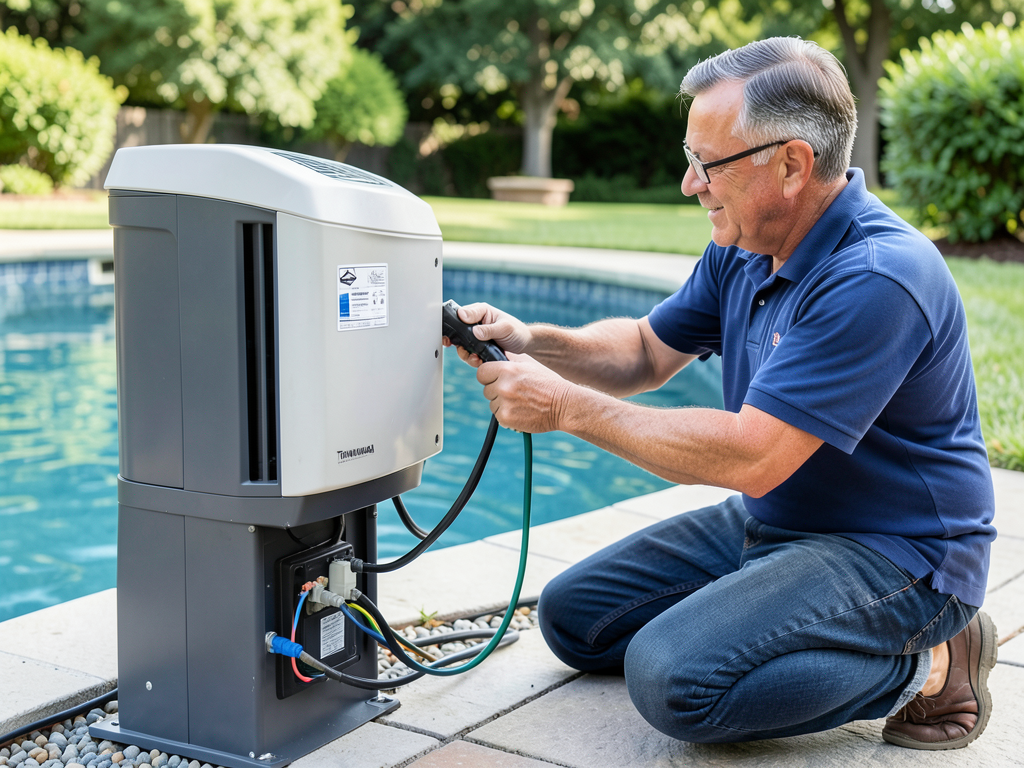
Why Choosing the Right Pool Heater Matters in Buffalo NY
Buffalo’s swimming season runs from roughly June through September. That’s only about 15 weeks of warm weather. Without a reliable pool heater, you might only swim for eight weeks. The right high-efficiency pool heater can extend your season by six to eight weeks, giving you more value from your backyard investment. Finding the Most Reliable Furnace Repair Services in Buffalo.
The Tonawanda area faces unique challenges. Lake-effect humidity keeps summer nights cool, often dropping into the 50s even in July. That means your pool loses heat quickly overnight. A heater that works well in Phoenix might struggle here. You need equipment built for Western New York’s temperature swings and short warm season.
Energy costs in Erie County run higher than the national average. National Fuel and National Grid rates mean inefficient heaters can cost $200-400 per month to operate. The wrong choice wastes money and shortens your swimming season. The right choice keeps your pool comfortable through September and protects your investment. National Fuel.
Local building codes in Tonawanda require specific permits for pool heater installation. The New York State Uniform Fire Prevention and Building Code mandates proper venting, gas line sizing, and electrical safety. Working with a local contractor who understands these requirements prevents costly mistakes and ensures your warranty stays valid. Ductless AC Installation for Historical Homes in North Buffalo.
Gas vs Heat Pump: Which Wins in the WNY Climate?
Gas heaters heat water fast. They can raise pool temperature by 2-3 degrees per hour, perfect for weekend use. But they burn natural gas or propane, costing $3-5 per hour to operate in Buffalo’s climate. For a 20,000-gallon pool, that’s $150-300 per weekend if you heat from scratch. HVAC Buffalo.
Heat pumps move heat from the air to your pool water. They use electricity but are three to five times more efficient than gas. A heat pump might cost $1-2 per hour to run but heats only 1-2 degrees per hour. They work best when you maintain a steady temperature.
In Tonawanda’s climate, heat pumps struggle when air temperatures drop below 50 degrees. September nights often hit 45-55 degrees, making heat pumps less effective. However, they excel during the peak summer months when electricity rates are lower and air temperatures stay above 65 degrees.
Gas heaters perform better in Buffalo’s shoulder seasons. They heat quickly for holiday weekends in May or September. The trade-off is higher operating costs. For year-round pool owners, gas heaters provide the reliability needed for unpredictable Western New York weather.
Your decision depends on how you use your pool. Weekend warriors who want 80-degree water on demand should choose gas. Daily swimmers who maintain steady temperatures should choose heat pumps. Many Tonawanda homeowners install both for maximum flexibility.
Top 5 Pool Heater Recommendations for Buffalo Homeowners
The Hayward Universal H-Series gas heaters lead the market for Western New York. They handle 95% efficiency and feature cupro-nickel heat exchangers that resist corrosion from our humid air. Models range from 150,000 to 400,000 BTU, covering pools from 10,000 to 40,000 gallons.
Raypak Digital gas heaters offer excellent value for Tonawanda homeowners. Their polymer headers prevent rust damage common in our salt-air environment near Lake Erie. The digital controls integrate with most pool automation systems, letting you adjust temperature from your smartphone.
Pentair UltraTemp heat pumps provide the best efficiency for summer use. Their titanium heat exchangers withstand our high humidity and resist chemical damage. The UltraTemp 120 model heats pools up to 15,000 gallons and costs about $1.50 per hour to operate when air temperatures stay above 65 degrees.
Jandy JXi gas heaters combine compact size with high performance. At just 28 inches tall, they fit tight spaces common in Tonawanda’s older homes. The hot-surface ignition system eliminates standing pilot lights, saving fuel and reducing maintenance in our humid climate.
Lochinvar EnergyRite heat pumps offer the best cold-weather performance. Their dual scroll compressors work efficiently down to 38 degrees air temperature. This matters in September when Buffalo nights dip into the 40s but daytime temperatures still reach 70 degrees.
Calculating the Correct BTU for Lake-Effect Temperatures
BTU stands for British Thermal Units. You need 50,000 BTU per 10,000 gallons of pool water for basic heating. But Buffalo’s climate requires more power. Our cool nights and high humidity mean you should add 20% to standard calculations.
For a 20,000-gallon pool in Tonawanda, start with 100,000 BTU. Add 20% for our climate, bringing you to 120,000 BTU minimum. If you want quick heating for weekend use, go up to 150,000-200,000 BTU. This ensures your pool reaches 80 degrees even when starting from 60 degrees.
Heat loss calculations matter more than pool volume. A 16×32 foot pool loses more heat through its surface than a 20×40 foot pool due to wind exposure. Pools near trees or buildings lose less heat. Use a solar cover to reduce heat loss by 50-70% overnight.
Altitude affects performance. Tonawanda sits at about 600 feet above sea level. This slightly reduces oxygen available for combustion in gas heaters. Choose models with high-altitude kits or electronic ignition to maintain efficiency at our elevation.
Professional sizing considers more than volume. Your contractor should measure your pool’s surface area, assess wind exposure, and calculate your desired temperature rise time. This ensures you get a heater that performs well during Buffalo’s unpredictable weather patterns.
Operating Costs: Estimating Your Monthly Bill with National Fuel & National Grid
Gas heaters cost $3-5 per hour to operate in Buffalo. A 200,000 BTU heater running 8 hours per day costs $24-40 daily. Over a 30-day month, that’s $720-1,200. However, most homeowners run heaters only on weekends, reducing monthly costs to $300-600.
Heat pumps cost $1-2 per hour to operate. The same 8-hour daily run time costs $8-16 daily, or $240-480 monthly. But heat pumps work best maintaining steady temperatures, not heating from cold. If you keep your pool at 80 degrees constantly, expect $300-500 monthly.
National Fuel’s current rate is about $1.50 per therm. One therm equals 100,000 BTU. A 200,000 BTU heater uses 2 therms per hour, costing $3.00 per hour at current rates. National Grid electricity costs about $0.14 per kilowatt-hour. A typical heat pump uses 5-7 kWh per hour. National Grid.
Solar covers reduce heating costs by 50-70%. They trap heat at night and reduce evaporation, which accounts for 70% of pool heat loss. A quality solar cover costs $200-400 but pays for itself in one season through energy savings.
Time-of-use rates affect heat pump costs. National Grid offers lower rates during off-peak hours (10 PM – 7 AM). Running your heat pump overnight can reduce operating costs by 20-30%. Smart controllers can automate this scheduling based on weather forecasts.
Installation Requirements and Local Buffalo Building Codes
NYS Uniform Fire Prevention and Building Code Section 1004 requires proper venting for all gas pool heaters. Vent pipes must extend at least 3 feet above the roof and 4 feet from any window or door. Improper venting causes carbon monoxide buildup, a serious safety hazard. NYS Uniform Fire Prevention and Building Code.
Erie County requires mechanical permits for pool heater installation. The permit process ensures proper gas line sizing, electrical connections, and setback requirements. Unpermitted work can void your warranty and create liability issues if you sell your home.
Gas line sizing follows strict rules. A 200,000 BTU heater needs a 3/4-inch gas line minimum. Longer runs require larger pipes. Undersized gas lines cause poor performance and potential safety hazards. Your contractor must calculate pressure drop based on your home’s gas load.
Electrical requirements include GFCI protection and proper grounding. Pool equipment must be on dedicated circuits with weatherproof outlets. The National Electrical Code Article 680 covers pool electrical safety. Violations can cause electrocution hazards and equipment damage.
Setback requirements keep heaters safe from structures. Gas heaters need 3 feet from combustible materials and 5 feet from windows. Heat pumps need 2 feet clearance for airflow. These distances prevent fire hazards and ensure proper operation in our humid climate.
Winterization Tips to Protect Your Investment from WNY Winters
Buffalo winters destroy unprotected pool equipment. Water left in heater lines freezes and cracks heat exchangers. The repair costs $1,500-3,000. Proper winterization takes 30 minutes but saves thousands in potential damage.
Drain all water from the heater using the drain plugs. Most heaters have two plugs, one on each side. Open them and let water drain completely. Use compressed air to blow out remaining water from the internal passages. Even small amounts of water can cause freeze damage.
Disconnect and store drain plugs in the heater’s pump basket. This prevents losing them over winter. Cover the heater with a breathable cover to protect from snow and ice while allowing moisture to escape. Plastic tarps trap moisture and cause rust.
Turn off the gas supply at the meter or propane tank. This prevents gas leaks and protects the pilot light assembly. For electronic ignition models, turn off the circuit breaker at the main panel.
Check your heater in early spring before opening your pool. Look for rodent nests, which are common in unused equipment. Test the ignition system and check for any visible damage from winter weather. Early detection prevents delays when you want to start swimming.
Frequently Asked Questions
How long does it take to heat a pool in Buffalo?
A 200,000 BTU gas heater raises a 20,000-gallon pool by 2-3 degrees per hour. Starting from 60 degrees, it takes 6-10 hours to reach 80 degrees. Heat pumps take 8-12 hours for the same temperature rise when air temperatures stay above 65 degrees.
Can I install a pool heater myself in Tonawanda?
No. New York State law requires licensed HVAC contractors for gas pool heater installation. Electrical work must be done by licensed electricians. DIY installation voids warranties and violates building codes. Professional installation ensures safety and maintains manufacturer warranties.
What size pool heater do I need for a 15,000-gallon pool?
For a 15,000-gallon pool in Buffalo, choose a 125,000-150,000 BTU gas heater or a 50,000 BTU heat pump. Add 20% capacity for our climate. If you want quick heating for weekend use, go up to 175,000 BTU. Professional sizing accounts for your specific conditions.
Are heat pumps worth it in Western New York?
Heat pumps work well from June through August when air temperatures stay above 65 degrees. They cost less to operate than gas heaters during these months. However, they struggle in May and September when nights get cold. Many homeowners use heat pumps in summer and gas for shoulder seasons.
How much does pool heater installation cost in Tonawanda?
Installation costs range from $1,500-3,500 depending on the heater type and complexity. Gas heaters cost more to install due to venting and gas line requirements. Heat pumps cost less but may need electrical upgrades. Permit fees add $100-300 to the total cost.
- Determine Your Pool Size and Usage
Measure your pool’s volume and consider how often you swim. Weekend users need fast heating. Daily swimmers need efficient maintenance heating.
- Choose Between Gas and Heat Pump
Gas heats fast but costs more to operate. Heat pumps save money but heat slowly. Consider your swimming season length and temperature preferences.
- Calculate Required BTU Rating
Use 50,000 BTU per 10,000 gallons plus 20% for Buffalo’s climate. Consider your desired heating speed and whether you’ll use a solar cover.
- Check Local Building Codes
Verify permit requirements in Tonawanda. Ensure your contractor understands NYS Uniform Fire Prevention and Building Code requirements for venting and gas line sizing.
- Get Professional Installation
Hire licensed HVAC and electrical contractors. Professional installation protects your warranty and ensures safe operation in our humid climate.
Ready to Extend Your Swimming Season?
Don’t let another short Buffalo summer pass without enjoying your pool to the fullest. The right high-efficiency pool heater can add six to eight weeks to your swimming season, turning your backyard into a true oasis. Whether you choose gas for quick heating or heat pump for efficiency, proper sizing and professional installation make all the difference. Choosing the Right HVAC Contractor for Your West Seneca Home Renovation.
Buffalo’s unique climate demands equipment that can handle lake-effect humidity and cool nights. Generic advice from national retailers won’t cut it here. You need a local expert who understands how our weather affects pool heating performance and operating costs.
Call (716) 317-7757 today to schedule your free pool heater consultation. We’ll assess your pool, discuss your swimming habits, and recommend the perfect system for your Tonawanda backyard. Our licensed technicians handle everything from permit acquisition to final testing, ensuring your new heater meets all local codes and manufacturer specifications.
Pick up the phone and call (716) 317-7757 before the next heat wave hits. Your extended swimming season starts with the right equipment and the right local expertise. Don’t wait until September to realize you could have been swimming comfortably all summer long.
{
“@context”: “https://schema.org”,
“@type”: “BlogPosting”,
“headline”: “How to Select the Right High Efficiency Pool Heater for Your Tonawanda Backyard”,
“description”: “Find the best pool heater for Tonawanda’s climate. Compare gas vs heat pump options, local installation codes, and operating costs for Buffalo-area homeowners.”,
“wordCount”: 2156,
“datePublished”: “2026-05-05T07:34:00.000Z”,
“dateModified”: “2026-05-05T07:34:00.000Z”,
“inLanguage”: “en-US”,
“mainEntityOfPage”: {
“@type”: “WebPage”,
“@id”: “https://unitedhvacbuffalo.com”
},
“publisher”: {
“@type”: “LocalBusiness”,
“name”: “United HVAC Buffalo”,
“url”: “https://unitedhvacbuffalo.com”
},
“author”: {
“@type”: “Organization”,
“name”: “United HVAC Buffalo”,
“url”: “https://unitedhvacbuffalo.com”
},
“image”: {
“@type”: “ImageObject”,
“url”: “https://unitedhvacbuffalo.com/wp-content/uploads/2026/03/how-to-select-the-right-high-efficiency-pool-heate-1.png”
}
}
{
“@context”: “https://schema.org”,
“@type”: “HVACBusiness”,
“name”: “United HVAC Buffalo”,
“url”: “https://unitedhvacbuffalo.com”,
“address”: {
“@type”: “PostalAddress”,
“addressLocality”: “Buffalo”
},
“areaServed”: {
“@type”: “City”,
“name”: “Buffalo”
}
}
{
“@context”: “https://schema.org”,
“@type”: “FAQPage”,
“mainEntity”: [
{
“@type”: “Question”,
“name”: “Gas vs Heat Pump: Which Wins in the WNY Climate?”,
“acceptedAnswer”: {
“@type”: “Answer”,
“text”: “Gas heaters heat water fast. They can raise pool temperature by 2-3 degrees per hour, perfect for weekend use. But they burn natural gas or propane, costing $3-5 per hour to operate in Buffalo’s climate. For a 20,000-gallon pool, that’s $150-300 per weekend if you heat from scratch. HVAC Buffalo.”
}
},
{
“@type”: “Question”,
“name”: “How long does it take to heat a pool in Buffalo?”,
“acceptedAnswer”: {
“@type”: “Answer”,
“text”: “A 200,000 BTU gas heater raises a 20,000-gallon pool by 2-3 degrees per hour. Starting from 60 degrees, it takes 6-10 hours to reach 80 degrees. Heat pumps take 8-12 hours for the same temperature rise when air temperatures stay above 65 degrees.”
}
},
{
“@type”: “Question”,
“name”: “Can I install a pool heater myself in Tonawanda?”,
“acceptedAnswer”: {
“@type”: “Answer”,
“text”: “No. New York State law requires licensed HVAC contractors for gas pool heater installation. Electrical work must be done by licensed electricians. DIY installation voids warranties and violates building codes. Professional installation ensures safety and maintains manufacturer warranties.”
}
},
{
“@type”: “Question”,
“name”: “What size pool heater do I need for a 15,000-gallon pool?”,
“acceptedAnswer”: {
“@type”: “Answer”,
“text”: “For a 15,000-gallon pool in Buffalo, choose a 125,000-150,000 BTU gas heater or a 50,000 BTU heat pump. Add 20% capacity for our climate. If you want quick heating for weekend use, go up to 175,000 BTU. Professional sizing accounts for your specific conditions.”
}
},
{
“@type”: “Question”,
“name”: “Are heat pumps worth it in Western New York?”,
“acceptedAnswer”: {
“@type”: “Answer”,
“text”: “Heat pumps work well from June through August when air temperatures stay above 65 degrees. They cost less to operate than gas heaters during these months. However, they struggle in May and September when nights get cold. Many homeowners use heat pumps in summer and gas for shoulder seasons.”
}
},
{
“@type”: “Question”,
“name”: “How much does pool heater installation cost in Tonawanda?”,
“acceptedAnswer”: {
“@type”: “Answer”,
“text”: “Installation costs range from $1,500-3,500 depending on the heater type and complexity. Gas heaters cost more to install due to venting and gas line requirements. Heat pumps cost less but may need electrical upgrades. Permit fees add $100-300 to the total cost.”
}
},
{
“@type”: “Question”,
“name”: “Ready to Extend Your Swimming Season?”,
“acceptedAnswer”: {
“@type”: “Answer”,
“text”: “Don’t let another short Buffalo summer pass without enjoying your pool to the fullest. The right high-efficiency pool heater can add six to eight weeks to your swimming season, turning your backyard into a true oasis. Whether you choose gas for quick heating or heat pump for efficiency, proper sizing and professional installation make all the difference. Choosing the Right HVAC Contractor for Your West Seneca Home Renovation.”
}
}
]
}
{
“@context”: “https://schema.org”,
“@type”: “HowTo”,
“name”: “How to Select the Right High Efficiency Pool Heater”,
“step”: [
{
“@type”: “HowToStep”,
“position”: 1,
“name”: “Determine Your Pool Size and Usage”,
“text”: “Measure your pool’s volume and consider how often you swim. Weekend users need fast heating. Daily swimmers need efficient maintenance heating.”
},
{
“@type”: “HowToStep”,
“position”: 2,
“name”: “Choose Between Gas and Heat Pump”,
“text”: “Gas heats fast but costs more to operate. Heat pumps save money but heat slowly. Consider your swimming season length and temperature preferences.”
},
{
“@type”: “HowToStep”,
“position”: 3,
“name”: “Calculate Required BTU Rating”,
“text”: “Use 50,000 BTU per 10,000 gallons plus 20% for Buffalo’s climate. Consider your desired heating speed and whether you’ll use a solar cover.”
},
{
“@type”: “HowToStep”,
“position”: 4,
“name”: “Check Local Building Codes”,
“text”: “Verify permit requirements in Tonawanda. Ensure your contractor understands NYS Uniform Fire Prevention and Building Code requirements for venting and gas line sizing.”
},
{
“@type”: “HowToStep”,
“position”: 5,
“name”: “Get Professional Installation”,
“text”: “Hire licensed HVAC and electrical contractors. Professional installation protects your warranty and ensures safe operation in our humid climate.”
}
],
“image”: “https://unitedhvacbuffalo.com/wp-content/uploads/2026/03/how-to-select-the-right-high-efficiency-pool-heate-1.png”
}
{
“@context”: “https://schema.org”,
“@type”: “BreadcrumbList”,
“itemListElement”: [
{
“@type”: “ListItem”,
“position”: 1,
“name”: “Home”,
“item”: “https://unitedhvacbuffalo.com”
},
{
“@type”: “ListItem”,
“position”: 2,
“name”: “Blog”,
“item”: “https://unitedhvacbuffalo.com/blog”
},
{
“@type”: “ListItem”,
“position”: 3,
“name”: “How to Select the Right High Efficiency Pool Heater for Your Tonawanda Backyard”
}
]
}
{
“@context”: “https://schema.org”,
“@type”: “Service”,
“serviceType”: “HVAC”,
“provider”: {
“@type”: “LocalBusiness”,
“name”: “United HVAC Buffalo”,
“url”: “https://unitedhvacbuffalo.com”
},
“areaServed”: {
“@type”: “City”,
“name”: “Buffalo”
},
“description”: “Find the best pool heater for Tonawanda’s climate. Compare gas vs heat pump options, local installation codes, and operating costs for Buffalo-area homeowners.”
}