
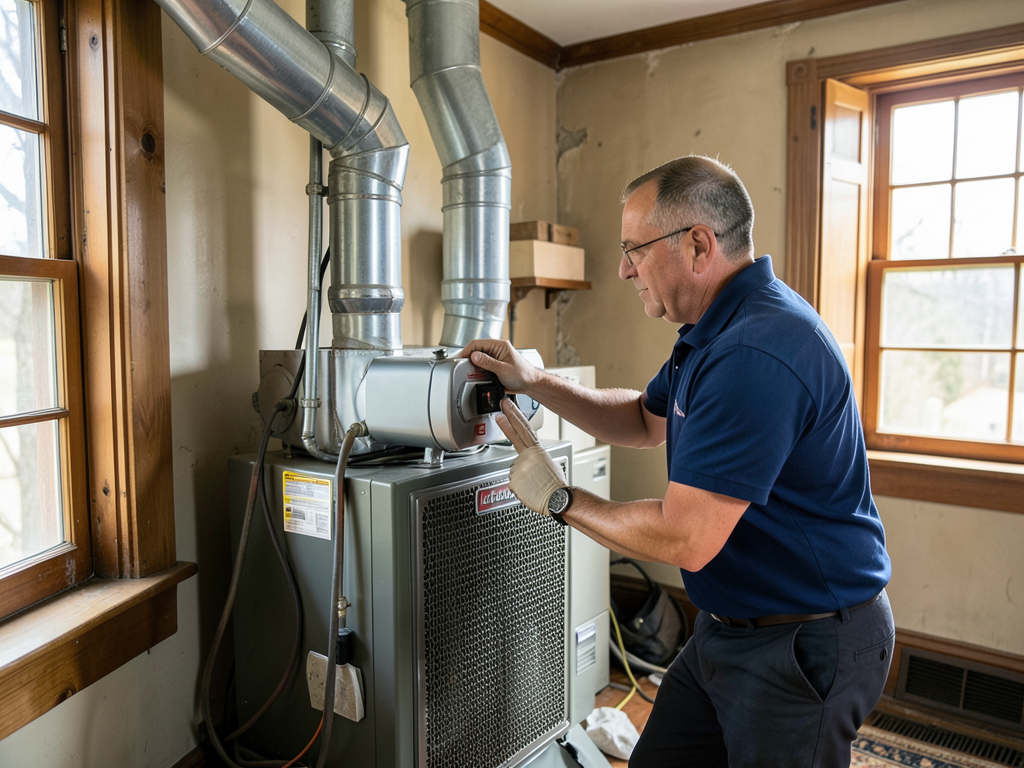
The Hidden Winter Threat to Your Elmwood Village Hardwood Floors
Your beautiful Elmwood Village Victorian home deserves floors that maintain their character through every season. But as winter settles over Buffalo with its bone-dry air and furnace heat, those wide-plank oak floors begin to shrink and separate. The gaps you see aren’t just cosmetic flaws. They signal a battle between your home’s historic wood and the harsh Western New York climate. EPA Indoor Air Quality Guidelines.
The problem starts with moisture content. Wood naturally expands and contracts with humidity changes. In Elmwood Village’s historic homes, where original hardwood flooring tells stories of Buffalo’s architectural past, this seasonal movement becomes extreme. During our humid summers, the wood swells. Come winter, furnace heat strips moisture from the air, causing the wood to contract dramatically. Without proper humidity control, you’re watching your floors slowly deteriorate. Emergency Furnace Repair in Amherst When Your Heat Goes Out at Night.
The solution isn’t just about filling gaps with wood putty. It’s about understanding the science of wood and moisture, then using your HVAC system to create the perfect environment for your floors to thrive year-round.. Read more about Adding a Second HVAC System for Your Finished Attic in Elmwood Village.
The Science of Wood and Moisture: Why Your Floors Act Like Sponges
Wood is hygroscopic. It absorbs and releases moisture from the surrounding air like a sponge. This property is called Equilibrium Moisture Content or EMC. When the air is humid, wood gains moisture and expands. When air is dry, wood loses moisture and shrinks.
In Buffalo’s climate, this cycle becomes extreme. Our summers bring high humidity from Lake Erie, often pushing indoor levels above 60%. Winters drop to desert-like dryness with furnace heat pulling humidity below 20%. Your historic Elmwood Village floors experience these swings daily. HVAC Buffalo.
The expansion and contraction happen across the width of boards, not the length. That’s why you see gaps between boards in winter but not along the length of individual planks. The movement can be significant. Wide-plank flooring common in Victorian homes can shrink up to 1/8 inch per board in winter conditions.
This movement isn’t just annoying. It stresses the wood structure. Repeated expansion and contraction cause permanent damage. Boards cup, crack, and eventually fail. The finish separates. What starts as seasonal gapping becomes permanent structural damage.
Understanding this science is the first step to protecting your investment. Your floors need stable humidity levels between 35% and 50% relative humidity. This range keeps wood stable while remaining comfortable for people.
Buffalo’s Climate Challenge: From Lake Effect Humidity to Bone-Dry Winters
Buffalo’s location on Lake Erie creates unique climate challenges. Summer brings high humidity from the lake, often pushing indoor levels above 60%. July and August can see dew points in the 70s, making air feel thick and heavy. Your hardwood floors absorb this moisture, swelling and sometimes cupping.. Read more about How to Keep Your Buffalo Mudroom Warm and Dry After Shoveling Snow.
Winter flips the script. Cold air holds less moisture. When that air enters your home and warms up, relative humidity plummets. A 20-degree winter day at 70% humidity outside becomes 20% humidity inside when heated to 70 degrees. Add furnace heat, and indoor levels can drop to 10-15%.
Elmwood Village’s historic homes face additional challenges. Many have original single-pane windows, minimal insulation, and drafty construction. These features let cold, dry air infiltrate constantly. Your furnace runs more frequently, pulling even more moisture from the air.
The rapid seasonal transitions in Buffalo make matters worse. We can swing from 60-degree humid days to sub-zero dry spells in 48 hours. Your floors experience these changes before your HVAC system can compensate.
Local building patterns compound the problem. Elmwood Village homes often feature large, open floor plans with extensive hardwood coverage. More wood surface area means more moisture exchange with the air. The original construction methods used in these homes also affect how wood responds to humidity changes.
Signs Your Floors are Suffering: More Than Just Cosmetic Gaps
Recognizing floor distress early prevents permanent damage. Here are the warning signs that your hardwood floors need humidity intervention:
Gapping appears as visible spaces between floorboards. In winter, gaps can widen to 1/8 inch or more. The gaps often close partially in summer but never fully return to their original tightness. This indicates chronic moisture stress.
Cupping happens when board edges rise higher than the center, creating a concave surface. This occurs when the bottom of boards absorbs more moisture than the top. Summer humidity or basement moisture often causes cupping.
Crowning is the opposite of cupping. The board center rises above the edges. This typically happens when wood swells after cupping has been sanded away without addressing the moisture source.
Buckling represents severe failure. Boards lift completely from the subfloor, creating dangerous tripping hazards. Buckling usually results from flooding or prolonged exposure to extreme moisture levels.
Checking and splitting appear as fine cracks along the wood grain. These cracks often start at board ends and work inward. They indicate the wood has dried beyond its elastic limit.
Finish failure shows as peeling, flaking, or cloudy areas in the floor finish. When wood moves too much, the finish loses adhesion. This damage often appears worse near exterior walls where temperature swings are greatest.
Sound changes provide another clue. Floors that creak more in winter or sound hollow when walked on indicate loosening joints from shrinkage.
The Ideal Humidity ‘Goldilocks Zone’ for WNY Homes
Your hardwood floors need humidity levels that feel comfortable for people while keeping wood stable. The sweet spot falls between 35% and 50% relative humidity. This range prevents both excessive shrinkage and swelling.
Within this range, different wood species have optimal points. Oak, common in Elmwood Village homes, performs best around 40-45% humidity. Maple prefers slightly higher levels around 45-50%. Exotic woods like Brazilian cherry need even more humidity stability.
Seasonal adjustments matter. In winter, aim for the lower end of the range around 35-40%. This minimizes shrinkage while preventing condensation on cold windows. Summer allows slightly higher levels around 45-50% to combat excessive drying from air conditioning.
Measuring humidity requires accurate tools. A quality hygrometer placed away from direct sunlight and heat sources gives reliable readings. Digital hygrometers with temperature displays help track how your HVAC system affects both metrics. Finding the Most Reliable Furnace Repair Services in Buffalo.
Multiple measurement points matter. Different rooms experience varying humidity levels. Basements stay more humid while upper floors dry out faster. Exterior walls experience more temperature swings affecting local humidity.
Tracking patterns helps identify problems. Note humidity levels when gaps appear most severe. This data helps your HVAC technician size humidification equipment properly.
Remember that achieving perfect humidity everywhere simultaneously isn’t realistic. Focus on maintaining the target range in main living areas where your family spends time and where hardwood flooring covers the most area.
HVAC Solutions for Hardwood Longevity
Your HVAC system offers the most effective way to control indoor humidity. Unlike portable humidifiers that treat single rooms, whole-home systems manage moisture levels throughout your entire house.
Whole-home humidifiers attach to your furnace and add moisture to heated air as it circulates. These systems use various methods:
Flow-through humidifiers use a water panel where warm air picks up moisture before entering ducts. They provide consistent humidity without standing water issues. Bypass models work with your furnace’s natural airflow. Fan-powered units include their own fans for better moisture distribution.
Steam humidifiers generate pure steam that mixes with heated air. They produce more moisture than flow-through models and work well in larger homes. Steam systems respond faster to humidity changes and maintain levels more precisely.
Smart humidifiers include sensors that monitor outdoor temperature and adjust output automatically. These prevent over-humidification that can cause window condensation or promote mold growth. Outdoor Unit Not Spinning.
Dehumidification systems handle summer moisture problems. While air conditioners remove some humidity, dedicated whole-home dehumidifiers provide better control. They work independently of cooling, allowing you to reduce humidity without overcooling.
High-efficiency air conditioners with variable-speed blowers remove more moisture than standard units. They run longer at lower speeds, pulling more water from the air without the temperature swings of single-speed systems.
Ventilation improvements also impact humidity. Energy recovery ventilators exchange stale indoor air with fresh outdoor air while transferring heat and moisture. This maintains air quality without losing temperature control.
Smart thermostats with humidity sensors provide better control. They can trigger humidifiers or dehumidifiers based on actual conditions rather than fixed schedules. Some models learn your patterns and adjust automatically.
The key is proper system sizing. An HVAC technician must calculate your home’s specific needs based on square footage, insulation levels, and local climate data. Oversized equipment short-cycles, reducing both temperature and humidity control effectiveness.
Maintenance Checklist for Buffalo Homeowners
Protecting your hardwood floors requires seasonal maintenance. Here’s your year-round checklist:
Fall Preparation (September-October):
- Test your humidifier before heating season begins
- Replace humidifier water panels if needed
- Check humidity levels daily as temperatures drop
- Seal any drafts around windows and doors
- Schedule HVAC maintenance to ensure proper operation
Winter Operation (November-March):
- Monitor humidity levels daily, aiming for 35-40%
- Adjust humidifier output based on outdoor temperature
- Watch for condensation on windows as an indicator of over-humidification
- Keep interior doors open to promote air circulation
- Maintain consistent thermostat settings to avoid temperature swings
Spring Transition (April-May):
- Gradually reduce humidification as outdoor temperatures rise
- Check for any winter damage to floors
- Clean humidifier components to prevent mold growth
- Test air conditioning for proper dehumidification
- Inspect for any water damage from melting snow or ice dams
Summer Management (June-August):
- Monitor indoor humidity, keeping it below 50%
- Run dehumidifiers if needed during humid spells
- Use exhaust fans in kitchens and bathrooms
- Keep air conditioning set to maintain consistent temperatures
- Check for any signs of floor cupping from summer moisture
Year-Round Best Practices:
- Maintain your HVAC system with annual professional service
- Replace air filters monthly during heavy use seasons
- Keep indoor temperatures consistent when possible
- Address any water leaks or moisture sources immediately
- Consider professional moisture testing if problems persist
Remember that your historic Elmwood Village home has unique characteristics. The original construction methods, aging materials, and architectural features all affect how your home responds to humidity control efforts.
Don’t forget about other moisture sources. Houseplants, aquariums, and even cooking can affect indoor humidity. Balance these factors when setting your HVAC controls.
The Cost of Inaction: Why Professional Help Matters
Ignoring winter floor gapping leads to expensive problems. What starts as minor gaps becomes permanent structural damage. Boards that cup and crown often need complete replacement rather than repair. The cost difference between prevention and repair can be substantial.
Professional HVAC assessment provides several benefits. Technicians measure your home’s specific humidity patterns using specialized equipment. They calculate the exact humidification capacity needed based on your home’s size, construction, and local climate data.
Professional installation ensures proper system integration. Whole-home humidifiers must connect correctly to your existing HVAC equipment. Improper installation reduces efficiency and can even damage your furnace. Ductless AC Installation for Historical Homes in North Buffalo.
Energy efficiency matters too. Properly sized and installed systems use less energy while providing better control. This saves money on utility bills while protecting your floors.
Professional maintenance keeps systems working correctly. Humidifier components need regular cleaning and replacement. Water panels clog with minerals. Solenoid valves fail. Professional service catches these issues before they cause problems.
Most importantly, professionals understand local conditions. They know how Buffalo’s lake-effect climate affects humidity control. They understand the specific challenges of historic Elmwood Village homes. This local expertise makes the difference between systems that work and systems that fail.
The investment in professional help pays for itself through floor preservation, energy savings, and peace of mind. Your historic hardwood floors deserve protection that only proper HVAC humidity control can provide.
Frequently Asked Questions
How much does it cost to install a whole-home humidifier in Buffalo?
Installation costs vary based on your home’s size and existing HVAC system. Basic flow-through humidifiers start around $400-600 installed, while steam systems can cost $1,200-2,500. Professional assessment ensures proper sizing for your specific needs.
Can I use portable humidifiers instead of whole-home systems?
Portable units treat single rooms but can’t maintain consistent humidity throughout your entire home. They require constant refilling and cleaning. For historic Elmwood Village homes with extensive hardwood flooring, whole-home systems provide more effective and convenient control.
How long does it take to see results after installing humidity control?
You’ll notice improved comfort within 24-48 hours. Floor gaps begin closing within a week as wood absorbs moisture. Full stabilization takes 2-4 weeks as the entire house reaches equilibrium. Some minor seasonal movement continues but becomes much less severe.
Will humidity control make my home feel muggy?
Proper humidity control maintains comfortable levels around 35-50%. This range feels comfortable, not muggy. In fact, many people find their homes feel more comfortable with proper humidity because it reduces static electricity and dry skin issues common in Buffalo winters.
Do I need to adjust humidity settings throughout the winter?
Yes. As outdoor temperatures drop, you’ll need to reduce indoor humidity to prevent condensation on windows. Many smart humidifiers adjust automatically based on outdoor temperature sensors. Without automatic adjustment, you’ll need to monitor conditions and make manual changes.
Call (716) 317-7757 Today to Schedule Your Humidity Assessment
Your Elmwood Village hardwood floors represent a significant investment in your home’s beauty and value. Don’t let another Buffalo winter cause irreversible damage through moisture loss. The gaps you see today will only get worse without proper humidity control.
Professional assessment identifies your specific needs and provides solutions tailored to your historic home. We understand the unique challenges of Elmwood Village’s Victorian architecture and Buffalo’s extreme climate swings. Our technicians use specialized equipment to measure your home’s current conditions and calculate the exact capacity needed.
Pick up the phone and call (716) 317-7757 before the next cold snap hits. Winter is coming, and your floors are already feeling the effects. A simple call now prevents expensive repairs later. Let us help you protect your home’s historic character while ensuring year-round comfort.
Don’t wait until you see permanent damage. Call (716) 317-7757 today and take the first step toward protecting your Elmwood Village hardwood floors from Buffalo’s harsh winters.
Remember, your floors tell the story of your home’s history. Make sure that story includes proper care and preservation through professional humidity control. Call (716) 317-7757 now to schedule your assessment. For more information, visit National Wood Flooring Association.
{
“@context”: “https://schema.org”,
“@type”: “BlogPosting”,
“headline”: “Preventing Your Historic Elmwood Village Hardwood Floors from Gapping in the Winter”,
“description”: “Protect your Elmwood Village hardwood floors from winter gapping with expert HVAC humidity control solutions tailored for Buffalo’s extreme climate shifts.”,
“wordCount”: 2397,
“datePublished”: “2026-05-20T09:43:00.000Z”,
“dateModified”: “2026-05-20T09:43:00.000Z”,
“inLanguage”: “en-US”,
“mainEntityOfPage”: {
“@type”: “WebPage”,
“@id”: “https://unitedhvacbuffalo.com”
},
“publisher”: {
“@type”: “LocalBusiness”,
“name”: “United HVAC Buffalo”,
“url”: “https://unitedhvacbuffalo.com”
},
“author”: {
“@type”: “Organization”,
“name”: “United HVAC Buffalo”,
“url”: “https://unitedhvacbuffalo.com”
},
“image”: {
“@type”: “ImageObject”,
“url”: “https://unitedhvacbuffalo.com/wp-content/uploads/2026/03/preventing-your-historic-elmwood-village-hardwood-1.png”
}
}
{
“@context”: “https://schema.org”,
“@type”: “HVACBusiness”,
“name”: “United HVAC Buffalo”,
“url”: “https://unitedhvacbuffalo.com”,
“address”: {
“@type”: “PostalAddress”,
“addressLocality”: “Buffalo”
},
“areaServed”: {
“@type”: “City”,
“name”: “Buffalo”
}
}
{
“@context”: “https://schema.org”,
“@type”: “FAQPage”,
“mainEntity”: [
{
“@type”: “Question”,
“name”: “How much does it cost to install a whole-home humidifier in Buffalo?”,
“acceptedAnswer”: {
“@type”: “Answer”,
“text”: “Installation costs vary based on your home’s size and existing HVAC system. Basic flow-through humidifiers start around $400-600 installed, while steam systems can cost $1,200-2,500. Professional assessment ensures proper sizing for your specific needs.”
}
},
{
“@type”: “Question”,
“name”: “Can I use portable humidifiers instead of whole-home systems?”,
“acceptedAnswer”: {
“@type”: “Answer”,
“text”: “Portable units treat single rooms but can’t maintain consistent humidity throughout your entire home. They require constant refilling and cleaning. For historic Elmwood Village homes with extensive hardwood flooring, whole-home systems provide more effective and convenient control.”
}
},
{
“@type”: “Question”,
“name”: “How long does it take to see results after installing humidity control?”,
“acceptedAnswer”: {
“@type”: “Answer”,
“text”: “You’ll notice improved comfort within 24-48 hours. Floor gaps begin closing within a week as wood absorbs moisture. Full stabilization takes 2-4 weeks as the entire house reaches equilibrium. Some minor seasonal movement continues but becomes much less severe.”
}
},
{
“@type”: “Question”,
“name”: “Will humidity control make my home feel muggy?”,
“acceptedAnswer”: {
“@type”: “Answer”,
“text”: “Proper humidity control maintains comfortable levels around 35-50%. This range feels comfortable, not muggy. In fact, many people find their homes feel more comfortable with proper humidity because it reduces static electricity and dry skin issues common in Buffalo winters.”
}
}
]
}
{
“@context”: “https://schema.org”,
“@type”: “BreadcrumbList”,
“itemListElement”: [
{
“@type”: “ListItem”,
“position”: 1,
“name”: “Home”,
“item”: “https://unitedhvacbuffalo.com”
},
{
“@type”: “ListItem”,
“position”: 2,
“name”: “Blog”,
“item”: “https://unitedhvacbuffalo.com/blog”
},
{
“@type”: “ListItem”,
“position”: 3,
“name”: “Preventing Your Historic Elmwood Village Hardwood Floors from Gapping in the Winter”
}
]
}
{
“@context”: “https://schema.org”,
“@type”: “Service”,
“serviceType”: “HVAC”,
“provider”: {
“@type”: “LocalBusiness”,
“name”: “United HVAC Buffalo”,
“url”: “https://unitedhvacbuffalo.com”
},
“areaServed”: {
“@type”: “City”,
“name”: “Buffalo”
},
“description”: “Protect your Elmwood Village hardwood floors from winter gapping with expert HVAC humidity control solutions tailored for Buffalo’s extreme climate shifts.”
}