
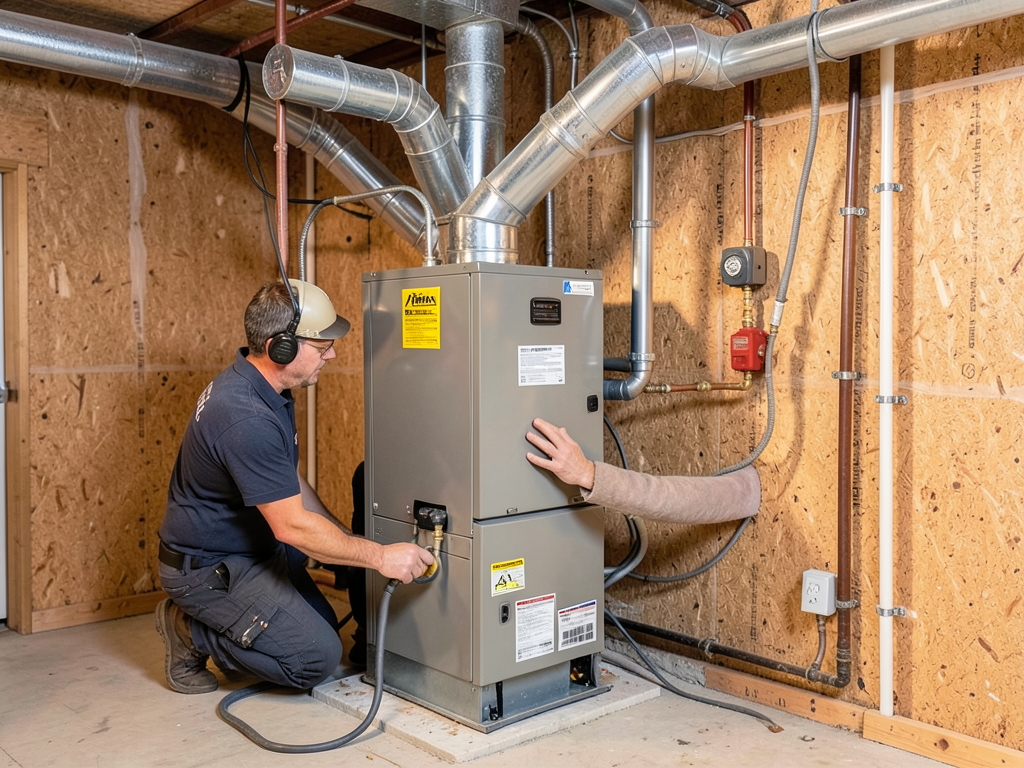
Switching from Oil Heating to a High Efficiency Gas Furnace in Elma
Making the switch from oil heating to a high-efficiency gas furnace in Elma can cut your winter energy bills by up to 30% while providing more consistent heat during Buffalo’s lake-effect snowstorms. The process involves more than swapping out equipment—it requires careful planning around National Fuel gas line installation, Erie County environmental codes, and proper chimney liner upgrades to ensure safe operation. National Fuel.
Why Elma Homeowners Are Choosing Gas Over Oil
Oil prices in Western New York have averaged $4.50 per gallon in recent winters, while natural gas delivers the same heat for roughly $1.50 per therm. That price difference becomes critical when temperatures drop below zero and your furnace runs constantly for days. Gas furnaces also heat up faster and maintain steadier temperatures than oil systems, which can leave rooms feeling drafty during extreme cold snaps. Emergency Furnace Repair in Amherst When Your Heat Goes Out at Night.
Elma’s older homes built between 1960 and 1980 often still rely on oil boilers or furnaces that were state-of-the-art when installed. These systems typically operate at 70-80% efficiency, meaning 20-30% of your fuel dollars go up the chimney as waste heat. Modern condensing gas furnaces achieve 95-98% efficiency by capturing heat from exhaust gases that would otherwise escape.
Golden Nugget: Elma’s frost line depth reaches 42 inches, requiring deeper gas line trenches than in warmer parts of New York State. This affects installation costs and timelines during winter conversions.
The Step-by-Step Conversion Process
Converting from oil to gas involves several coordinated steps that typically take 3-5 days from start to finish. Each phase requires specific permits and inspections to meet Erie County mechanical codes and National Fuel safety standards.
1. Home Energy Assessment and Load Calculation
Before selecting equipment, technicians perform a Manual J load calculation to determine your home’s exact heating requirements. This involves measuring square footage, insulation levels, window types, and air infiltration rates. Many Elma homes have added insulation over the years, which may allow for a smaller furnace than the original oil unit.
During this assessment, we also inspect your existing ductwork for leaks, check electrical service capacity, and evaluate your chimney condition. Oil furnaces produce different combustion byproducts than gas, often requiring chimney liner replacement to prevent moisture damage and carbon monoxide risks.
2. Oil Tank Removal and Environmental Compliance
Underground oil tanks require special handling under New York State Department of Environmental Conservation regulations. Tanks must be pumped dry, cleaned, and either removed or filled with inert material like sand or foam. Any soil contamination found during removal triggers additional testing and cleanup requirements.
Above-ground tanks follow different rules but still require proper disposal through licensed hazardous waste handlers. The tank removal process typically takes 1-2 days and may require coordination with your homeowner’s insurance if contamination is discovered.
Golden Nugget: Erie County requires oil tank decommissioning permits and soil testing for any tank over 10 years old, regardless of visible condition. This protects against groundwater contamination from slow leaks that homeowners often never notice.
3. National Fuel Gas Line Installation
National Fuel determines gas line requirements based on your furnace’s BTU input rating. A typical 100,000 BTU furnace needs a 1-inch gas line, but older homes may require line upsizing from existing 3/4-inch service. The utility company handles the main line installation from the street to your home’s foundation. Ductless AC Installation for Historical Homes in North Buffalo.
Inside your home, licensed HVAC contractors install the branch line to the furnace location, pressure test the system, and coordinate with National Fuel for final connection and meter installation. This phase requires a mechanical permit from Erie County and inspection before the furnace can operate.
4. High-Efficiency Furnace Installation
Modern gas furnaces come in various configurations including single-stage, two-stage, and modulating units. Two-stage furnaces provide better comfort by running at lower capacity most of the time, only switching to high heat during extreme cold. Modulating furnaces adjust output in small increments for maximum efficiency.
Installation includes mounting the unit, connecting gas and electrical supplies, installing condensate drains for high-efficiency models, and setting up thermostat wiring. Condensing furnaces produce acidic condensate that requires proper drainage to prevent pipe corrosion.
Golden Nugget: High-efficiency furnaces produce about one gallon of acidic condensate per 100,000 BTU per hour of operation. This requires a dedicated drain line with proper pitch and trap to prevent sewer gas backup.
5. Chimney Liner Installation and Safety Testing
Oil furnaces operate at higher flue gas temperatures than gas, often allowing masonry chimneys to function without liners. Gas produces cooler, moisture-laden exhaust that can condense inside chimney walls, causing deterioration and carbon monoxide leaks. Most oil-to-gas conversions require stainless steel chimney liners to handle the different combustion characteristics.
After installation, technicians perform combustion analysis to verify proper burner adjustment, check for gas leaks using electronic detectors, and test carbon monoxide levels throughout the home. The system must pass Erie County mechanical inspection before final approval.
Local Codes and Permit Requirements in Elma
Erie County requires mechanical permits for all furnace replacements, with additional permits needed for gas line work and chimney modifications. The permitting process includes plan review to ensure compliance with New York State Uniform Fire Prevention and Building Code and National Fuel safety standards.
National Fuel maintains specific requirements for gas service in Elma, including minimum trench depths of 24 inches in residential areas and protective conduit for lines crossing driveways or sidewalks. The utility company also requires pressure testing to 1.5 times the maximum operating pressure before connecting service.
Golden Nugget: Elma’s 14059 zip code falls under National Fuel’s Western Region service area, which has different gas pressure standards than the Eastern Region serving parts of Erie County. This affects regulator sizing and installation requirements.
Cost Breakdown and Financial Incentives
The total cost of converting from oil to gas in Elma typically ranges from $8,000 to $15,000, depending on the complexity of the installation. This includes equipment, labor, permits, and utility work. Here’s how costs typically break down:
| Component | Typical Cost Range | Notes |
|---|---|---|
| High-Efficiency Furnace | $3,000 – $5,000 | 95%+ AFUE rating |
| Oil Tank Removal | $1,000 – $3,000 | Underground tanks cost more |
| Gas Line Installation | $2,000 – $4,000 | National Fuel portion varies |
| Chimney Liner | $800 – $2,500 | Stainless steel required |
| Permits and Inspections | $500 – $1,000 | Erie County fees |
NYSERDA offers rebates through the EmPower+ program for income-eligible homeowners, covering up to $4,000 of conversion costs. National Fuel also provides rebates of $400-$800 for high-efficiency furnace installations. These incentives can significantly reduce your out-of-pocket expenses. NYSERDA.
Annual operating costs for a gas furnace typically run $800-$1,200 compared to $1,500-$2,500 for oil heat in Elma’s climate. This means most homeowners recoup their investment within 5-7 years through fuel savings alone.
Performance Comparison: Oil vs. Gas in Buffalo Winters
Gas furnaces provide several advantages during Western New York’s extreme weather conditions. They heat up faster than oil systems, reaching full output in 30-60 seconds versus several minutes for oil burners. This quick response time means rooms warm up faster when you return home to a cold house.
Gas systems also maintain more consistent temperatures because they can modulate output based on demand. Oil furnaces typically run at full capacity or shut off completely, creating temperature swings of 3-5 degrees. Gas furnaces with variable-speed blowers can maintain temperatures within 1-2 degrees of the thermostat setting.
During power outages, neither system works without electricity, but gas furnaces require less maintenance and have fewer moving parts that can fail. Oil systems need annual nozzle cleaning, fuel filter replacement, and combustion chamber servicing to maintain efficiency and safety.
Golden Nugget: Buffalo’s average winter temperature of 27°F means gas furnaces run about 2,500 hours annually. At 95% efficiency, a 100,000 BTU gas furnace uses approximately 26,300 cubic feet of natural gas per heating season.
Choosing the Right Equipment for Your Elma Home
Selecting the proper furnace size and features requires understanding your home’s specific needs. Oversized furnaces short-cycle, reducing efficiency and comfort. Undersized units struggle to maintain temperatures during extreme cold.
Two-stage furnaces offer the best balance of efficiency and comfort for most Elma homes. They run at 60-70% capacity during mild weather and automatically increase output during cold snaps. This reduces energy consumption while maintaining even temperatures.
Variable-speed blowers provide additional benefits by running continuously at low speed to filter air and distribute heat evenly. They also operate more quietly than single-speed fans and can improve cooling efficiency if you have central air conditioning.
Consider furnaces with smart thermostat compatibility for remote monitoring and control. These features allow you to adjust temperatures from your phone, track energy usage, and receive maintenance alerts when filters need changing or service is due.
Maintenance and Longevity Considerations
Gas furnaces require annual maintenance to ensure safe and efficient operation. This includes cleaning the burner assembly, checking gas pressure, testing safety controls, and inspecting the heat exchanger for cracks that could leak carbon monoxide.
The average gas furnace lasts 15-20 years with proper maintenance, compared to 20-30 years for oil systems. However, the fuel savings and improved comfort often justify replacement before the end of the equipment’s life.
Filter replacement every 1-3 months depending on your home’s dust levels helps maintain efficiency and indoor air quality. High-efficiency furnaces with variable-speed blowers often include filter change indicators to remind you when service is needed.
Frequently Asked Questions
How long does an oil to gas conversion take?
The complete conversion process typically takes 3-5 days, depending on oil tank removal complexity and gas line installation requirements. Weather can affect outdoor work, especially during winter months. Outdoor Unit Not Spinning.
Do I need to replace my ductwork for a gas furnace?
Most existing ductwork works fine with gas furnaces, but we inspect for leaks and proper sizing. Some homes benefit from duct sealing or minor modifications to optimize airflow and efficiency.
What happens to my old oil tank?
Underground tanks must be removed or filled with inert material. Above-ground tanks are drained and recycled. All work follows DEC regulations and requires proper disposal through licensed handlers.
Can I keep my oil system as backup?
Yes, many homeowners install dual-fuel systems that can switch between oil and gas. This provides backup capability if gas service is interrupted, though it adds complexity and cost.
Are there any tax credits for switching to gas?
Federal tax credits may be available for high-efficiency equipment, and NYSERDA offers rebates through income-eligible programs. Check current year incentives as they change annually.
Ready to Make the Switch?
Converting from oil to gas heating in Elma represents a significant investment in your home’s comfort and efficiency. With proper planning and professional installation, you can enjoy lower energy bills, more reliable heat, and improved indoor air quality for years to come. Finding the Most Reliable Furnace Repair Services in Buffalo.
Call (716) 317-7757 today to schedule your free home energy assessment and learn exactly what your conversion would involve. Our team understands Elma’s specific requirements and can guide you through every step of the process, from permits to final inspection.
Don’t wait until your old oil system fails during a blizzard. Pick up the phone and call (716) 317-7757 before the next cold snap hits. We’ll help you make the switch to efficient, reliable gas heating that keeps your family comfortable all winter long.
{
“@context”: “https://schema.org”,
“@type”: “BlogPosting”,
“headline”: “Switching from Oil Heating to a High Efficiency Gas Furnace in Elma”,
“description”: “Thinking about switching from oil to gas in Elma? Learn the full conversion process, local costs, National Fuel requirements, and available NYSERDA rebates.”,
“wordCount”: 1896,
“datePublished”: “2026-03-16T14:18:00.000Z”,
“dateModified”: “2026-03-16T14:18:00.000Z”,
“inLanguage”: “en-US”,
“mainEntityOfPage”: {
“@type”: “WebPage”,
“@id”: “https://unitedhvacbuffalo.com”
},
“publisher”: {
“@type”: “LocalBusiness”,
“name”: “United HVAC Buffalo”,
“url”: “https://unitedhvacbuffalo.com”
},
“author”: {
“@type”: “Organization”,
“name”: “United HVAC Buffalo”,
“url”: “https://unitedhvacbuffalo.com”
},
“image”: {
“@type”: “ImageObject”,
“url”: “https://unitedhvacbuffalo.com/wp-content/uploads/2026/03/switching-from-oil-heating-to-a-high-efficiency-ga-1.png”
}
}
{
“@context”: “https://schema.org”,
“@type”: “HVACBusiness”,
“name”: “United HVAC Buffalo”,
“url”: “https://unitedhvacbuffalo.com”,
“address”: {
“@type”: “PostalAddress”,
“addressLocality”: “Buffalo”
},
“areaServed”: {
“@type”: “City”,
“name”: “Buffalo”
}
}
{
“@context”: “https://schema.org”,
“@type”: “FAQPage”,
“mainEntity”: [
{
“@type”: “Question”,
“name”: “How long does an oil to gas conversion take?”,
“acceptedAnswer”: {
“@type”: “Answer”,
“text”: “The complete conversion process typically takes 3-5 days, depending on oil tank removal complexity and gas line installation requirements. Weather can affect outdoor work, especially during winter months. Outdoor Unit Not Spinning.”
}
},
{
“@type”: “Question”,
“name”: “Do I need to replace my ductwork for a gas furnace?”,
“acceptedAnswer”: {
“@type”: “Answer”,
“text”: “Most existing ductwork works fine with gas furnaces, but we inspect for leaks and proper sizing. Some homes benefit from duct sealing or minor modifications to optimize airflow and efficiency.”
}
},
{
“@type”: “Question”,
“name”: “What happens to my old oil tank?”,
“acceptedAnswer”: {
“@type”: “Answer”,
“text”: “Underground tanks must be removed or filled with inert material. Above-ground tanks are drained and recycled. All work follows DEC regulations and requires proper disposal through licensed handlers.”
}
},
{
“@type”: “Question”,
“name”: “Can I keep my oil system as backup?”,
“acceptedAnswer”: {
“@type”: “Answer”,
“text”: “Yes, many homeowners install dual-fuel systems that can switch between oil and gas. This provides backup capability if gas service is interrupted, though it adds complexity and cost.”
}
},
{
“@type”: “Question”,
“name”: “Are there any tax credits for switching to gas?”,
“acceptedAnswer”: {
“@type”: “Answer”,
“text”: “Federal tax credits may be available for high-efficiency equipment, and NYSERDA offers rebates through income-eligible programs. Check current year incentives as they change annually.”
}
},
{
“@type”: “Question”,
“name”: “Ready to Make the Switch?”,
“acceptedAnswer”: {
“@type”: “Answer”,
“text”: “Converting from oil to gas heating in Elma represents a significant investment in your home’s comfort and efficiency. With proper planning and professional installation, you can enjoy lower energy bills, more reliable heat, and improved indoor air quality for years to come. Finding the Most Reliable Furnace Repair Services in Buffalo.”
}
}
]
}
{
“@context”: “https://schema.org”,
“@type”: “BreadcrumbList”,
“itemListElement”: [
{
“@type”: “ListItem”,
“position”: 1,
“name”: “Home”,
“item”: “https://unitedhvacbuffalo.com”
},
{
“@type”: “ListItem”,
“position”: 2,
“name”: “Blog”,
“item”: “https://unitedhvacbuffalo.com/blog”
},
{
“@type”: “ListItem”,
“position”: 3,
“name”: “Switching from Oil Heating to a High Efficiency Gas Furnace in Elma”
}
]
}
{
“@context”: “https://schema.org”,
“@type”: “Service”,
“serviceType”: “HVAC”,
“provider”: {
“@type”: “LocalBusiness”,
“name”: “United HVAC Buffalo”,
“url”: “https://unitedhvacbuffalo.com”
},
“areaServed”: {
“@type”: “City”,
“name”: “Buffalo”
},
“description”: “Thinking about switching from oil to gas in Elma? Learn the full conversion process, local costs, National Fuel requirements, and available NYSERDA rebates.”
}