
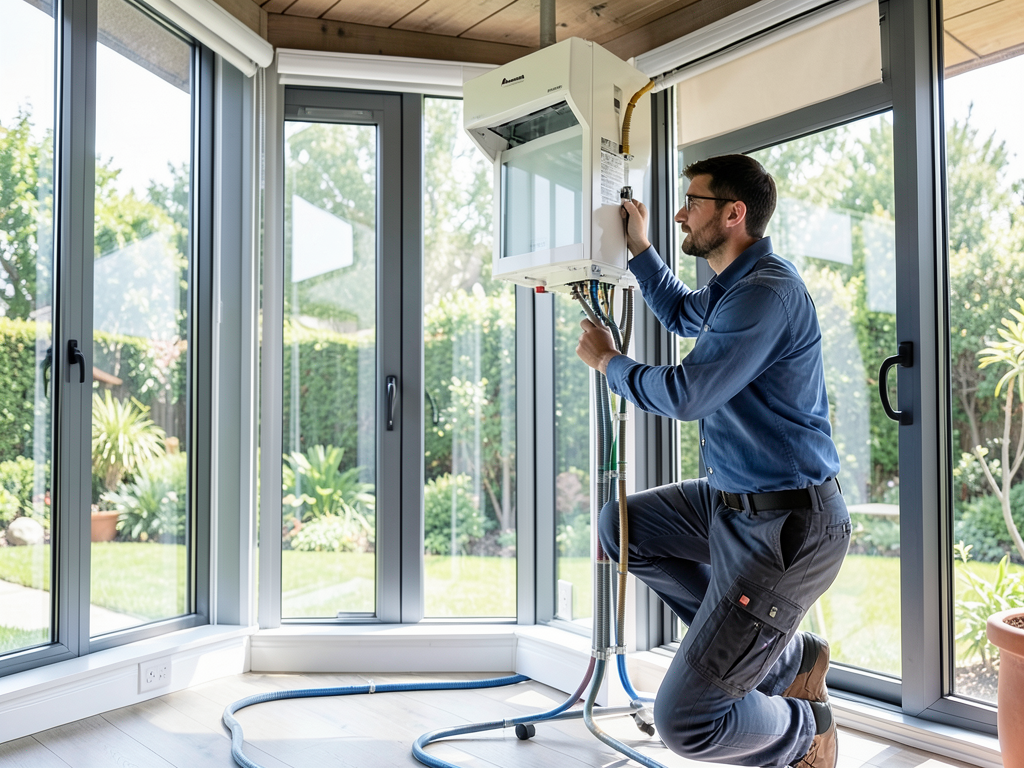
The Best Way to Heat and Cool Your Year Round Sunroom in Amherst
Sunrooms in Amherst, NY face unique climate challenges that make year-round comfort difficult without proper HVAC solutions. The combination of large glass surfaces, exposure to Western New York’s extreme seasonal swings, and the specific thermal characteristics of Amherst homes creates a perfect storm for temperature control problems. During summer months, solar heat gain through expansive windows can push temperatures well above 90 degrees Fahrenheit, while winter’s sub-zero cold makes these spaces nearly unusable without dedicated heating systems.
The key to solving sunroom HVAC challenges lies in understanding the specific heat load calculations required for glass-dominated spaces and selecting equipment that can handle both the intense summer heat and brutal winter cold that Buffalo-area homes experience. A properly designed sunroom HVAC system needs to account for solar orientation, glass type, insulation levels, and the unique thermal envelope that differs significantly from the main home structure. HVAC Buffalo.
Why Standard HVAC Systems Fail in Amherst Sunrooms
Traditional central heating and cooling systems struggle with sunroom applications for several critical reasons. First, the glass walls and ceiling create massive heat gain during summer and heat loss during winter that far exceeds the capacity of standard ductwork designed for insulated walls. Second, sunrooms are often added as extensions to existing homes after construction, making it difficult or impossible to extend existing ductwork without major renovations. Third, the thermal mass of a sunroom differs dramatically from the main living areas, causing it to heat and cool at different rates than the rest of the home.
Building codes in Amherst and throughout Erie County require specific considerations for sunroom additions. The NYS Uniform Fire Prevention and Building Code mandates proper mechanical ventilation and temperature control for habitable spaces, including sunrooms used year-round. This means simply opening windows during summer or using portable heaters during winter does not meet code requirements for a four-season room.
Top HVAC Solutions for Amherst Sunrooms
Several HVAC options exist for sunroom climate control, each with distinct advantages for Buffalo’s climate conditions. The right choice depends on your specific sunroom configuration, usage patterns, and budget considerations. Choosing the Right HVAC Contractor for Your West Seneca Home Renovation.
Ductless Mini-Split Systems: The Gold Standard
Ductless mini-split systems have emerged as the preferred solution for Amherst sunrooms due to their exceptional efficiency and ability to handle extreme temperature ranges. These systems consist of an outdoor compressor unit connected to one or more indoor air handlers mounted on walls or ceilings. For Buffalo’s climate, Mitsubishi Electric and Daikin offer cold-climate heat pumps capable of maintaining heating capacity down to -13 degrees Fahrenheit, well within the range of typical Amherst winter conditions. Ductless AC Installation for Historical Homes in North Buffalo.
The installation process involves mounting the indoor unit, running refrigerant lines through a small hole in the wall, and placing the outdoor condenser on a proper pad that meets local frost line requirements. Amherst’s heavy clay soil and high water table in certain areas require specific pad preparation to prevent settling and ensure proper drainage around the outdoor unit. Outdoor Unit Not Spinning.
PTAC Units: A Budget-Friendly Alternative
Packaged Terminal Air Conditioners (PTAC) offer a more economical solution for smaller sunrooms, though they typically provide less efficiency than mini-splits. These through-wall units combine heating and cooling in a single package and work well for sunrooms under 300 square feet. However, PTAC units generally have lower SEER ratings and may struggle during extreme cold snaps common in Western New York.
Installation requires cutting an exterior wall opening and ensuring proper electrical service, which may need upgrading in older Amherst homes built before modern electrical codes were established. The units also protrude into the room space, which some homeowners find less aesthetically pleasing than the flush-mounted mini-split air handlers.
Extending Existing Ductwork: When It Works
Extending existing HVAC ductwork to a sunroom can be cost-effective if the main system has sufficient capacity and the sunroom is close to existing ducts. However, this approach requires careful load calculations to ensure the main system can handle the additional square footage without compromising comfort in other areas of the home. Many Amherst homes, particularly older constructions in Snyder and Eggertsville, have HVAC systems that are already operating at maximum capacity.
The challenge with ductwork extensions lies in maintaining proper airflow and temperature balance. Long duct runs to sunrooms can result in significant heat loss before the air reaches the space, reducing efficiency and comfort. Additionally, retrofitting ductwork into a finished home often requires extensive demolition and reconstruction work.
Radiant Floor Heating: Luxury Comfort
Electric or hydronic radiant floor heating provides exceptional comfort for sunroom floors, especially when combined with other heating sources. This system involves installing heating elements beneath the floor surface, creating warm floors that feel comfortable even when air temperatures are cooler. For Amherst sunrooms, electric radiant systems are often more practical than hydronic systems due to the lower installation complexity and ability to zone heating independently.
Radiant heating works particularly well in sunrooms with tile or stone flooring, which can become uncomfortably cold during Buffalo’s winter months. However, radiant systems alone typically cannot provide adequate cooling, requiring a separate air conditioning solution for summer comfort.
Amherst-Specific Climate Factors Affecting Sunroom HVAC
Western New York’s unique climate creates specific challenges for sunroom HVAC systems that homeowners must understand when selecting equipment. Amherst experiences lake-effect snow patterns that can dump several feet of snow in a single storm, creating additional load on heating systems and potential access issues for outdoor equipment. The high humidity levels during summer months, often exceeding 80% in July and August, require systems with robust dehumidification capabilities.
The freeze-thaw cycles common in Amherst can cause ground movement that affects outdoor unit pads and refrigerant line stability. Proper installation requires understanding local frost line depths, which in Erie County typically extend to 42 inches below grade. This impacts how deep outdoor unit pads must be secured and whether additional foundation work is needed.
Amherst’s position in the transition zone between the city’s lake-effect snow belt and the slightly milder Southtowns climate means HVAC systems must handle rapid temperature swings. A typical January day might see temperatures ranging from -10 to 35 degrees Fahrenheit, requiring equipment with wide operating ranges and reliable cold-weather performance. Finding the Most Reliable Furnace Repair Services in Buffalo.
Understanding BTU Load Calculations for Sunrooms
Proper HVAC sizing for sunrooms requires detailed heat load calculations that account for factors standard room calculations overlook. The primary difference lies in the solar heat gain coefficient (SHGC) of glass walls, which can contribute hundreds of additional BTUs per hour compared to insulated walls. A typical 200-square-foot sunroom with floor-to-ceiling glass might require 12,000-18,000 BTUs of cooling capacity, significantly more than a similarly sized room with standard construction.
Heat loss calculations must also account for the lower R-values of sunroom construction. While a standard exterior wall might have an R-value of 13-19, sunroom glass typically provides only R-2 to R-4 insulation value. This means heat escapes much more rapidly during cold weather, requiring heating systems with higher output capacity than initially estimated.
The orientation of your sunroom significantly impacts these calculations. South-facing sunrooms in Amherst receive maximum solar exposure during winter months, potentially reducing heating requirements but increasing cooling loads during summer. East-facing rooms capture morning sun, while west-facing rooms face intense afternoon heat that can make late-day cooling particularly challenging.
Permit Requirements and Building Codes in Amherst
Installing HVAC equipment in a sunroom addition requires proper permits from the Town of Amherst Building Department. The permit process ensures installations meet current mechanical codes and energy efficiency standards. For sunroom HVAC projects, you’ll need to submit detailed mechanical plans showing equipment locations, refrigerant line routing, and electrical connections.
The NYS Energy Code, which Amherst enforces, requires specific efficiency standards for new HVAC equipment. As of 2026, heat pumps must meet minimum SEER2 ratings of 15 for cooling and 7.5 HSPF2 for heating. These standards ensure your new system provides adequate efficiency to offset the additional energy consumption of conditioning a glass-dominated space.
Electrical permits are also required for most sunroom HVAC installations, particularly for ductless mini-splits that need dedicated 220-volt circuits. Amherst’s building department reviews these permits to ensure proper grounding, circuit protection, and compliance with National Electrical Code requirements for HVAC equipment.
Installation Process and Timeline
A typical sunroom HVAC installation in Amherst follows a systematic process that ensures proper system performance and code compliance. The first step involves a comprehensive site evaluation where technicians assess your sunroom’s dimensions, existing infrastructure, and specific heating and cooling requirements. This evaluation includes checking electrical service capacity, measuring available outdoor space for equipment placement, and evaluating the sunroom’s construction for proper mounting surfaces.
System design comes next, where HVAC professionals calculate the exact equipment size needed based on heat load analysis, select appropriate equipment models, and plan the installation configuration. For ductless systems, this includes determining optimal indoor unit locations for even air distribution and planning refrigerant line routing that minimizes visual impact while maintaining efficiency.
The installation itself typically requires one to three days depending on system complexity. Indoor unit mounting involves securing brackets to wall studs or ceiling joists, ensuring proper level installation for optimal operation. Refrigerant line installation requires careful measurement and cutting, with lines typically pre-charged at the factory to minimize on-site handling of refrigerants.
Electrical connections must be completed by licensed electricians familiar with HVAC requirements. This includes installing dedicated circuits with appropriate overcurrent protection and ensuring proper grounding for both indoor and outdoor units. The final commissioning process involves testing system operation, verifying refrigerant charge levels, and calibrating thermostats for optimal performance.
Energy Efficiency and Cost Considerations
Modern sunroom HVAC systems offer significant energy efficiency improvements over older equipment, with potential utility savings that can offset installation costs over time. High-efficiency heat pumps with SEER2 ratings above 18 can reduce cooling costs by 30-40% compared to standard efficiency units, while advanced inverter technology provides precise temperature control that eliminates the temperature swings common in sunrooms.
The initial investment for sunroom HVAC varies significantly based on system type and capacity. Basic PTAC units might cost $1,500-$2,500 installed, while high-end ductless mini-split systems with cold-climate heat pumps typically range from $4,000-$8,000. The higher upfront cost of premium systems often pays for itself through lower operating costs and better comfort, particularly important in Amherst’s climate where equipment runs frequently throughout the year.
Energy efficiency rebates and incentives can significantly reduce the net cost of new HVAC equipment. NYSERDA offers rebates for high-efficiency heat pump installations, with amounts varying based on equipment efficiency ratings and installation timing. National Fuel Gas also provides incentives for customers upgrading to high-efficiency electric heat pumps, supporting the state’s clean energy initiatives. NYSERDA heat pump rebates and incentives.
Maintenance Requirements for Optimal Performance
Regular maintenance ensures your sunroom HVAC system operates efficiently and reliably throughout its service life. For ductless mini-splits, this includes cleaning or replacing air filters every one to three months depending on usage and environmental conditions. Amherst’s high pollen counts during spring and summer can clog filters more quickly than in other regions, reducing system efficiency and air quality.
Outdoor unit maintenance involves keeping the condenser coils clean and ensuring proper clearance around the unit for adequate airflow. This is particularly important in Amherst where falling leaves in autumn and snow accumulation in winter can obstruct outdoor equipment. The outdoor pad should be checked annually for settling or movement that could stress refrigerant lines or electrical connections.
Professional maintenance services should be scheduled annually before the cooling season begins. This service includes checking refrigerant levels, testing electrical components, cleaning coils, and verifying thermostat operation. For heat pump systems, the reversing valve operation should be tested to ensure proper switching between heating and cooling modes.
Case Study: Snyder Sunroom Transformation
A recent project in the Snyder neighborhood demonstrates the impact of proper sunroom HVAC design. The homeowners had a 250-square-foot sunroom addition that was unusable for six months of the year due to temperature extremes. Their existing window units provided inadequate cooling during summer and no heating during winter, making the space a seasonal liability rather than an asset.
The solution involved installing a Mitsubishi multi-zone mini-split system with a single outdoor unit serving two indoor air handlers. The system included a hyper-heat outdoor unit capable of maintaining 100% heating capacity down to -13 degrees Fahrenheit, essential for Snyder’s winter conditions. The installation required careful planning to route refrigerant lines through the existing home’s wall cavity while maintaining the room’s aesthetic appeal.
Post-installation testing showed the system maintained consistent temperatures between 72-78 degrees Fahrenheit year-round, with humidity levels kept between 40-50% even during the most humid August days. The homeowners reported using the space daily throughout the year, effectively increasing their usable living area by 20% without the temperature limitations that previously restricted access.
Choosing the Right HVAC Contractor in Amherst
Selecting an HVAC contractor for your sunroom project requires evaluating several critical factors beyond just price quotes. Experience with sunroom-specific installations is essential, as these projects require different approaches than standard room HVAC work. Look for contractors who understand the unique thermal characteristics of glass-dominated spaces and can demonstrate experience with similar projects in the Amherst area.
Proper licensing and insurance are non-negotiable requirements. In New York, HVAC contractors must hold valid state licenses and carry adequate liability insurance. Ask to see current licenses and verify insurance coverage before signing any contracts. Additionally, check for manufacturer certifications, particularly for premium brands like Mitsubishi Electric, which offers specialized training for their most efficient equipment.
Local knowledge provides significant advantages for sunroom HVAC projects. Contractors familiar with Amherst’s specific building codes, permit requirements, and climate conditions can navigate the installation process more efficiently and avoid common pitfalls that out-of-area companies might encounter. They also understand local utility incentive programs and can help maximize available rebates for energy-efficient equipment.
Future-Proofing Your Sunroom HVAC Investment
Technology advances rapidly in the HVAC industry, and planning for future upgrades can extend your system’s useful life and improve long-term performance. Smart thermostat integration allows remote monitoring and control of your sunroom climate, providing convenience and potential energy savings through automated scheduling and learning algorithms that adapt to your usage patterns.
Consider installing slightly oversized electrical service during initial construction, even if your current system doesn’t require it. This future-proofs the installation for potential upgrades to higher-capacity equipment or the addition of supplementary heating sources like electric fireplaces or heated floors. The cost difference between minimum and slightly oversized electrical service is often minimal compared to the expense of upgrading later.
Equipment selection should also consider long-term availability of replacement parts and manufacturer support. Premium brands typically offer better warranty coverage and longer production runs for specific models, making future repairs more straightforward and cost-effective. This is particularly important for specialized equipment like cold-climate heat pumps that may not be as widely available as standard models.
Common Mistakes to Avoid
Several common errors can compromise sunroom HVAC performance and lead to costly corrections. Undersizing equipment is perhaps the most frequent mistake, often resulting from using standard room calculation methods that don’t account for the high solar heat gain of glass walls. Always insist on detailed heat load calculations specific to your sunroom’s configuration and orientation.
Improper equipment placement can significantly impact system efficiency and longevity. Outdoor units placed in areas with poor drainage or insufficient clearance will experience reduced performance and potentially premature failure. Similarly, indoor units mounted in locations with restricted airflow or direct sunlight exposure may not provide even temperature distribution throughout the space.
Neglecting humidity control is another critical oversight, particularly for Amherst’s humid summer climate. Systems without adequate dehumidification capacity can leave sunrooms feeling clammy and uncomfortable even when temperatures are technically within the desired range. This is especially problematic for sunrooms used as home offices or entertainment spaces where comfort directly impacts usability.
Making the Right Choice for Your Amherst Home
The best sunroom HVAC solution for your Amherst home depends on your specific needs, budget, and the room’s intended use. For homeowners seeking maximum comfort and efficiency, high-end ductless mini-split systems with cold-climate heat pumps provide the most comprehensive solution, handling both extreme summer heat and brutal winter cold while maintaining excellent energy efficiency.
Budget-conscious homeowners might find PTAC units or properly sized window air conditioners sufficient for moderate climate control, though these options typically provide less comfort during temperature extremes. Extending existing ductwork works well when properly engineered but often proves more expensive than expected due to the complexity of retrofitting older homes.
Regardless of the system chosen, proper installation by experienced professionals familiar with Amherst’s specific conditions is essential for optimal performance. The investment in quality equipment and expert installation pays dividends through improved comfort, lower energy bills, and the ability to use your sunroom year-round as intended.
Frequently Asked Questions
What size HVAC system do I need for my sunroom?
The required HVAC capacity depends on your sunroom’s dimensions, glass area, orientation, and local climate conditions. A professional heat load calculation considering solar heat gain, insulation values, and Amherst’s temperature extremes will determine the exact BTU requirements, typically ranging from 9,000 to 24,000 BTUs for most residential sunrooms.
How much does sunroom HVAC installation cost in Amherst?
Installation costs vary widely based on system type and complexity. Basic PTAC units start around $1,500-$2,500 installed, while high-end ductless mini-split systems typically range from $4,000-$8,000. Factors affecting cost include equipment capacity, installation difficulty, and whether electrical upgrades are needed.
Can I install HVAC in my sunroom myself?
DIY HVAC installation is not recommended and may violate local building codes and manufacturer warranties. Sunroom HVAC systems require specialized knowledge of refrigerant handling, electrical connections, and proper sizing calculations. Professional installation ensures code compliance, warranty protection, and optimal system performance.
How long does sunroom HVAC installation take?
Most sunroom HVAC installations require one to three days depending on system complexity. Simple PTAC replacements might be completed in a single day, while ductless mini-split installations typically require two days for proper equipment mounting, line installation, and system commissioning.
What permits are required for sunroom HVAC in Amherst?
The Town of Amherst requires mechanical permits for all new HVAC installations, including sunroom equipment. Electrical permits are also typically required for the dedicated circuits needed by most modern HVAC systems. Your contractor should handle permit acquisition as part of the installation process.
How can I improve my sunroom’s energy efficiency?
Beyond proper HVAC equipment, energy efficiency improvements include upgrading to low-E glass, adding insulation to any accessible cavities, using thermal curtains during extreme weather, and ensuring proper weatherstripping around doors and windows. These measures reduce the load on your HVAC system and lower operating costs.
Get Professional Sunroom HVAC Assessment
Ready to transform your sunroom from a seasonal space to year-round comfort? United HVAC Buffalo specializes in custom sunroom HVAC solutions throughout Amherst and the surrounding Western New York communities. Our NATE-certified technicians understand the unique challenges of conditioning glass-dominated spaces in Buffalo’s extreme climate.
We provide comprehensive heat load calculations, permit handling, and professional installation of all major HVAC system types. Whether you need a high-efficiency ductless mini-split system or are exploring more economical options, we’ll help you select the perfect solution for your specific needs and budget.
Call (716) 317-7757 today to schedule your free sunroom HVAC assessment. Our team will evaluate your current setup, discuss your comfort goals, and provide detailed recommendations with transparent pricing. Don’t let another season pass with an uncomfortable sunroom – take the first step toward year-round enjoyment of your favorite space.
Pick up the phone and call (716) 317-7757 before the next heat wave or cold snap hits. Your perfect sunroom climate is just one call away. For more information, visit U.S. Department of Energy air conditioning guide.
{
“@context”: “https://schema.org”,
“@type”: “BlogPosting”,
“headline”: “The Best Way to Heat and Cool Your Year Round Sunroom in Amherst”,
“description”: “Discover expert HVAC solutions for year-round sunroom comfort in Amherst, NY. Learn about ductless mini-splits, heat pumps, and local climate challenges that affect your sunroom temperature.”,
“wordCount”: 3311,
“datePublished”: “2026-04-23T15:24:00.000Z”,
“dateModified”: “2026-04-23T15:24:00.000Z”,
“inLanguage”: “en-US”,
“mainEntityOfPage”: {
“@type”: “WebPage”,
“@id”: “https://unitedhvacbuffalo.com”
},
“publisher”: {
“@type”: “LocalBusiness”,
“name”: “United HVAC Buffalo”,
“url”: “https://unitedhvacbuffalo.com”
},
“author”: {
“@type”: “Organization”,
“name”: “United HVAC Buffalo”,
“url”: “https://unitedhvacbuffalo.com”
},
“image”: {
“@type”: “ImageObject”,
“url”: “https://unitedhvacbuffalo.com/wp-content/uploads/2026/03/the-best-way-to-heat-and-cool-your-year-round-sunr-1.png”
}
}
{
“@context”: “https://schema.org”,
“@type”: “HVACBusiness”,
“name”: “United HVAC Buffalo”,
“url”: “https://unitedhvacbuffalo.com”,
“address”: {
“@type”: “PostalAddress”,
“addressLocality”: “Buffalo”
},
“areaServed”: {
“@type”: “City”,
“name”: “Buffalo”
}
}
{
“@context”: “https://schema.org”,
“@type”: “FAQPage”,
“mainEntity”: [
{
“@type”: “Question”,
“name”: “What size HVAC system do I need for my sunroom?”,
“acceptedAnswer”: {
“@type”: “Answer”,
“text”: “The required HVAC capacity depends on your sunroom’s dimensions, glass area, orientation, and local climate conditions. A professional heat load calculation considering solar heat gain, insulation values, and Amherst’s temperature extremes will determine the exact BTU requirements, typically ranging from 9,000 to 24,000 BTUs for most residential sunrooms.”
}
},
{
“@type”: “Question”,
“name”: “How much does sunroom HVAC installation cost in Amherst?”,
“acceptedAnswer”: {
“@type”: “Answer”,
“text”: “Installation costs vary widely based on system type and complexity. Basic PTAC units start around $1,500-$2,500 installed, while high-end ductless mini-split systems typically range from $4,000-$8,000. Factors affecting cost include equipment capacity, installation difficulty, and whether electrical upgrades are needed.”
}
},
{
“@type”: “Question”,
“name”: “Can I install HVAC in my sunroom myself?”,
“acceptedAnswer”: {
“@type”: “Answer”,
“text”: “DIY HVAC installation is not recommended and may violate local building codes and manufacturer warranties. Sunroom HVAC systems require specialized knowledge of refrigerant handling, electrical connections, and proper sizing calculations. Professional installation ensures code compliance, warranty protection, and optimal system performance.”
}
},
{
“@type”: “Question”,
“name”: “How long does sunroom HVAC installation take?”,
“acceptedAnswer”: {
“@type”: “Answer”,
“text”: “Most sunroom HVAC installations require one to three days depending on system complexity. Simple PTAC replacements might be completed in a single day, while ductless mini-split installations typically require two days for proper equipment mounting, line installation, and system commissioning.”
}
},
{
“@type”: “Question”,
“name”: “What permits are required for sunroom HVAC in Amherst?”,
“acceptedAnswer”: {
“@type”: “Answer”,
“text”: “The Town of Amherst requires mechanical permits for all new HVAC installations, including sunroom equipment. Electrical permits are also typically required for the dedicated circuits needed by most modern HVAC systems. Your contractor should handle permit acquisition as part of the installation process.”
}
},
{
“@type”: “Question”,
“name”: “How can I improve my sunroom’s energy efficiency?”,
“acceptedAnswer”: {
“@type”: “Answer”,
“text”: “Beyond proper HVAC equipment, energy efficiency improvements include upgrading to low-E glass, adding insulation to any accessible cavities, using thermal curtains during extreme weather, and ensuring proper weatherstripping around doors and windows. These measures reduce the load on your HVAC system and lower operating costs.”
}
}
]
}
{
“@context”: “https://schema.org”,
“@type”: “BreadcrumbList”,
“itemListElement”: [
{
“@type”: “ListItem”,
“position”: 1,
“name”: “Home”,
“item”: “https://unitedhvacbuffalo.com”
},
{
“@type”: “ListItem”,
“position”: 2,
“name”: “Blog”,
“item”: “https://unitedhvacbuffalo.com/blog”
},
{
“@type”: “ListItem”,
“position”: 3,
“name”: “The Best Way to Heat and Cool Your Year Round Sunroom in Amherst”
}
]
}
{
“@context”: “https://schema.org”,
“@type”: “Service”,
“serviceType”: “HVAC”,
“provider”: {
“@type”: “LocalBusiness”,
“name”: “United HVAC Buffalo”,
“url”: “https://unitedhvacbuffalo.com”
},
“areaServed”: {
“@type”: “City”,
“name”: “Buffalo”
},
“description”: “Discover expert HVAC solutions for year-round sunroom comfort in Amherst, NY. Learn about ductless mini-splits, heat pumps, and local climate challenges that affect your sunroom temperature.”
}