
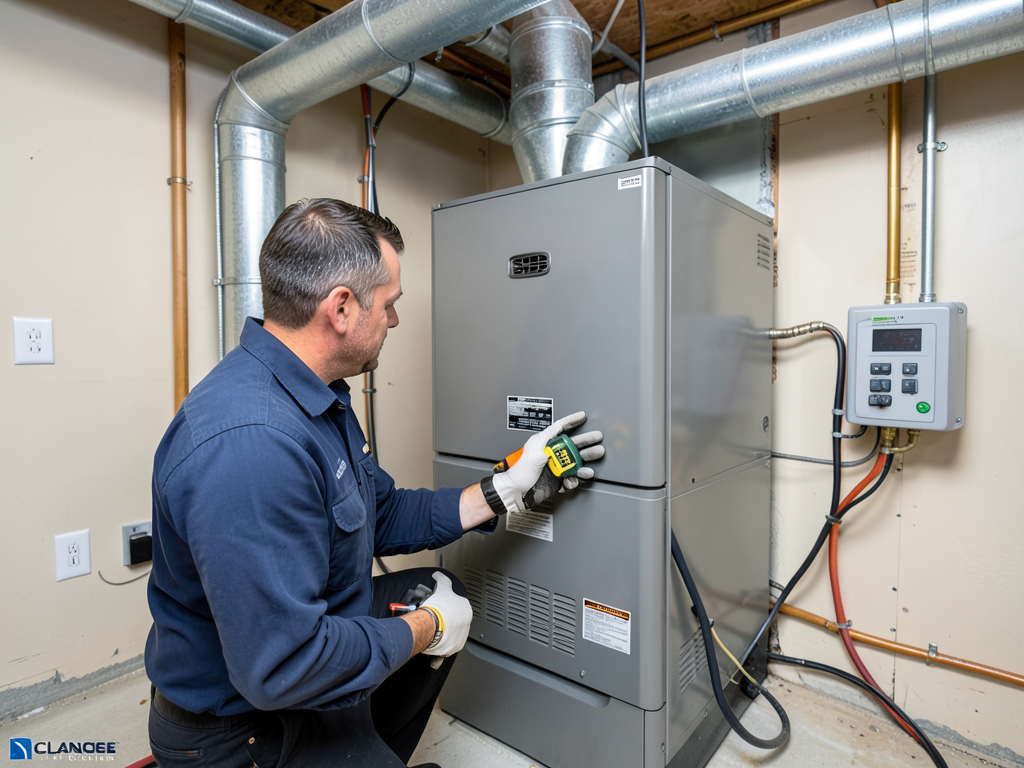
Why New Homes in Clarence Center Still Struggle with Basement Humidity
New construction in Clarence Center comes with an unexpected problem: persistent basement humidity. While the exterior looks perfect, the basement often feels damp and clammy months after move-in. This happens because modern building techniques create tight envelopes that trap moisture inside, and the local climate pushes even more water vapor into your home.
The concrete foundation itself releases thousands of gallons of water during the curing process. A typical 2,000-square-foot basement slab contains about 800 gallons of water mixed into the concrete. As this water evaporates over 12 to 24 months, it raises basement humidity levels significantly. Combine this with Clarence Center’s high summer dew points that regularly exceed 65 degrees Fahrenheit, and you have a recipe for moisture problems that no new homeowner expects.
Understanding why your new basement feels humid is the first step to fixing it. The solutions go beyond running a portable dehumidifier. They require understanding building science, local climate patterns, and the specific challenges of Clarence Center’s soil conditions.
The Concrete Curing Process Creates Hidden Moisture
When concrete is poured, water becomes chemically bound in the hydration process. This water doesn’t just disappear. It slowly migrates to the surface as vapor over many months. The process is called concrete curing, and it’s essential for strength but problematic for indoor air quality.
A new foundation releases moisture at a rate of about 0.2 to 0.5 gallons per square foot during the first year. For a 1,200-square-foot basement, that’s 240 to 600 gallons of water vapor entering your indoor air. This moisture has nowhere to go in a tightly sealed modern home.
Clarence Center’s soil composition makes this worse. The area sits on heavy clay soil that drains slowly and holds moisture against foundation walls. When summer rains saturate this clay, hydrostatic pressure pushes water vapor through concrete walls even when there’s no liquid water intrusion.
Building codes require vapor barriers under basement slabs, but many Clarence Center homes were built during the recent construction boom when inspection backlogs meant some details were missed. Without a proper vapor barrier, moisture migration from the soil adds to the concrete curing problem.
Buffalo’s Climate Pushes Humidity Higher
Western New York’s climate creates unique challenges for basement humidity control. Summer dew points in Buffalo regularly reach 65 to 70 degrees Fahrenheit, which is considered very humid. When outdoor air at these dew points enters a cool basement, condensation forms on cold surfaces. HVAC Buffalo.
Clarence Center experiences lake-effect moisture patterns that intensify this problem. Cool air masses moving across Lake Erie pick up water vapor, then drop it as humidity when they reach inland areas. This creates a moisture cycle that affects basements for months.
Winter presents the opposite problem. When you heat your home, warm air rises and creates negative pressure in the basement. This draws in cold, moist outside air through any gaps in the foundation. The moisture in this air condenses when it hits cold basement walls.
The temperature differential between seasons in Clarence Center can be extreme. Summer temperatures often exceed 85 degrees while winter nights drop below zero. This 100-degree swing causes foundation materials to expand and contract, creating micro-cracks that allow moisture exchange.
According to the National Weather Service, Buffalo averages 40 inches of annual precipitation, with summer thunderstorms delivering most of this moisture in concentrated bursts. These storms saturate soil quickly, overwhelming drainage systems and increasing basement humidity.
Ideal Basement Humidity Levels for Finished Spaces
Maintaining proper humidity levels protects your basement investment and prevents health hazards. The ideal relative humidity range for a finished basement is 45% to 55%. Below 45% creates uncomfortable dryness and static electricity. Above 55% promotes mold growth and wood rot.
At 60% relative humidity, mold spores begin to germinate on organic materials like wood framing, paper-faced drywall, and carpet padding. Many Clarence Center homeowners discover this too late when they notice musty odors or see black spots on baseboards.
Wood framing in basements should maintain moisture content below 16% to prevent rot. At 70% relative humidity, wood can absorb enough moisture to reach this critical threshold within weeks. This is especially concerning in new homes where framing is still drying out.
High humidity also damages mechanical systems. Excess moisture corrodes electrical connections, reduces HVAC efficiency, and creates ideal conditions for dust mites. These microscopic creatures thrive at humidity levels above 50% and can trigger allergies and asthma.
The Environmental Protection Agency recommends using dehumidifiers that can maintain consistent humidity levels rather than relying on portable units that run intermittently. Whole-house dehumidification systems provide better control and energy efficiency.
Mechanical Solutions Beyond Portable Dehumidifiers
Portable dehumidifiers handle small spaces but struggle with the moisture load in new basements. A 70-pint portable unit might remove 70 pints of water per day, but a new basement can produce 100 pints or more during peak curing periods.
Whole-house dehumidification systems connect to your HVAC equipment and can remove 100 to 150 pints of water per day continuously. These systems maintain consistent humidity levels and integrate with your existing ductwork for even distribution.
Energy Recovery Ventilators (ERVs) provide another solution by exchanging stale indoor air with fresh outdoor air while transferring moisture between the airstreams. This prevents your basement from becoming a moisture trap while maintaining energy efficiency. Outdoor Unit Not Spinning.
Proper HVAC sizing is critical. Many new homes in Clarence Center have oversized air conditioners that cool quickly but don’t run long enough to remove moisture. An undersized system runs constantly but may not cool adequately. Both scenarios lead to high humidity.
According to ASHRAE Standard 62.2, new homes need mechanical ventilation to maintain indoor air quality. This standard recommends 0.35 air changes per hour or one cubic foot per minute per square foot of floor area, whichever is greater. ASHRAE Standard 62.2.
Smart humidity controls can automate the process. These devices monitor basement humidity levels and activate dehumidification equipment only when needed, reducing energy consumption while maintaining optimal conditions.
Foundation Seepage vs. Construction Moisture
Distinguishing between normal construction moisture and foundation problems saves homeowners from unnecessary repairs. Construction moisture appears as uniform dampness across basement surfaces and persists for 12 to 24 months. Foundation seepage shows as localized wet spots, especially after rain.
Hydrostatic pressure from saturated soil forces water through concrete pores. This creates damp areas near foundation walls, particularly after heavy rainfall or rapid snowmelt. The water often appears as damp streaks or small puddles in corners and along wall-floor junctions.
Condensation differs from both. It appears on cold surfaces when warm, humid air contacts them. You’ll see water droplets on metal pipes, ductwork, or cold water supply lines. Condensation typically occurs during summer months when air conditioning creates cold surfaces.
A simple diagnostic test helps identify the moisture source. Tape a 2-foot square piece of plastic sheeting to the basement wall. If water droplets form on the outside of the plastic after 24 hours, you have condensation. If the concrete behind the plastic darkens, moisture is migrating through the wall.
Foundation cracks wider than 1/8 inch often indicate structural movement and can allow significant water intrusion. Hairline cracks are normal in new construction as concrete cures and shrinks. Monitor these cracks for changes in width or length.
According to the International Residential Code Section R406, foundations in areas with high water tables require drainage systems. Clarence Center’s clay soil and proximity to water bodies often create conditions that meet this requirement.
Preventive Measures for New Homeowners
Taking action before humidity problems develop saves time and money. Start by ensuring your builder installed proper vapor barriers under the slab and exterior foundation waterproofing. These barriers prevent moisture migration from soil into your basement.
Grade the soil around your foundation so it slopes away from the house at 1/2 inch per foot for at least 6 feet. This prevents surface water from pooling against foundation walls and reduces hydrostatic pressure.
Clean gutters and downspouts regularly. Clogged gutters cause water to overflow and saturate soil near the foundation. Extend downspouts at least 5 feet from the house to direct water away from the basement.
Install a sump pump if your lot has poor drainage or sits in a low area. Clarence Center’s flat terrain and clay soil create conditions where water can accumulate around foundations even with proper grading.
According to the National Association of Home Builders, new homes should include a dedicated basement dehumidifier in the HVAC design. This equipment should be sized for the specific moisture load of your basement rather than using generic sizing charts.
Test your basement’s relative humidity monthly using a hygrometer. Document readings to identify patterns and determine if your moisture control measures are effective. Humidity levels above 60% for extended periods indicate a need for additional dehumidification.
Consider installing a whole-house humidifier/dehumidifier system that integrates with your HVAC equipment. These systems provide year-round humidity control and can reduce energy costs by allowing you to set higher cooling temperatures while maintaining comfort.
When to Call a Professional
Some humidity problems require professional diagnosis and equipment. Call an HVAC specialist if your basement consistently measures above 55% relative humidity despite running a portable dehumidifier, or if you notice musty odors, condensation on windows, or visible mold growth.
Foundation specialists should evaluate any water intrusion through walls or floors, especially if it occurs during dry weather. This could indicate groundwater issues or foundation problems that require structural repairs.
Indoor air quality professionals can test for mold spores, volatile organic compounds, and other contaminants that thrive in humid environments. These tests help identify hidden problems before they cause health issues or property damage.
According to the EPA’s Moisture Control Guidance for Building Design, Construction and Maintenance, professional assessment is recommended when humidity problems persist despite basic mitigation efforts. This guidance emphasizes that moisture problems rarely resolve themselves and often worsen over time. EPA’s Mold Course Chapter 2.
Professional HVAC contractors can perform blower door tests to identify air leaks that contribute to moisture problems. They can also evaluate your HVAC system’s capacity and recommend upgrades or modifications to improve humidity control.
Many Clarence Center homeowners qualify for energy efficiency rebates when installing whole-house dehumidification systems. These rebates can offset 20% to 30% of the installation cost, making professional solutions more affordable. Ductless AC Installation for Historical Homes in North Buffalo.
Long-term Solutions for Lasting Comfort
Addressing basement humidity requires a comprehensive approach that combines moisture prevention, mechanical control, and regular monitoring. The most successful solutions treat humidity as a year-round concern rather than a seasonal problem.
Invest in quality equipment rather than the cheapest options. A properly sized whole-house dehumidifier with a MERV 13 air filter will provide better results and lower operating costs than multiple portable units running continuously.
Maintain your moisture control systems regularly. Clean dehumidifier filters monthly, check condensate drains for clogs, and inspect foundation walls for new cracks or moisture intrusion points. These simple tasks prevent small problems from becoming major repairs.
Consider the long-term value of your basement space. A dry, comfortable basement adds usable square footage to your home and protects your investment in finishes and furnishings. The cost of proper humidity control is minimal compared to repairing water damage or replacing mold-infested materials.
According to building science research from the Building Science Corporation, homes with proper moisture management systems have 50% fewer indoor air quality problems and require 30% less maintenance on HVAC equipment over their lifetime.
The most effective approach combines source control (preventing moisture entry), removal (mechanical dehumidification), and monitoring (humidity sensors and regular testing). This three-pronged strategy addresses both immediate comfort and long-term building health.
Frequently Asked Questions
How long does new construction moisture last in a basement?
Concrete curing typically releases moisture for 12 to 24 months after construction. The process slows over time but can continue for up to three years in some conditions. Factors affecting duration include concrete mix design, basement temperature, and ventilation rates.
Can high humidity damage my new basement finishes?
Yes. Humidity above 55% can cause wood flooring to warp, drywall to develop mold, and carpeting to develop musty odors. Electronic equipment and stored items can also be damaged by prolonged exposure to high moisture levels.
What size dehumidifier do I need for my basement?
Calculate based on square footage and moisture conditions. A 1,500-square-foot basement in a moderately damp condition needs about 30 pints per day capacity. New construction with concrete curing may require 50 to 70 pints per day or a whole-house system.
Is basement humidity worse in older vs. newer homes?
Newer homes often have worse humidity problems because they’re built tighter, trapping moisture inside. Older homes have more air leakage that allows moisture to escape. However, older homes may have foundation cracks that allow water intrusion.
Will running my air conditioner reduce basement humidity?
Air conditioners remove some moisture while cooling, but they’re not designed as dehumidifiers. In moderately humid conditions, your AC might not run long enough to control basement humidity effectively. Dedicated dehumidification equipment provides better results.
Take Control of Your Basement Humidity Today
Don’t let unexpected basement humidity ruin your new home investment. The moisture problems in Clarence Center new construction are predictable and solvable with the right approach. Whether you’re dealing with concrete curing moisture, summer humidity spikes, or foundation seepage, professional help can restore comfort and protect your property. Choosing the Right HVAC Contractor for Your West Seneca Home Renovation.
United HVAC Buffalo understands the unique challenges of Western New York’s climate and Clarence Center’s soil conditions. Our technicians can diagnose your specific moisture problems and recommend solutions that work for your home’s construction and your family’s needs.
Call (716) 317-7757 today to schedule your basement humidity assessment. We’ll test your current conditions, identify moisture sources, and design a system that keeps your basement dry and comfortable year-round. Don’t wait until mold develops or your finishes are damaged. Take action now and protect your investment.
Pick up the phone and call (716) 317-7757 before the next summer humidity spike hits. Your new basement deserves to be as comfortable as the rest of your home, and we can make that happen.
United HVAC Buffalo serves Clarence Center and all of Western New York with emergency service available 24/7. We’re not just HVAC contractors; we’re your neighbors who understand local building challenges and provide solutions that last. Emergency Furnace Repair in Amherst When Your Heat Goes Out at Night.
Visit our website at unitedhvacbuffalo.com to learn more about our whole-house dehumidification systems and how they can solve your basement humidity problems permanently.
You may also find this helpful. Determining If Your Historic Parkside Home Needs a Dedicated Dehumidifier or Just Better Ventilation.
{
“@context”: “https://schema.org”,
“@type”: “BlogPosting”,
“headline”: “Why New Homes in Clarence Center Still Struggle with Basement Humidity”,
“description”: “New Clarence Center homes face unexpected basement humidity due to concrete curing, Buffalo’s climate, and soil conditions. Learn why and how to fix it.”,
“wordCount”: 2437,
“datePublished”: “2026-05-29T13:45:00.000Z”,
“dateModified”: “2026-05-29T13:45:00.000Z”,
“inLanguage”: “en-US”,
“mainEntityOfPage”: {
“@type”: “WebPage”,
“@id”: “https://unitedhvacbuffalo.com”
},
“publisher”: {
“@type”: “LocalBusiness”,
“name”: “United HVAC Buffalo”,
“url”: “https://unitedhvacbuffalo.com”
},
“author”: {
“@type”: “Organization”,
“name”: “United HVAC Buffalo”,
“url”: “https://unitedhvacbuffalo.com”
},
“image”: {
“@type”: “ImageObject”,
“url”: “https://unitedhvacbuffalo.com/wp-content/uploads/2026/03/why-new-homes-in-clarence-center-still-struggle-wi-1.png”
}
}
{
“@context”: “https://schema.org”,
“@type”: “HVACBusiness”,
“name”: “United HVAC Buffalo”,
“url”: “https://unitedhvacbuffalo.com”,
“address”: {
“@type”: “PostalAddress”,
“addressLocality”: “Buffalo”
},
“areaServed”: {
“@type”: “City”,
“name”: “Buffalo”
}
}
{
“@context”: “https://schema.org”,
“@type”: “FAQPage”,
“mainEntity”: [
{
“@type”: “Question”,
“name”: “How long does new construction moisture last in a basement?”,
“acceptedAnswer”: {
“@type”: “Answer”,
“text”: “Concrete curing typically releases moisture for 12 to 24 months after construction. The process slows over time but can continue for up to three years in some conditions. Factors affecting duration include concrete mix design, basement temperature, and ventilation rates.”
}
},
{
“@type”: “Question”,
“name”: “Can high humidity damage my new basement finishes?”,
“acceptedAnswer”: {
“@type”: “Answer”,
“text”: “Yes. Humidity above 55% can cause wood flooring to warp, drywall to develop mold, and carpeting to develop musty odors. Electronic equipment and stored items can also be damaged by prolonged exposure to high moisture levels.”
}
},
{
“@type”: “Question”,
“name”: “What size dehumidifier do I need for my basement?”,
“acceptedAnswer”: {
“@type”: “Answer”,
“text”: “Calculate based on square footage and moisture conditions. A 1,500-square-foot basement in a moderately damp condition needs about 30 pints per day capacity. New construction with concrete curing may require 50 to 70 pints per day or a whole-house system.”
}
},
{
“@type”: “Question”,
“name”: “Is basement humidity worse in older vs. newer homes?”,
“acceptedAnswer”: {
“@type”: “Answer”,
“text”: “Newer homes often have worse humidity problems because they’re built tighter, trapping moisture inside. Older homes have more air leakage that allows moisture to escape. However, older homes may have foundation cracks that allow water intrusion.”
}
},
{
“@type”: “Question”,
“name”: “Will running my air conditioner reduce basement humidity?”,
“acceptedAnswer”: {
“@type”: “Answer”,
“text”: “Air conditioners remove some moisture while cooling, but they’re not designed as dehumidifiers. In moderately humid conditions, your AC might not run long enough to control basement humidity effectively. Dedicated dehumidification equipment provides better results.”
}
}
]
}
{
“@context”: “https://schema.org”,
“@type”: “BreadcrumbList”,
“itemListElement”: [
{
“@type”: “ListItem”,
“position”: 1,
“name”: “Home”,
“item”: “https://unitedhvacbuffalo.com”
},
{
“@type”: “ListItem”,
“position”: 2,
“name”: “Blog”,
“item”: “https://unitedhvacbuffalo.com/blog”
},
{
“@type”: “ListItem”,
“position”: 3,
“name”: “Why New Homes in Clarence Center Still Struggle with Basement Humidity”
}
]
}
{
“@context”: “https://schema.org”,
“@type”: “Service”,
“serviceType”: “HVAC”,
“provider”: {
“@type”: “LocalBusiness”,
“name”: “United HVAC Buffalo”,
“url”: “https://unitedhvacbuffalo.com”
},
“areaServed”: {
“@type”: “City”,
“name”: “Buffalo”
},
“description”: “New Clarence Center homes face unexpected basement humidity due to concrete curing, Buffalo’s climate, and soil conditions. Learn why and how to fix it.”
}