
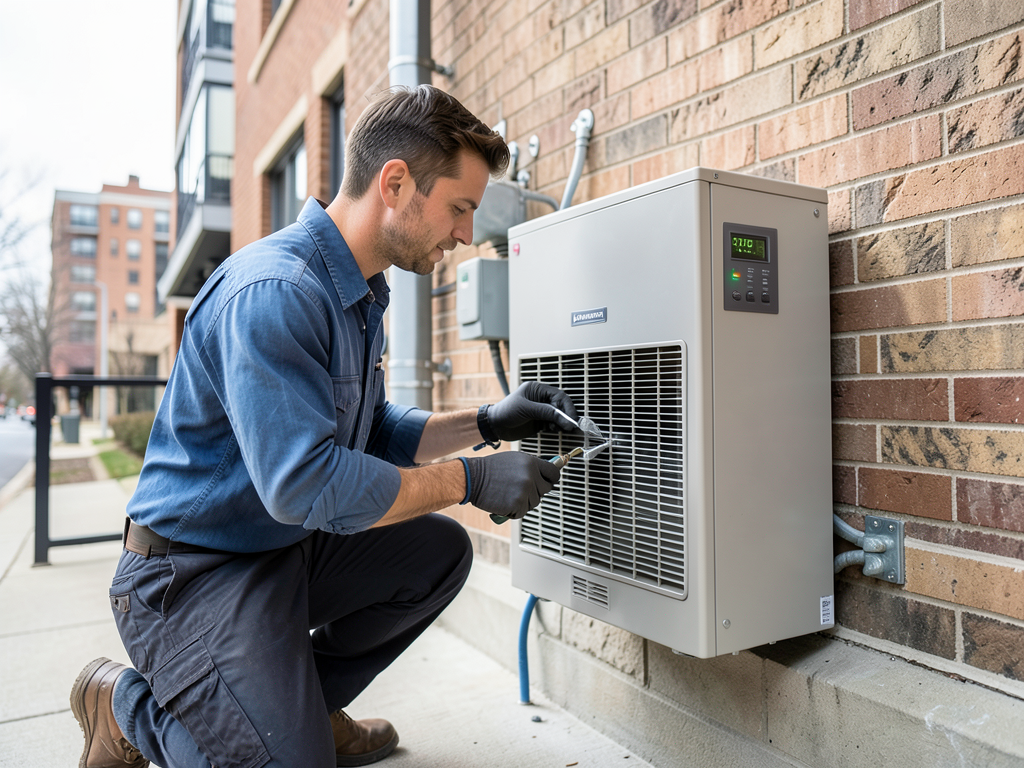
Understanding Condo HVAC Systems in Buffalo
Living in a downtown Buffalo condo means dealing with a unique set of HVAC challenges that single-family homeowners never face. The combination of high-rise building constraints, shared mechanical systems, and Buffalo’s notorious lake-effect climate creates a complex environment where standard residential solutions simply don’t work. From the freezing temperatures that can drop below zero during January blizzards to the humid summer months when Lake Erie’s moisture rolls in, your condo’s heating and cooling system needs to be both robust and space-efficient. HVAC Buffalo.
The first thing most condo owners discover is that their system isn’t like the traditional furnace and central air setup they grew up with. Instead, you’re likely dealing with a packaged terminal air conditioner (PTAC), a water-source heat pump, or a vertical fan coil unit that’s integrated into the building’s central plant. These systems require specialized knowledge because they operate on different principles than residential HVAC and often fall under the jurisdiction of your homeowners association rather than individual ownership. Emergency Furnace Repair in Amherst When Your Heat Goes Out at Night.
Golden Nugget #1: Buffalo’s high-rise buildings typically use water-source heat pump systems that circulate water from a central cooling tower. This water is usually maintained between 60-90 degrees Fahrenheit year-round, which means your heat pump doesn’t have to work as hard as an air-source unit during our extreme temperature swings.
Understanding your system starts with identifying what type of equipment you have. PTAC units are the boxy units you see beneath windows in hotel rooms – they handle both heating and cooling but are generally less efficient than modern alternatives. Water-source heat pumps use the building’s central water loop to transfer heat, making them more energy-efficient but requiring careful maintenance of the water chemistry to prevent corrosion. Vertical fan coil units work with the building’s boiler and chiller systems, providing heating or cooling through a central plant rather than individual compressors.
The Buffalo climate factor can’t be overstated. Our location on the eastern shore of Lake Erie means we experience some of the most extreme temperature variations in the country. Winter temperatures can plummet to -10°F during lake-effect snow events, while summer humidity often exceeds 80%. This creates condensation challenges in high-rise buildings where warm, moist air meets cold window surfaces, leading to mold growth and indoor air quality issues if not properly managed.
Golden Nugget #2: The frost line in Buffalo extends to 36 inches below grade, which affects how outdoor condenser pads are installed for any supplemental cooling systems. Condensers must be mounted on elevated pads with proper drainage to prevent ice damage during our freeze-thaw cycles.
Common Types of Condo HVAC Units
Understanding the specific equipment in your downtown Buffalo condo is crucial for proper maintenance and troubleshooting. Each system type has distinct advantages and limitations that affect everything from energy bills to repair costs. Here’s what you’re most likely to encounter in the Elmwood Village, Allentown, or Canalside areas:
| System Type | Energy Efficiency (SEER2) | Typical Noise Level | Buffalo Suitability |
|---|---|---|---|
| PTAC Units | 11-14 | 55-65 dB | Moderate |
| Water-Source Heat Pump | 16-20 | 45-55 dB | Excellent |
| Vertical Fan Coil | N/A (Central Plant) | 40-50 dB | Excellent |
| Ductless Mini-Split | 18-24 | 32-45 dB | Good |
Golden Nugget #3: The NYSERDA Clean Heat Program offers rebates up to $1,400 for condo owners who upgrade from PTAC units to high-efficiency heat pumps, specifically targeting downtown Buffalo buildings built before 2010.
PTAC units remain common in older downtown buildings because they’re relatively inexpensive to install and don’t require ductwork. However, they struggle during Buffalo’s extreme cold snaps and typically need supplemental electric resistance heating when temperatures drop below 20°F. The constant cycling also means higher energy bills compared to more modern systems.
Water-source heat pumps represent the gold standard for downtown Buffalo condos. These units use the building’s central water loop, which stays at a relatively constant temperature thanks to the central plant’s cooling tower and boiler. During summer, the system rejects heat to the water loop; in winter, it extracts heat from the same loop. This heat exchange process is far more efficient than trying to move heat directly between your indoor air and the frigid outdoor air we experience for four to five months each year. Outdoor Unit Not Spinning.
Vertical fan coil units are the silent workhorses of many downtown high-rises. These units don’t have their own compressors or heating elements – instead, they rely entirely on the building’s central boiler and chiller systems. When you adjust your thermostat, you’re actually signaling the building management system to either heat or cool the water circulating through your unit’s coils. This setup means excellent energy efficiency and quiet operation, but it also means you’re at the mercy of the building’s maintenance schedule and the HOA’s budget for system upgrades.
Ductless mini-splits are gaining popularity among condo owners who want more control over their comfort and energy usage. These systems can be installed in individual units without affecting the building’s central plant, making them ideal for renovations or for owners who want zoned temperature control. The main limitation is finding adequate space for the outdoor condenser unit, which must be properly mounted to withstand Buffalo’s high winds and heavy snow loads. Ductless AC Installation for Historical Homes in North Buffalo.
The Buffalo Climate Factor: Maintenance Essentials
Buffalo’s unique climate creates specific maintenance challenges that condo owners must address to keep their HVAC systems running efficiently. The combination of extreme cold, high humidity, and rapid temperature swings means your system works harder and experiences more wear than similar equipment in milder climates.
Winter maintenance starts with understanding that your heat pump or PTAC unit will run almost continuously from December through March. The key is ensuring proper airflow – check that your unit’s filters are clean and that furniture or curtains aren’t blocking air intake or discharge vents. For water-source heat pump systems, the building’s water chemistry becomes critical during winter. If the water treatment isn’t properly maintained, you risk corrosion that can lead to leaks or complete system failure when you need heat the most.
Condensation management becomes crucial during both winter and summer months. In winter, warm indoor air meeting cold window surfaces creates perfect conditions for mold growth along window sills and in wall cavities. Your HVAC system should maintain indoor humidity between 30-50% to prevent this. During summer, the reverse happens – cold air from your AC meets warm, humid outdoor air, creating condensation on ductwork and around vents. This is particularly problematic in older downtown buildings where insulation may be inadequate.. Read more about Choosing Between an ERV and an HRV for Your Airtight New Build in Clarence.
Diagnostic Tip: If you notice water pooling around your indoor unit during summer months, check the condensate drain line first. In high-rise buildings, these drains can become clogged with algae growth, causing water to back up and overflow. A simple vinegar solution poured through the drain line monthly can prevent most clogs.
Spring and fall in Buffalo are particularly hard on HVAC equipment due to rapid temperature swings. One day you might need heat in the morning and AC by afternoon. This constant cycling puts stress on compressors and electrical components. Consider programming your thermostat with wider temperature ranges during shoulder seasons to reduce system cycling.
Golden Nugget #4: The National Fuel Gas Code requires outdoor HVAC equipment in Buffalo to be installed with a minimum 24-inch clearance from combustible materials, and all units must be secured against wind loads that can exceed 90 mph during lake-effect storms.
Air quality in downtown Buffalo condos deserves special attention. The urban environment means higher levels of particulate matter, vehicle exhaust, and industrial pollutants. Your HVAC system’s air filter becomes your first line of defense, but standard filters only catch particles down to about 10 microns. For truly clean indoor air, consider upgrading to HEPA filtration or installing a standalone air purifier, especially if you live near high-traffic areas like the Buffalo Skyway or the I-190 corridor.
Energy efficiency in Buffalo’s climate means balancing heating and cooling needs throughout the year. Heat pumps with variable-speed compressors can adjust their output to match demand, rather than cycling on and off like single-speed units. This not only saves energy but also provides more consistent comfort and extends equipment life. Look for units with SEER2 ratings above 18 for cooling and HSPF ratings above 10 for heating efficiency.
HOA and Building Regulations
Navigating the rules and regulations of condo living in downtown Buffalo can be as challenging as understanding the HVAC equipment itself. Your homeowners association likely has specific requirements for any modifications, repairs, or replacements to your heating and cooling system. Understanding these rules before you start planning upgrades can save you time, money, and potential conflicts with neighbors.
Most downtown Buffalo HOAs require advance notice for any HVAC work, even routine maintenance. This isn’t just bureaucracy – it’s about coordinating access to mechanical rooms, ensuring compliance with building-wide energy management systems, and preventing disruptions to other residents. Some buildings require work to be done during specific hours, typically between 9 AM and 5 PM on weekdays, to minimize noise and inconvenience.
Noise ordinances in Buffalo are strictly enforced, particularly in residential areas like Elmwood Village and Allentown. Your HVAC equipment must meet specific decibel requirements, usually under 60 dB at the property line. This means that even if you want to upgrade to a more powerful system, you might be limited by noise regulations. Some buildings require sound testing before and after installations to ensure compliance.
Structural modifications are another major consideration. Adding a ductless mini-split system requires mounting brackets for the outdoor condenser, which must be approved by the building engineer to ensure they won’t damage the building’s exterior or violate load-bearing requirements. Some historic buildings in downtown Buffalo have additional restrictions to preserve their architectural integrity, which can limit your options for exterior modifications.
Golden Nugget #5: The City of Buffalo requires a mechanical permit for any HVAC replacement or modification, even in condo units. These permits cost between $75-150 and must be obtained before work begins, with inspections required upon completion.
Water-source heat pump systems present unique challenges because they’re tied to the building’s central plant. If your unit needs repair or replacement, the building management must coordinate the work to avoid disrupting other residents. This often means scheduling repairs during off-peak hours or when the building’s backup systems can handle the load. Some buildings charge a coordination fee for this service, typically $200-500.
Insurance considerations are often overlooked but crucial. Your condo association’s master policy likely covers the building’s central HVAC equipment, but your individual unit’s components may not be covered. Check your policy to understand what’s included – many standard policies exclude mechanical system failures due to wear and tear. Consider adding equipment breakdown coverage if it’s not included.
Energy management agreements between condo associations and utility companies can affect your ability to make changes to your HVAC system. Some buildings participate in demand response programs where the utility can temporarily reduce power to HVAC systems during peak demand periods. Modifying your system without understanding these agreements could result in fines or service interruptions.
Communication with your HOA board is essential before making any changes. Prepare a detailed proposal that includes equipment specifications, installation timeline, noise considerations, and how the changes might affect other residents. Some boards require engineering assessments for major modifications, which can add $500-1,000 to your project cost but provide peace of mind that your plans are structurally sound.
Energy Efficiency and Rebates
Buffalo’s harsh climate and high energy costs make efficiency upgrades particularly valuable for condo owners. Fortunately, New York State offers several programs specifically designed to help residents reduce energy consumption and lower utility bills. Understanding these incentives can make the difference between an expensive upgrade and a smart investment that pays for itself within a few years.
The NYSERDA Clean Heat Program is the cornerstone of energy efficiency incentives in New York. For condo owners in downtown Buffalo, this program offers rebates ranging from $500 to $1,400 for qualifying high-efficiency heat pump installations. The exact amount depends on the equipment’s efficiency ratings and whether you’re replacing an older, less efficient system. These rebates are available through participating contractors who handle the paperwork on your behalf.
National Fuel Gas Company, which serves most of Erie County including downtown Buffalo, offers additional rebates for energy-efficient upgrades. Their Smart Home program provides $100-300 rebates for programmable thermostats and up to $500 for high-efficiency gas furnaces. While these rebates are more limited for condo owners since many buildings use electric or central plant systems, they can still provide valuable savings if your unit uses natural gas for supplemental heating.. Read more about Is an 80 Percent AFUE Furnace Ever Better Than a 96 Percent Model for Buffalo Homeowners?.
National Grid, which provides electricity to most of Buffalo, offers rebates through their Energy Efficiency Program. These include $75-150 for smart thermostats and various incentives for building-wide energy improvements. Condo associations can often access larger rebates for system-wide upgrades, making it worthwhile to work with your board on efficiency improvements that benefit all residents.
Federal tax credits for energy-efficient home improvements were extended through 2026, providing up to 30% of the cost for qualifying equipment, with maximum credits of $2,000 for heat pumps and $600 for high-efficiency furnaces. These credits apply to individual condo owners who pay federal income taxes and can significantly reduce the net cost of HVAC upgrades.
Financing options through the Green Jobs-Green New York program offer low-interest loans up to $20,000 for energy efficiency improvements. These loans feature interest rates as low as 3.49% with terms up to 10 years, making it easier to afford high-efficiency equipment that might otherwise be out of reach. The program is administered through local credit unions and community banks throughout Erie County.
Golden Nugget #6: The Erie County Energy Improvement District offers a property tax exemption for energy efficiency improvements that increase a property’s value by at least 5%. This exemption can last up to 10 years and applies to both individual condo units and building-wide improvements.
Timing your upgrade can affect your eligibility for rebates and incentives. Many programs have annual funding limits that can run out by late summer or fall. Starting your project in early spring gives you the best chance of accessing all available incentives before they’re exhausted. Additionally, contractors are typically less busy during shoulder seasons, which can mean better pricing and faster installation times.
Beyond financial incentives, energy-efficient upgrades can provide significant long-term savings on utility bills. In Buffalo’s climate, where heating accounts for 60-70% of annual energy usage, upgrading from an older system to a high-efficiency heat pump can reduce heating costs by 30-50%. This translates to $300-600 in annual savings for the average downtown condo, meaning many upgrades pay for themselves within 5-7 years through utility savings alone.
When evaluating efficiency upgrades, look beyond the initial cost to the total cost of ownership. A high-efficiency system might cost $2,000-3,000 more upfront but could save $5,000-8,000 over its lifetime through reduced energy bills and fewer repairs. Consider factors like equipment lifespan, warranty coverage, and the quality of installation when making your decision.
Frequently Asked Questions
Who is responsible for HVAC repairs in a condo – the owner or the HOA?
Responsibility depends on your specific system type and HOA bylaws. Generally, individual owners are responsible for equipment within their unit’s walls, while the HOA maintains central plant systems and building infrastructure. For water-source heat pumps, you typically own the unit itself but share responsibility for the water loop. PTAC units are usually entirely the owner’s responsibility. Always check your HOA documents and consider having a professional assess your specific situation before assuming responsibility.
How can I improve indoor air quality in my high-rise condo?
Start with high-quality air filters rated MERV 11 or higher for your HVAC system. Consider adding a standalone HEPA air purifier for your living space, especially if you’re sensitive to allergens or live near busy streets. Maintain indoor humidity between 30-50% using a hygrometer to monitor levels. Regular duct cleaning (if your system has ducts) and professional coil cleaning can also significantly improve air quality. For the best results, combine these measures with proper ventilation and consider installing UV light systems to kill mold and bacteria.
What’s the average lifespan of a condo heat pump in Buffalo?
Most heat pumps in Buffalo’s climate last 12-15 years with proper maintenance. The extreme temperature variations and high humidity can shorten this to 10-12 years if maintenance is neglected. Regular filter changes, annual professional maintenance, and prompt repairs when issues arise can extend equipment life significantly. Water-source heat pumps often last longer than air-source units because they don’t have to deal with extreme outdoor temperatures, sometimes reaching 15-20 years with good maintenance.
Can I install a ductless mini-split in my condo?
Yes, but you’ll need HOA approval and possibly permits from the City of Buffalo. The main considerations are finding space for the outdoor condenser unit, ensuring proper mounting that won’t damage the building exterior, and meeting noise regulations. Some buildings have restrictions on exterior modifications, especially in historic districts. Work with a contractor experienced in condo installations who can navigate the approval process and ensure compliance with all building regulations. Finding the Most Reliable Furnace Repair Services in Buffalo.
How much does it cost to replace a PTAC unit in a downtown Buffalo condo?
Replacement costs typically range from $1,200 to $2,500 installed, depending on the unit’s capacity and efficiency rating. High-efficiency models with better noise control and improved filtration can cost $500-1,000 more but often provide better long-term value through lower energy bills and improved comfort. Factor in potential electrical upgrades if your building’s electrical system is older, which can add $300-800 to the total cost.
What maintenance should I perform on my condo HVAC system?
- Monthly Filter Inspection
Check and replace air filters every 30-60 days. Dirty filters reduce efficiency by up to 15% and can cause system strain.
- Seasonal Cleaning
Clean around indoor and outdoor units, removing dust, debris, and any obstructions that could restrict airflow.
- Condensate Drain Check
Inspect condensate drain lines monthly during cooling season. Clear any clogs with a vinegar solution to prevent water damage.
- Thermostat Calibration
Test your thermostat’s accuracy each season and replace batteries annually to ensure proper system control.
- Professional Maintenance
Schedule annual professional maintenance to check refrigerant levels, electrical connections, and overall system performance.
Call (716) 317-7757 today to schedule your inspection. Our experienced technicians understand the unique challenges of downtown Buffalo condo HVAC systems and can help you maintain optimal comfort year-round.
Ready to upgrade your condo’s HVAC system? Don’t wait until the next Buffalo blizzard or heat wave to discover your system can’t keep up. Pick up the phone and call (716) 317-7757 before the next storm hits. We’ll provide a free assessment of your current system and show you energy-efficient options that can save you money while keeping you comfortable in any weather.
Additional Resources
For more information about energy efficiency programs and building codes in Buffalo, visit these authoritative sources:
- NYSERDA – New York State Energy Research and Development Authority
- City of Buffalo Official Website
- National Fuel Gas Company
{
“@context”: “https://schema.org”,
“@type”: “BlogPosting”,
“headline”: “HVAC Options for Condo and Townhome Owners in Downtown Buffalo”,
“description”: “Discover the best HVAC options for downtown Buffalo condos and townhomes. Learn about PTAC units, water-source heat pumps, and energy-efficient solutions for Buffalo’s unique climate.”,
“wordCount”: 3178,
“datePublished”: “2026-04-07T15:16:00.000Z”,
“dateModified”: “2026-04-07T15:16:00.000Z”,
“inLanguage”: “en-US”,
“mainEntityOfPage”: {
“@type”: “WebPage”,
“@id”: “https://unitedhvacbuffalo.com”
},
“publisher”: {
“@type”: “LocalBusiness”,
“name”: “United HVAC Buffalo”,
“url”: “https://unitedhvacbuffalo.com”
},
“author”: {
“@type”: “Organization”,
“name”: “United HVAC Buffalo”,
“url”: “https://unitedhvacbuffalo.com”
},
“image”: {
“@type”: “ImageObject”,
“url”: “https://unitedhvacbuffalo.com/wp-content/uploads/2026/03/hvac-options-for-condo-and-townhome-owners-in-down-1.png”
}
}
{
“@context”: “https://schema.org”,
“@type”: “HVACBusiness”,
“name”: “United HVAC Buffalo”,
“url”: “https://unitedhvacbuffalo.com”,
“address”: {
“@type”: “PostalAddress”,
“addressLocality”: “Buffalo”
},
“areaServed”: {
“@type”: “City”,
“name”: “Buffalo”
}
}
{
“@context”: “https://schema.org”,
“@type”: “FAQPage”,
“mainEntity”: [
{
“@type”: “Question”,
“name”: “Who is responsible for HVAC repairs in a condo – the owner or the HOA?”,
“acceptedAnswer”: {
“@type”: “Answer”,
“text”: “Responsibility depends on your specific system type and HOA bylaws. Generally, individual owners are responsible for equipment within their unit’s walls, while the HOA maintains central plant systems and building infrastructure. For water-source heat pumps, you typically own the unit itself but share responsibility for the water loop. PTAC units are usually entirely the owner’s responsibility. Always check your HOA documents and consider having a professional assess your specific situation before assuming responsibility.”
}
},
{
“@type”: “Question”,
“name”: “How can I improve indoor air quality in my high-rise condo?”,
“acceptedAnswer”: {
“@type”: “Answer”,
“text”: “Start with high-quality air filters rated MERV 11 or higher for your HVAC system. Consider adding a standalone HEPA air purifier for your living space, especially if you’re sensitive to allergens or live near busy streets. Maintain indoor humidity between 30-50% using a hygrometer to monitor levels. Regular duct cleaning (if your system has ducts) and professional coil cleaning can also significantly improve air quality. For the best results, combine these measures with proper ventilation and consider installing UV light systems to kill mold and bacteria.”
}
},
{
“@type”: “Question”,
“name”: “What’s the average lifespan of a condo heat pump in Buffalo?”,
“acceptedAnswer”: {
“@type”: “Answer”,
“text”: “Most heat pumps in Buffalo’s climate last 12-15 years with proper maintenance. The extreme temperature variations and high humidity can shorten this to 10-12 years if maintenance is neglected. Regular filter changes, annual professional maintenance, and prompt repairs when issues arise can extend equipment life significantly. Water-source heat pumps often last longer than air-source units because they don’t have to deal with extreme outdoor temperatures, sometimes reaching 15-20 years with good maintenance.”
}
},
{
“@type”: “Question”,
“name”: “Can I install a ductless mini-split in my condo?”,
“acceptedAnswer”: {
“@type”: “Answer”,
“text”: “Yes, but you’ll need HOA approval and possibly permits from the City of Buffalo. The main considerations are finding space for the outdoor condenser unit, ensuring proper mounting that won’t damage the building exterior, and meeting noise regulations. Some buildings have restrictions on exterior modifications, especially in historic districts. Work with a contractor experienced in condo installations who can navigate the approval process and ensure compliance with all building regulations. Finding the Most Reliable Furnace Repair Services in Buffalo.”
}
},
{
“@type”: “Question”,
“name”: “How much does it cost to replace a PTAC unit in a downtown Buffalo condo?”,
“acceptedAnswer”: {
“@type”: “Answer”,
“text”: “Replacement costs typically range from $1,200 to $2,500 installed, depending on the unit’s capacity and efficiency rating. High-efficiency models with better noise control and improved filtration can cost $500-1,000 more but often provide better long-term value through lower energy bills and improved comfort. Factor in potential electrical upgrades if your building’s electrical system is older, which can add $300-800 to the total cost.”
}
}
]
}
{
“@context”: “https://schema.org”,
“@type”: “HowTo”,
“name”: “Condo HVAC Maintenance Checklist”,
“step”: [
{
“@type”: “HowToStep”,
“position”: 1,
“name”: “Monthly Filter Inspection”,
“text”: “Check and replace air filters every 30-60 days. Dirty filters reduce efficiency by up to 15% and can cause system strain.”
},
{
“@type”: “HowToStep”,
“position”: 2,
“name”: “Seasonal Cleaning”,
“text”: “Clean around indoor and outdoor units, removing dust, debris, and any obstructions that could restrict airflow.”
},
{
“@type”: “HowToStep”,
“position”: 3,
“name”: “Condensate Drain Check”,
“text”: “Inspect condensate drain lines monthly during cooling season. Clear any clogs with a vinegar solution to prevent water damage.”
},
{
“@type”: “HowToStep”,
“position”: 4,
“name”: “Thermostat Calibration”,
“text”: “Test your thermostat’s accuracy each season and replace batteries annually to ensure proper system control.”
},
{
“@type”: “HowToStep”,
“position”: 5,
“name”: “Professional Maintenance”,
“text”: “Schedule annual professional maintenance to check refrigerant levels, electrical connections, and overall system performance.”
}
],
“image”: “https://unitedhvacbuffalo.com/wp-content/uploads/2026/03/hvac-options-for-condo-and-townhome-owners-in-down-1.png”
}
{
“@context”: “https://schema.org”,
“@type”: “BreadcrumbList”,
“itemListElement”: [
{
“@type”: “ListItem”,
“position”: 1,
“name”: “Home”,
“item”: “https://unitedhvacbuffalo.com”
},
{
“@type”: “ListItem”,
“position”: 2,
“name”: “Blog”,
“item”: “https://unitedhvacbuffalo.com/blog”
},
{
“@type”: “ListItem”,
“position”: 3,
“name”: “HVAC Options for Condo and Townhome Owners in Downtown Buffalo”
}
]
}
{
“@context”: “https://schema.org”,
“@type”: “Service”,
“serviceType”: “HVAC”,
“provider”: {
“@type”: “LocalBusiness”,
“name”: “United HVAC Buffalo”,
“url”: “https://unitedhvacbuffalo.com”
},
“areaServed”: {
“@type”: “City”,
“name”: “Buffalo”
},
“description”: “Discover the best HVAC options for downtown Buffalo condos and townhomes. Learn about PTAC units, water-source heat pumps, and energy-efficient solutions for Buffalo’s unique climate.”
}