
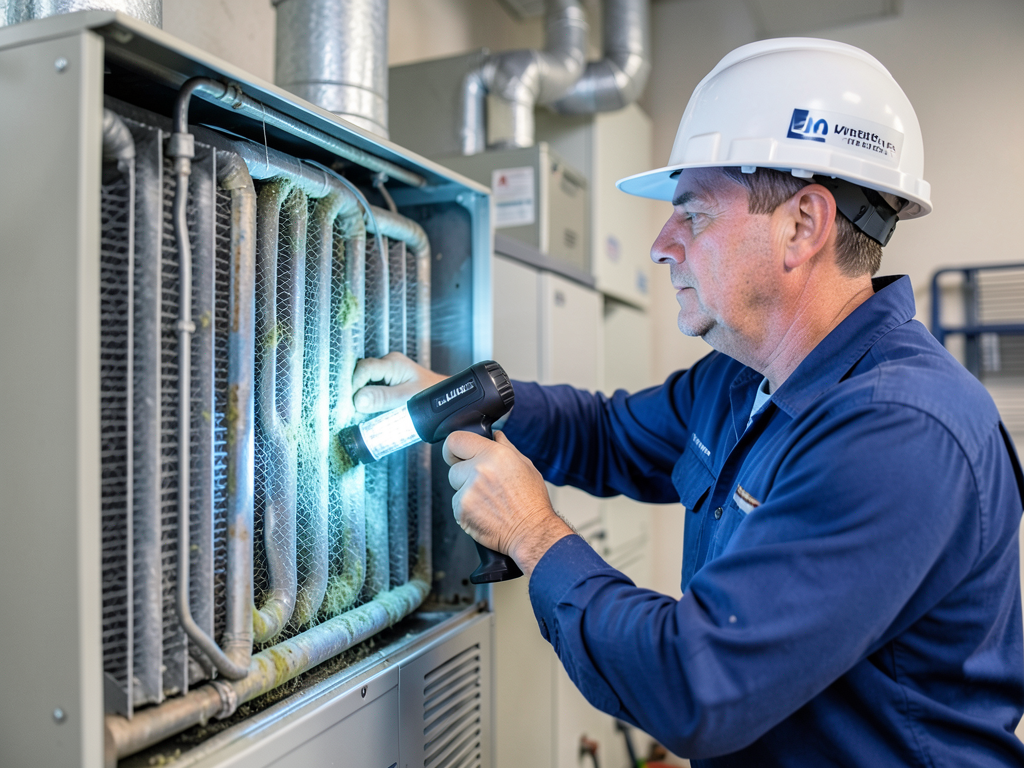
Preventing Mold Growth Inside Your AC Unit During a Damp Buffalo Summer
Your air conditioner works hard to keep your home cool during Buffalo’s humid summers, but that same moisture can create the perfect breeding ground for mold inside your AC unit. When Lake Erie’s humidity combines with the constant condensation inside your system, mold can take hold in as little as 24-48 hours, compromising your indoor air quality and potentially causing health issues for your family. HVAC Buffalo.
The musty smell coming from your vents or visible dark spots on your registers are often the first signs that mold has invaded your HVAC system. In Buffalo’s climate, where summer dew points regularly exceed 70%, your AC’s evaporator coils and condensate drain pan provide ideal conditions for mold spores to multiply rapidly.
Addressing mold growth isn’t just about eliminating unpleasant odors—it’s about protecting your family’s health. The EPA recommends indoor humidity levels between 30-50%, but Buffalo’s summer humidity often pushes indoor levels well above this range, creating conditions where mold can thrive inside your air conditioning system. EPA Mold Resources.
Professional HVAC technicians understand the unique challenges of Western New York’s climate. They know that Buffalo’s rapid temperature swings—from 90-degree summer days to cool lake breezes—create condensation patterns that generic advice from national websites simply doesn’t address. Your AC system needs specific care to prevent mold growth in our unique environment.
Signs You Have Mold in Your Buffalo Home’s AC
Recognizing mold in your air conditioning system early can prevent more serious problems. The most common indicator is a persistent musty or earthy smell when your AC runs—what Buffalo homeowners often describe as a “damp basement” odor that seems to follow the air through your vents.
Visual signs include dark spots or streaks on air vents, especially in areas where condensation tends to accumulate. You might notice black or green growth around the edges of registers, or see dark residue when you remove vent covers. Some Buffalo homeowners report seeing what looks like “dust” that reappears quickly after cleaning.
Health symptoms can also indicate mold in your AC system. If family members experience increased allergy symptoms, respiratory irritation, or unexplained headaches that seem worse when the AC is running, mold could be circulating through your home’s air. Children and elderly residents are particularly vulnerable to mold-related health issues.
Another telltale sign is excessive condensation on windows or walls near AC vents. When your system is producing more moisture than it can properly drain, that excess water creates ideal conditions for mold growth throughout your ductwork and inside the unit itself.
Why Buffalo’s Humidity Leads to AC Mold Growth
Buffalo’s geographic location creates unique humidity challenges that directly impact your air conditioning system. Lake Erie’s massive water surface generates consistent moisture that gets trapped by prevailing winds, creating what meteorologists call “lake-effect humidity” that can push summer relative humidity levels above 80% for extended periods.
The science behind AC mold growth is straightforward: your evaporator coils cool air to temperatures below the dew point, causing moisture to condense on the cold surfaces. In Buffalo’s humid climate, this condensation is significantly heavier than in drier regions. When your AC cycles off, that moisture remains trapped in the system, providing the water mold needs to grow.
Buffalo’s temperature fluctuations compound the problem. A typical summer day might start at 70°F, climb to 85°F by afternoon, then drop to 65°F by evening. These swings cause your AC to cycle on and off frequently, creating alternating periods of condensation and stagnation that promote mold growth.
The city’s older housing stock presents additional challenges. Many Buffalo homes built before 1980 have ductwork that wasn’t designed for modern AC systems, with inadequate insulation that allows condensation to form on the outside of ducts. This external moisture can drip onto building materials, creating secondary mold problems that spread to your AC system.
Health Risks: Is HVAC Mold Dangerous?
Black mold (Stachybotrys chartarum) in your AC system poses serious health risks that Buffalo residents shouldn’t ignore. This toxic mold produces mycotoxins that can cause respiratory problems, skin irritation, and in severe cases, neurological symptoms. Children, elderly individuals, and those with compromised immune systems face the highest risk.
Common symptoms of mold exposure include persistent coughing, wheezing, throat irritation, and eye discomfort. Some people experience skin rashes or headaches that worsen when they’re in air-conditioned spaces. If multiple family members develop similar symptoms that improve when away from home, mold in your AC system could be the culprit.
The EPA and CDC both warn that indoor mold exposure can trigger asthma attacks and exacerbate existing respiratory conditions. In Buffalo, where many residents already deal with seasonal allergies, adding mold exposure from your AC system can create a perfect storm of respiratory distress. CDC Mold Information.
Beyond health concerns, mold can damage your AC system itself. Mold colonies can clog condensate drain lines, reducing your system’s efficiency and potentially causing water damage to your home. The corrosive nature of mold can also deteriorate metal components, leading to premature system failure and costly repairs.
DIY Cleaning vs. Professional Remediation
Homeowners often wonder if they can tackle mold in their AC system themselves. While you can clean visible mold from accessible components, the EPA recommends professional remediation for mold covering more than 10 square feet or when mold is inside your ductwork or within the AC unit itself.
DIY cleaning typically involves using a mixture of white vinegar and water (50/50 solution) to clean accessible surfaces. However, bleach—a common household mold killer—is actually ineffective on porous surfaces like insulation and can damage metal components in your AC system. Never use bleach inside your AC unit.
Professional remediation involves specialized equipment and EPA-approved biocides that safely eliminate mold without damaging your system. Technicians use HEPA vacuums, negative air pressure containment, and antimicrobial treatments that address both visible mold and microscopic spores that DIY methods miss.
The cost difference is significant: DIY cleaning might cost $20-50 for supplies, while professional remediation in Buffalo typically ranges from $300-800 depending on the extent of contamination. However, professionals provide documentation and guarantee their work, which is crucial if you need to prove mold remediation for insurance or real estate purposes.
Our Specialized AC Deep-Cleaning Process
Professional AC mold remediation follows a systematic process that addresses every component where mold can hide. The first step involves inspecting your entire system using moisture meters and thermal imaging to identify all areas of contamination, not just the obvious spots.
Technicians begin by safely disconnecting power and protecting your home from contamination. They then remove and clean or replace all accessible components, including evaporator coils, blower wheels, and condensate drain pans. Each component receives specific treatment based on its material and the extent of contamination.
The cleaning process uses EPA-registered antimicrobials that kill mold at the spore level without leaving harmful residues. Technicians apply these treatments using specialized sprayers that ensure complete coverage, even in hard-to-reach areas like coil fins and drain line interiors.
UV light installation represents the most effective long-term prevention strategy. These germicidal lights installed near the evaporator coils kill mold spores before they can establish colonies. In Buffalo’s humid climate, UV lights can reduce mold recurrence by up to 99% and improve your system’s efficiency by keeping coils clean. Ductless AC Installation for Historical Homes in North Buffalo.
Finally, technicians clean or replace your system’s air filter and provide recommendations for preventing future mold growth, including proper humidity control and regular maintenance schedules tailored to Buffalo’s climate.
Preventing Future Mold Growth in Your AC System
Prevention is far more cost-effective than remediation. The foundation of mold prevention is maintaining indoor humidity below 50%, which in Buffalo often requires a whole-house dehumidifier working in conjunction with your AC system. These units can remove 70-100 pints of moisture daily during peak summer humidity.. Read more about How to Choose the Right Whole House Dehumidifier for Sticky Buffalo Summers.
Regular maintenance is crucial. Professional AC tune-ups every spring should include coil cleaning, drain line flushing, and inspection for early signs of moisture problems. In Buffalo’s climate, bi-annual maintenance (spring and fall) provides optimal protection against mold growth.
Consider installing a smart thermostat that monitors humidity levels and can automatically adjust your AC operation to maintain optimal moisture levels. Some models can even alert you when humidity exceeds safe thresholds, allowing you to address problems before mold takes hold.
Proper drainage is essential. Ensure your condensate drain line remains clear by pouring a cup of white vinegar through it monthly during cooling season. This natural treatment prevents algae and mold buildup without the harsh chemicals that can damage your system.
Upgrade to a high-efficiency air filter with a MERV rating between 8-11. These filters capture more mold spores before they enter your system, though you should never use filters with MERV ratings above 11 without consulting an HVAC professional, as they can restrict airflow and reduce efficiency.. Read more about Choosing Between an ERV and an HRV for Your Airtight New Build in Clarence.
Cost Factors for Mold Remediation in Buffalo
Understanding the costs involved helps you make informed decisions about mold remediation. Basic cleaning of accessible components typically starts around $250-350, while comprehensive system cleaning including ductwork can range from $600-1,200 depending on your home’s size and system complexity.
UV light installation adds $400-800 to the total cost but provides the best long-term value by preventing future mold growth. These systems typically pay for themselves within 2-3 years through improved efficiency and reduced cleaning needs.
Factors affecting cost include the extent of contamination, accessibility of components, and whether your system requires component replacement. Older systems often need more extensive cleaning due to accumulated debris that provides additional food sources for mold.
Many Buffalo homeowners find that mold remediation costs are partially offset by improved energy efficiency. A clean, mold-free system can reduce your cooling costs by 15-25% while also extending the life of your equipment by preventing corrosion and component failure.
When to Replace vs. Clean Your AC Unit
Sometimes mold contamination is so severe that replacement becomes the most cost-effective option. Consider replacement if your system is over 10 years old, has extensive mold throughout the ductwork, or if cleaning costs exceed 50% of replacement value.
Signs that replacement might be better than cleaning include persistent mold odors even after professional cleaning, visible mold growth in multiple system components, or if your system struggles to maintain comfortable temperatures even when functioning properly.
Modern AC systems offer features that prevent mold growth, including improved coil designs that shed moisture more effectively, antimicrobial coatings on components, and better drainage systems. These features can provide long-term protection against the humidity challenges specific to Buffalo’s climate.
When evaluating replacement, consider the age of your current system, the cost of ongoing maintenance, and potential energy savings from a more efficient unit. Many Buffalo homeowners find that replacing an old, mold-prone system with a new, high-efficiency model provides both immediate air quality improvements and long-term cost savings.
Local Building Codes and Mold Remediation
Buffalo and Erie County follow New York State Uniform Fire Prevention and Building Code requirements for HVAC work. While the code doesn’t specifically address mold remediation, it does require proper permits for any work that involves modifying or replacing HVAC components.
Professional mold remediation companies must follow EPA guidelines for containment and disposal of contaminated materials. This includes using HEPA filtration during cleaning, properly containing contaminated areas to prevent spore spread, and disposing of contaminated materials according to local regulations.
NYSERDA (New York State Energy Research and Development Authority) offers programs that can help offset the cost of HVAC upgrades, including systems with built-in mold prevention features. These programs are particularly valuable for Buffalo homeowners dealing with chronic humidity and mold issues.
Local HVAC contractors familiar with Buffalo’s building codes can ensure that any mold remediation work meets all local requirements, including proper permitting and inspection procedures. This compliance protects you from potential liability and ensures that the work meets current safety standards.
Frequently Asked Questions
How quickly can mold grow in my AC unit?
Mold can begin growing in your AC system within 24-48 hours of moisture exposure. In Buffalo’s humid climate, where summer humidity often exceeds 70%, mold spores can establish colonies even faster, especially in dark, undisturbed areas like evaporator coils and drain pans.
Can I stay in my home during mold remediation?
Yes, professional mold remediation is designed to contain contamination and protect your living spaces. Technicians use containment barriers and negative air pressure to prevent spores from spreading. However, if you have severe allergies or respiratory conditions, you might prefer to stay elsewhere during the cleaning process.
How often should I have my AC professionally cleaned to prevent mold?
In Buffalo’s climate, annual professional cleaning before cooling season is recommended. If you’ve had mold problems before or live in an especially humid area, consider bi-annual cleaning. Regular filter changes every 1-3 months and keeping your home’s humidity below 50% are also crucial preventive measures.
Will my homeowner’s insurance cover mold remediation?
Coverage varies by policy, but most standard homeowner’s insurance policies exclude mold damage unless it results from a covered peril like a burst pipe. Some policies offer limited mold coverage as an add-on. Check your specific policy or consult with your insurance provider about coverage options for HVAC mold remediation.
What’s the difference between mold and mildew in my AC?
Mildew is a surface-level mold that’s typically white or gray and easier to clean. Mold is usually darker (green, black, or brown) and can penetrate deeper into materials. Both can grow in AC systems, but mold poses greater health risks and is more difficult to eliminate completely without professional treatment.
Take Action Against AC Mold Today
Mold in your air conditioning system isn’t just an inconvenience—it’s a health hazard that can affect your entire family. Buffalo’s unique climate creates conditions where mold can thrive in your AC system, but you don’t have to live with musty odors, respiratory issues, or the risk of toxic mold exposure.
Professional HVAC technicians understand the specific challenges of Western New York’s humidity and can provide solutions that actually work in our climate. They have the equipment, training, and local experience to safely eliminate mold and prevent its return, something that generic advice from national websites simply can’t provide.
Don’t wait until mold problems become severe enough to cause health issues or system damage. The musty smell you’re noticing now is your AC system’s way of telling you something’s wrong. Addressing mold early prevents more expensive repairs and protects your family’s health.
Pick up the phone and call (716) 317-7757 before the next heat wave hits. United HVAC Buffalo offers comprehensive mold inspection and remediation services specifically designed for our local climate conditions. Our technicians will evaluate your system, identify any mold problems, and provide a clear plan for eliminating the issue and preventing future growth.
Your family deserves clean, healthy air. Don’t let Buffalo’s humidity compromise your indoor air quality. Call (716) 317-7757 today to schedule your professional AC mold inspection and take the first step toward a healthier, more comfortable home.
Remember, mold problems only get worse with time. The sooner you address the issue, the easier and less expensive the solution will be. Your health and comfort are worth the call.
{
“@context”: “https://schema.org”,
“@type”: “BlogPosting”,
“headline”: “Preventing Mold Growth Inside Your AC Unit During a Damp Buffalo Summer”,
“description”: “Buffalo’s lake-effect humidity creates perfect conditions for AC mold. Learn how to prevent and remove mold from your air conditioner with expert tips from United HVAC.”,
“wordCount”: 2524,
“datePublished”: “2026-04-08T12:07:00.000Z”,
“dateModified”: “2026-04-08T12:07:00.000Z”,
“inLanguage”: “en-US”,
“mainEntityOfPage”: {
“@type”: “WebPage”,
“@id”: “https://unitedhvacbuffalo.com”
},
“publisher”: {
“@type”: “LocalBusiness”,
“name”: “United HVAC Buffalo”,
“url”: “https://unitedhvacbuffalo.com”
},
“author”: {
“@type”: “Organization”,
“name”: “United HVAC Buffalo”,
“url”: “https://unitedhvacbuffalo.com”
},
“image”: {
“@type”: “ImageObject”,
“url”: “https://unitedhvacbuffalo.com/wp-content/uploads/2026/03/preventing-mold-growth-inside-your-ac-unit-during-1.png”
}
}
{
“@context”: “https://schema.org”,
“@type”: “HVACBusiness”,
“name”: “United HVAC Buffalo”,
“url”: “https://unitedhvacbuffalo.com”,
“address”: {
“@type”: “PostalAddress”,
“addressLocality”: “Buffalo”
},
“areaServed”: {
“@type”: “City”,
“name”: “Buffalo”
}
}
{
“@context”: “https://schema.org”,
“@type”: “FAQPage”,
“mainEntity”: [
{
“@type”: “Question”,
“name”: “Health Risks: Is HVAC Mold Dangerous?”,
“acceptedAnswer”: {
“@type”: “Answer”,
“text”: “Black mold (Stachybotrys chartarum) in your AC system poses serious health risks that Buffalo residents shouldn’t ignore. This toxic mold produces mycotoxins that can cause respiratory problems, skin irritation, and in severe cases, neurological symptoms. Children, elderly individuals, and those with compromised immune systems face the highest risk.”
}
},
{
“@type”: “Question”,
“name”: “How quickly can mold grow in my AC unit?”,
“acceptedAnswer”: {
“@type”: “Answer”,
“text”: “Mold can begin growing in your AC system within 24-48 hours of moisture exposure. In Buffalo’s humid climate, where summer humidity often exceeds 70%, mold spores can establish colonies even faster, especially in dark, undisturbed areas like evaporator coils and drain pans.”
}
},
{
“@type”: “Question”,
“name”: “Can I stay in my home during mold remediation?”,
“acceptedAnswer”: {
“@type”: “Answer”,
“text”: “Yes, professional mold remediation is designed to contain contamination and protect your living spaces. Technicians use containment barriers and negative air pressure to prevent spores from spreading. However, if you have severe allergies or respiratory conditions, you might prefer to stay elsewhere during the cleaning process.”
}
},
{
“@type”: “Question”,
“name”: “How often should I have my AC professionally cleaned to prevent mold?”,
“acceptedAnswer”: {
“@type”: “Answer”,
“text”: “In Buffalo’s climate, annual professional cleaning before cooling season is recommended. If you’ve had mold problems before or live in an especially humid area, consider bi-annual cleaning. Regular filter changes every 1-3 months and keeping your home’s humidity below 50% are also crucial preventive measures.”
}
},
{
“@type”: “Question”,
“name”: “Will my homeowner’s insurance cover mold remediation?”,
“acceptedAnswer”: {
“@type”: “Answer”,
“text”: “Coverage varies by policy, but most standard homeowner’s insurance policies exclude mold damage unless it results from a covered peril like a burst pipe. Some policies offer limited mold coverage as an add-on. Check your specific policy or consult with your insurance provider about coverage options for HVAC mold remediation.”
}
},
{
“@type”: “Question”,
“name”: “What’s the difference between mold and mildew in my AC?”,
“acceptedAnswer”: {
“@type”: “Answer”,
“text”: “Mildew is a surface-level mold that’s typically white or gray and easier to clean. Mold is usually darker (green, black, or brown) and can penetrate deeper into materials. Both can grow in AC systems, but mold poses greater health risks and is more difficult to eliminate completely without professional treatment.”
}
}
]
}
{
“@context”: “https://schema.org”,
“@type”: “BreadcrumbList”,
“itemListElement”: [
{
“@type”: “ListItem”,
“position”: 1,
“name”: “Home”,
“item”: “https://unitedhvacbuffalo.com”
},
{
“@type”: “ListItem”,
“position”: 2,
“name”: “Blog”,
“item”: “https://unitedhvacbuffalo.com/blog”
},
{
“@type”: “ListItem”,
“position”: 3,
“name”: “Preventing Mold Growth Inside Your AC Unit During a Damp Buffalo Summer”
}
]
}
{
“@context”: “https://schema.org”,
“@type”: “Service”,
“serviceType”: “HVAC”,
“provider”: {
“@type”: “LocalBusiness”,
“name”: “United HVAC Buffalo”,
“url”: “https://unitedhvacbuffalo.com”
},
“areaServed”: {
“@type”: “City”,
“name”: “Buffalo”
},
“description”: “Buffalo’s lake-effect humidity creates perfect conditions for AC mold. Learn how to prevent and remove mold from your air conditioner with expert tips from United HVAC.”
}