menu

Weak Airflow from Vents in Buffalo – Expert Diagnosis and Permanent Fixes

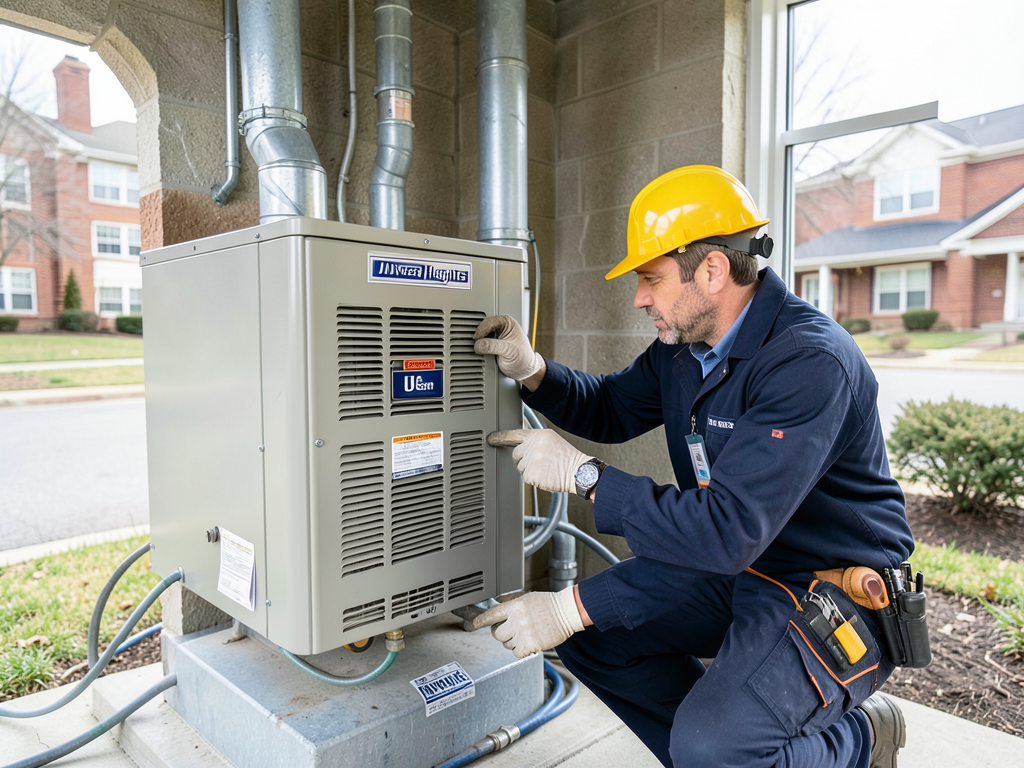
When your AC blows weakly or registers barely push air, you need more than guesswork. United HVAC Buffalo delivers precision diagnostics using manometers and static pressure testing to identify the exact cause of weak airflow from vents and restore proper circulation.

Slider Image 1
Slider Image 2
Slider Image 3
Slider Image 4
Slider Image 5
Slider Image 7
Slider Image 8
Slider Image 9
Slider Image 10
Slider Image 11

Why Buffalo Homes Struggle with Weak Airflow More Than You Think

You walk to a vent expecting cold air and feel nothing but a whisper. The compressor runs, the thermostat is set correctly, but little air coming out of vents leaves rooms stuffy and temperatures uneven. This is not normal, and it is not something you should live with.

Buffalo's climate creates specific challenges that amplify airflow problems. Our heating-dominated months mean ductwork sits idle for long stretches, allowing dust, construction debris, and even rodent nesting to accumulate. When you fire up the AC in June, that blockage chokes airflow before it reaches your living space. Older homes in neighborhoods like Elmwood Village and Allentown often have undersized return ducts or flex duct that has collapsed in unconditioned attics, strangling the system.

Low air pressure from vents also signals blower motor failure, clogged evaporator coils, or a filter so packed with particulate that the system cannot pull enough air to function. In homes with finished basements, improperly sealed ductwork leaks conditioned air into crawl spaces, leaving upper floors with reduced air flow from registers. You pay for cooling you never feel.

Poor airflow from AC does more than make you uncomfortable. It forces your compressor to run longer, spiking energy bills and shortening equipment life. Humidity climbs because the coil cannot remove moisture efficiently when air velocity drops. Mold risk increases. Rooms farthest from the air handler become unusable in summer.

If your vents deliver weak airflow, you need a technician who measures static pressure, inspects ductwork integrity, and checks blower wheel condition. Anything less is a guess.

Why Buffalo Homes Struggle with Weak Airflow More Than You Think
How We Diagnose and Fix Weak Airflow the Right Way

How We Diagnose and Fix Weak Airflow the Right Way

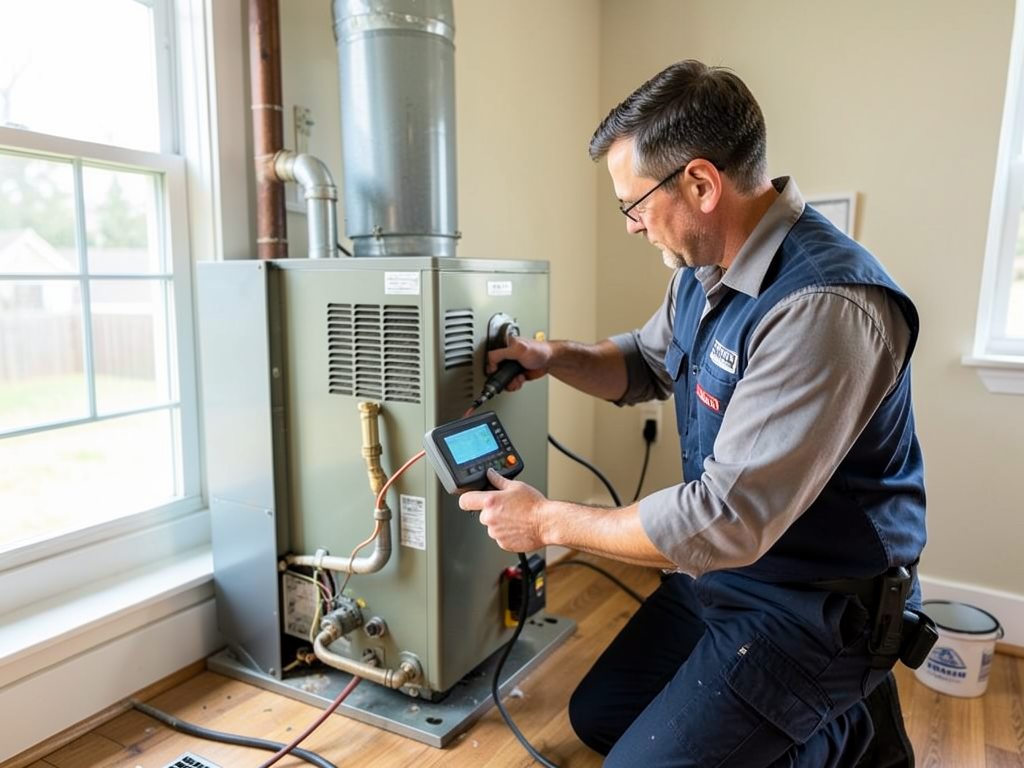
We do not walk in, change the filter, and leave. Weak airflow from vents requires systematic airflow diagnostics, and that starts with static pressure measurement. We install manometers at the supply and return plenums to measure resistance across the system. High static pressure means ductwork is undersized, kinked, or blocked. Low static pressure with weak output points to blower motor failure or a grossly oversized duct system that cannot maintain velocity.

Next, we pull the blower assembly and inspect the wheel for dust caking. A quarter inch of buildup cuts airflow by 30 percent. We check the evaporator coil for blockage, common in homes that skip annual maintenance or run without adequate filtration. If the coil face is matted with lint and dander, air cannot pass through, no matter how hard the blower runs.

Ductwork inspection follows. We trace every branch, looking for disconnected boots, crushed flex duct, or dampers left closed during installation. In Buffalo's older housing stock, we frequently find original galvanized duct with seams that have separated or panned floor joists that leak into wall cavities. We use a duct blaster test if leakage is suspected, pressurizing the system to quantify how much air you lose before it reaches the vents.

Blower motor capacitors and run capacitors get tested under load. A weak capacitor lets the motor run but not at full speed, cutting CFM output. We measure amp draw and compare it to nameplate specs. If the motor pulls low amps, it is not working hard enough. If it pulls high amps, it is fighting restriction or failing mechanically.

Once we isolate the cause, we fix it permanently. That might mean sealing ductwork with mastic, replacing a failed blower motor, or cleaning the evaporator coil. We retest static pressure after repairs to confirm airflow restoration.

What Happens During Your Airflow Restoration Service

Weak Airflow from Vents in Buffalo – Expert Diagnosis and Permanent Fixes
01

System Pressure Testing

We install manometers at the supply and return plenums to measure total external static pressure. This gives us a snapshot of how hard your blower is working and whether ductwork or coil blockage is choking the system. We compare readings to manufacturer specs and ACCA Manual D standards to identify exactly where restriction occurs.
02

Component Inspection

We remove the blower assembly, inspect the wheel for dust buildup, and check the evaporator coil for blockage. Capacitors get tested under load. We trace visible ductwork for disconnections, collapse, or damper issues. If your system has a zoning panel, we verify damper actuators are responding correctly. Every component that affects airflow gets evaluated, not just the obvious ones.
03

Repair and Verification

After isolating the cause, we execute the fix. That could mean replacing a failed blower motor, sealing ductwork with mastic, or cleaning the evaporator coil. We retest static pressure and measure airflow at each register with a flow hood to confirm CFM delivery matches design specs. You get documentation showing before and after readings so you know the problem is solved.

Why Buffalo Homeowners Trust United HVAC for Airflow Problems

Most HVAC companies in Buffalo send technicians who replace parts without measuring airflow. They swap a blower motor, close the panel, and hope for the best. That approach fails when the real issue is undersized ductwork, a kinked flex run, or a damper stuck closed. You pay for a repair that does not fix the problem.

United HVAC Buffalo measures first, diagnoses second, and repairs third. We carry manometers, amp clamps, and flow hoods on every truck because weak airflow from vents cannot be solved without data. Our technicians are trained in ACCA Manual D duct design and understand how static pressure, velocity, and CFM interact. We know that a 1,200 square foot home in North Buffalo with a 3-ton unit should deliver roughly 400 CFM per ton at the registers. If it does not, we find out why.

Buffalo's housing stock presents unique challenges. Homes built before 1960 often have ductwork that was never engineered, just installed by a contractor who eyeballed it. Finished basements added later frequently cover accessible duct runs, making leaks hard to find. We use thermal imaging to trace temperature drops that indicate leakage points behind drywall. We understand local building practices and know where to look.

We also understand Buffalo's seasonal demands. Your system needs to handle humid summer days and frigid winter mornings. Weak airflow in cooling mode often means your furnace is also underperforming because the blower cannot move enough air across the heat exchanger. We evaluate both heating and cooling airflow to ensure year-round performance.

You get honest answers. If your ductwork is too small for your tonnage, we tell you. If a previous contractor installed flex duct with excessive bends, we show you the problem. We do not sell you a repair that cannot work.

What to Expect When You Call United HVAC Buffalo

Same-Day Diagnostics

Weak airflow makes your home uncomfortable fast, especially during Buffalo's July heat. We prioritize airflow diagnostics and typically arrive the same day you call. Our trucks carry the tools needed to measure static pressure, test blower motors, and inspect ductwork without waiting on parts or equipment. You get answers quickly, not a callback scheduled for next week.

Data-Driven Assessment

We do not guess. Our technicians measure total external static pressure, check amp draw on the blower motor, and test airflow at each register with a flow hood. You receive a written report showing what we found, what normal readings should be, and what is causing the restriction. If ductwork leakage is suspected, we use a duct blaster test to quantify losses. Every recommendation is backed by measured data.

Permanent Solutions

Once we identify the cause, we fix it correctly. Blower motors get replaced with OEM-spec units, not generic aftermarket parts that fail in two years. Ductwork gets sealed with mastic and UL-181 tape, not duct tape that peels off. Evaporator coils are chemically cleaned to restore full airflow, not just rinsed with a garden hose. We retest after repairs to confirm CFM delivery meets manufacturer specs.

Post-Repair Documentation

You get before and after static pressure readings, blower motor amp draw comparisons, and register airflow measurements. This documentation proves the repair worked and gives you a baseline for future service. We also provide maintenance recommendations to prevent the issue from recurring, whether that means quarterly filter changes, annual coil cleaning, or duct sealing in problem areas.

Frequently Asked Questions

You Have Questions,
We Have Answers

Why do I barely feel air coming out of my vents? +

Weak airflow usually means your filter is clogged, your ductwork is leaking, or the blower motor is failing. In Buffalo homes, dust and pollen accumulate fast, especially during spring and fall transitions. Check your filter first. If it looks gray or fuzzy, replace it. If the problem continues, you might have disconnected ducts in the attic or basement, a common issue in older Buffalo properties. A dirty blower wheel can also restrict airflow. Turn off your system and inspect accessible ducts for gaps or tears. If you cannot locate the issue, call a technician to test static pressure and diagnose the exact blockage.

Why is my AC not blowing hard through the vents? +

Low airflow from your AC points to a clogged filter, frozen evaporator coil, or failing blower capacitor. Buffalo's humid summers force your system to work harder, and dirty coils freeze when airflow drops. Check your filter and replace it if needed. Inspect your indoor coil through the access panel. If you see frost or ice, turn off the system and let it thaw completely. A weak capacitor also reduces blower speed without triggering error codes. Listen for humming or delayed startup from the air handler. If the blower runs but barely moves air, you need a technician to test capacitance and motor amperage.

How to increase air flow in vents? +

Start by replacing your air filter every 30 to 60 days. Open all supply vents and remove furniture or curtains blocking airflow. In Buffalo homes with basements, check floor registers for dust buildup or closed dampers. Seal visible duct leaks with mastic or foil tape, not cloth duct tape. Vacuum return grilles to remove pet hair and debris. If airflow remains weak, your ducts may be undersized or crushed in the attic. A professional duct inspection with airflow testing identifies restrictions. Adding a return air path or upsizing ducts requires load calculations specific to your home's layout and insulation levels.

Why is my AC set at 74 but reads 78? +

Your AC struggles to reach setpoint because the system is undersized, the refrigerant charge is low, or airflow is restricted. Buffalo's humidity makes your AC work harder to remove moisture, not just cool air. Check your outdoor unit. If the coil looks packed with cottonwood seeds or dirt, clean it with a garden hose from the inside out. Inspect your filter and indoor coil for blockages. If both are clean and the outdoor fan runs but the compressor cycles off quickly, you likely have a refrigerant leak or failing compressor. A technician should measure superheat and subcooling to confirm proper charge.

What is the $5000 AC rule? +

The $5000 rule is a guideline for deciding between repair and replacement. Multiply the repair cost by the age of your system. If the result exceeds $5000, replace the unit instead of repairing it. For example, a $400 repair on a 10-year-old system equals $4000, so repair makes sense. A $600 repair on a 15-year-old system equals $9000, suggesting replacement. Buffalo's temperature swings and humidity shorten AC lifespan compared to milder climates. This rule helps you avoid throwing money at an aging system that will fail again soon. Always get a second opinion before major repairs.

How to tell if a house has poor ventilation? +

Signs of poor ventilation include stuffy air, condensation on windows during winter, mold growth in bathrooms, and lingering odors. Buffalo homes built before 1980 often lack adequate return air paths or bathroom exhaust fans. Check your attic for frost buildup in winter, a clear sign of trapped moisture. Open a window and see if airflow improves. If yes, your home needs more return vents or a fresh air intake. Persistent humidity above 60 percent indoors means your system cannot remove moisture effectively. A blower door test measures air leakage and identifies ventilation deficiencies specific to your home's construction.

What is the 3 minute rule for AC? +

The 3 minute rule prevents compressor damage by delaying restart after shutdown. Modern AC systems have a built-in timer that waits 3 to 5 minutes before allowing the compressor to cycle back on. This delay lets refrigerant pressures equalize, reducing strain on startup. If you flip your thermostat on and off rapidly, the compressor tries to start under high pressure and can trip the breaker or fail prematurely. Buffalo homeowners often override this during heat waves, damaging their systems. Let your AC rest between cycles. If your compressor short-cycles every few minutes, you have a bigger problem requiring professional diagnosis.

How do you fix a weak AC airflow? +

Start with a new filter and clean outdoor coil. Remove debris from around the condenser and trim vegetation back at least 2 feet. Check that all supply vents are open and unblocked. Inspect your return grilles for obstructions like pet hair or furniture. If airflow stays weak, turn off the system and check the blower wheel for dust buildup. In Buffalo homes with flex duct, look for crushed or kinked sections in the attic or crawlspace. A technician can measure static pressure and airflow at each vent to pinpoint restrictions. Leaky or undersized ductwork requires sealing or replacement to restore proper airflow.

What should my AC be set at if it's 100 degrees outside? +

Set your thermostat 15 to 20 degrees below outdoor temperature for realistic cooling. If it is 100 degrees outside, aim for 80 to 85 degrees indoors. Buffalo rarely hits triple digits, but during extreme heat, your AC cannot overcome the temperature difference if you set it too low. Running your system at 68 degrees when it is 100 outside forces the compressor to run nonstop without reaching setpoint. This wastes energy and freezes the evaporator coil. Use ceiling fans to improve comfort at higher thermostat settings. Close blinds during peak sun hours to reduce heat gain and help your system keep up.

What is the 2 foot rule in HVAC? +

The 2 foot rule means keeping objects at least 2 feet away from your outdoor condenser and indoor return vents. Buffalo homeowners often stack firewood, snow shovels, or patio furniture against the condenser, blocking airflow and reducing efficiency. Shrubs and grass clippings also restrict airflow, forcing the compressor to work harder and overheat. Indoors, furniture or drapes blocking return vents starve the system of air, causing frozen coils and weak airflow. Maintain clearance around all equipment. Trim vegetation seasonally and vacuum return grilles monthly. Proper clearance extends equipment life and prevents costly breakdowns during Buffalo's humid summers.

How Buffalo's Seasonal Dust and Older Ductwork Make Weak Airflow Worse

Buffalo's long heating season means your AC sits idle for eight months while dust, pollen, and construction debris accumulate in ductwork. When you switch to cooling in late May, that buildup restricts airflow immediately. Homes near Hertel Avenue and Delaware Park experience higher particulate loads from street traffic and tree pollen, clogging filters faster than suburban neighborhoods. Older homes in Allentown and the Elmwood Village often have original galvanized duct with seams that leak or flex duct that has compressed over decades. These conditions create low air pressure from vents that worsens every season without intervention.

Buffalo HVAC contractors who understand local housing stock know where to look for airflow problems. We have worked in hundreds of homes built before 1950 and recognize the signs of undersized ductwork, collapsed flex runs, and improperly sealed panned returns. We understand that finished basements in North Buffalo often hide ductwork problems behind drywall, requiring thermal imaging to locate leaks. Choosing a local technician who knows these patterns means faster diagnosis and fewer callbacks.

HVAC Services in The Buffalo Area

We are proud to serve the entire Buffalo area and its surrounding communities with our expert HVAC services. Our centrally located team allows us to respond quickly to your needs, whether you are in the city or a nearby suburb. We are committed to being your local, trusted resource for all things heating and cooling, and we look forward to serving you right where you are.

Address:
United HVAC Buffalo, 360 Delaware Ave, Buffalo, NY, 14202

Additional Services We Offer

Our news updates

Latest Articles & News from The Blogs

Managing Excessive Dust in Your South Buffalo Home During High Wind Events South Buffalo homes face unique dust challenges when…

Managing Excessive Dust in Your South Buffalo Home During High Wind Events

Managing Excessive Dust in Your South Buffalo Home During High Wind Events South Buffalo homes face unique dust challenges when…

Is it Better to Pay for a Monthly HVAC Maintenance Plan or Just Call When Something Breaks?

Is it Better to Pay for a Monthly HVAC Maintenance Plan or Just Call When Something Breaks? When your furnace…

The Homeowners Guide to Buying a New HVAC System for a Rental Property in University Heights

The Homeowners Guide to Buying a New HVAC System for a Rental Property in University Heights University Heights landlords face…

Contact Us

Weak airflow from vents will not fix itself. Call United HVAC Buffalo at (716) 317-7757 for same-day diagnostics and data-driven repairs. We measure, diagnose, and restore proper airflow so your home stays comfortable all summer.