menu

SEER Ratings Explained in Buffalo – Learn How to Cut Cooling Costs by 30% or More

Understanding seasonal energy efficiency ratio meaning helps Buffalo homeowners choose the right AC system for our humid summers and unpredictable shoulder seasons, saving hundreds annually on utility bills.

Slider Image 1
Slider Image 2
Slider Image 3
Slider Image 4
Slider Image 5
Slider Image 7
Slider Image 8
Slider Image 9
Slider Image 10
Slider Image 11

Why Buffalo Homeowners Need to Understand SEER Ratings Now

Buffalo's climate presents a unique cooling challenge. Our summers bring thick humidity rolling off Lake Erie, with temperatures spiking into the 80s and 90s. The shoulder seasons swing wildly, forcing air conditioners to work harder during those unexpected May heat waves and lingering September warmth.

What is SEER rating? The seasonal energy efficiency ratio meaning measures how efficiently your air conditioner converts electricity into cooling power over an entire season. Think of it like miles per gallon for your car. A higher SEER rating definition means less electricity wasted, which translates directly to lower monthly bills.

Understanding SEER ratings matters more in Buffalo than in drier climates. High humidity makes your AC work overtime. The system pulls moisture from the air while cooling, consuming more energy in the process. A unit with a 14 SEER rating uses roughly 30% more electricity than one rated at 18 SEER to achieve the same comfort level.

The meaning of SEER in HVAC becomes critical during Buffalo's muggy July and August months. Your air conditioner runs longer cycles to manage both temperature and humidity. A low-efficiency system burns through kilowatt hours, sending your National Grid bill climbing. Higher SEER units handle moisture removal more efficiently, cycling less frequently while maintaining comfort.

Most Buffalo homes built before 2006 run on systems rated 10 SEER or lower. Federal minimum standards now require 14 SEER for new installations in New York State. The gap between old and new technology represents real money. Upgrading from a 10 SEER to a 16 SEER unit can cut cooling costs by 40% or more during peak summer months.

Why Buffalo Homeowners Need to Understand SEER Ratings Now
How SEER Ratings Actually Work in Real-World Buffalo Conditions

How SEER Ratings Actually Work in Real-World Buffalo Conditions

The seasonal energy efficiency ratio meaning comes from a controlled laboratory test. Manufacturers run units through cooling cycles at outdoor temperatures ranging from 65°F to 104°F, measuring total cooling output in British Thermal Units against total electrical input in watt-hours. The SEER rating definition is simply BTUs divided by watt-hours.

Here's what that means for your home. A 3-ton AC unit with a 16 SEER rating produces 36,000 BTUs of cooling per hour while consuming 2,250 watts. The same capacity unit at 12 SEER pulls 3,000 watts for identical cooling output. Over a Buffalo cooling season averaging 800 runtime hours, that 750-watt difference adds up to 600 kilowatt-hours, roughly $120 at current local electricity rates.

Understanding SEER ratings requires knowing the laboratory test differs from Buffalo's real conditions. The rating assumes consistent outdoor humidity levels and steady indoor thermostat settings. Lake Erie humidity throws that off. When outdoor moisture content spikes, your compressor runs longer to dehumidify, consuming more energy than the SEER test accounts for.

Variable-speed compressors change the equation. Traditional single-stage units run at 100% capacity or shut off completely. Two-stage and variable-speed systems modulate output between 40% and 100%, matching cooling demand more precisely. These units achieve their rated SEER performance more consistently in Buffalo's variable climate because they avoid the energy waste of constant on-off cycling.

The meaning of SEER in HVAC also connects to your ductwork condition. Leaky ducts bleed 20% to 30% of cooled air into attics and wall cavities before it reaches living spaces. Even a high-SEER unit performs like a low-efficiency model when half the cooled air escapes. Proper duct sealing and insulation ensure you capture the full efficiency potential of higher SEER ratings.

What Happens During a SEER-Based System Consultation

SEER Ratings Explained in Buffalo – Learn How to Cut Cooling Costs by 30% or More
01

Load Calculation Assessment

We measure your home's actual cooling load using Manual J calculations, accounting for Buffalo-specific factors like north-facing Lake Erie exposure, insulation levels in older housing stock, and window orientation. This determines the precise tonnage needed, preventing oversizing that kills efficiency. Oversized units short-cycle, never reaching peak SEER performance. We factor in your home's thermal envelope characteristics to match equipment capacity to real demand.
02

Duct System Evaluation

We inspect your entire duct network for leakage points, improper sizing, and insulation gaps. Buffalo homes built before 1980 often have undersized return ducts that strangle airflow, forcing high-SEER equipment to work harder. We use blower door testing to quantify duct leakage and identify restriction points. Proper duct design ensures your new high-efficiency system delivers rated performance. Without adequate airflow, even an 18 SEER unit performs like a 12 SEER.
03

Equipment Matching and ROI

We calculate payback periods for different SEER levels based on your current utility costs and runtime hours. Buffalo's moderate cooling season means a 20 SEER system may take 15 years to recoup the price premium over a 16 SEER unit. We present actual dollar projections, not generic claims. You see exactly how much each SEER increment saves monthly, letting you choose the efficiency sweet spot that fits your budget and timeline.

Why Local Buffalo Knowledge Matters for SEER Selection

National HVAC chains push the highest SEER units available, ignoring regional climate realities. Buffalo's cooling season runs roughly May through September, about 120 to 140 days depending on the year. Compare that to Houston's 240-day season or Phoenix's year-round demand. The payback math changes completely.

United HVAC Buffalo specializes in right-sizing equipment for Western New York's specific climate zone. We account for Lake Erie's moderating effect on summer peak temperatures and the humidity loads from prevailing southwest winds crossing the lake. These factors influence which SEER ratings deliver real savings versus marketing hype.

Buffalo's housing stock presents unique installation challenges. Homes in Elmwood Village, Allentown, and North Buffalo feature narrow lot lines, mature tree canopies, and limited outdoor unit placement options. Condenser positioning affects efficiency. A high-SEER unit crammed against a west-facing brick wall, baking in afternoon sun with restricted airflow, loses 15% to 20% of its rated performance.

We understand local building codes and Historical District requirements. Installing condensers in Delaware Park area homes requires careful attention to setback rules and noise ordinances. Some neighborhoods restrict outdoor unit visibility from the street. We navigate these requirements while preserving system efficiency, finding placement solutions that satisfy code officials and optimize equipment performance.

Western New York's electrical grid characteristics matter too. National Grid's time-of-use rates and demand charges for commercial properties change the SEER calculation. Business owners in the Main Street corridor and Industrial Parks need different equipment strategies than residential customers. We factor in demand reduction and power quality considerations when specifying commercial SEER ratings.

Our technicians train specifically on equipment performance in Buffalo's freeze-thaw cycle environment. Spring startups after harsh winters require attention to refrigerant charge levels and electrical connections. We catch issues that affect SEER performance before they cost you money all summer.

What to Expect When Choosing Your SEER Rating

Consultation Timeline and Information Gathering

Your SEER consultation takes 60 to 90 minutes. We review 12 months of utility bills to establish baseline cooling costs, inspect your existing equipment and ductwork, and measure key home characteristics. You receive a written load calculation and efficiency comparison within 24 hours. The report breaks down monthly savings projections for SEER ratings from 14 through 20, showing exactly where the cost-benefit curve flattens for your specific home. No pressure, just data. You decide which efficiency level makes financial sense for your situation and timeline.

Understanding Your Options and Trade-Offs

We explain the technology behind different SEER ratings in plain terms. Single-stage, two-stage, and variable-speed compressors each deliver rated SEER performance differently. Single-stage units hit their SEER rating only at specific outdoor temperatures. Variable-speed systems maintain efficiency across a wider range. We show you sound level differences, because higher SEER often means quieter operation. Comfort factors matter beyond energy savings. Some high-SEER units dehumidify better, improving comfort on muggy Buffalo mornings when temperature is tolerable but humidity is oppressive. We present the complete picture, not just the efficiency number.

Installation Quality and Performance Verification

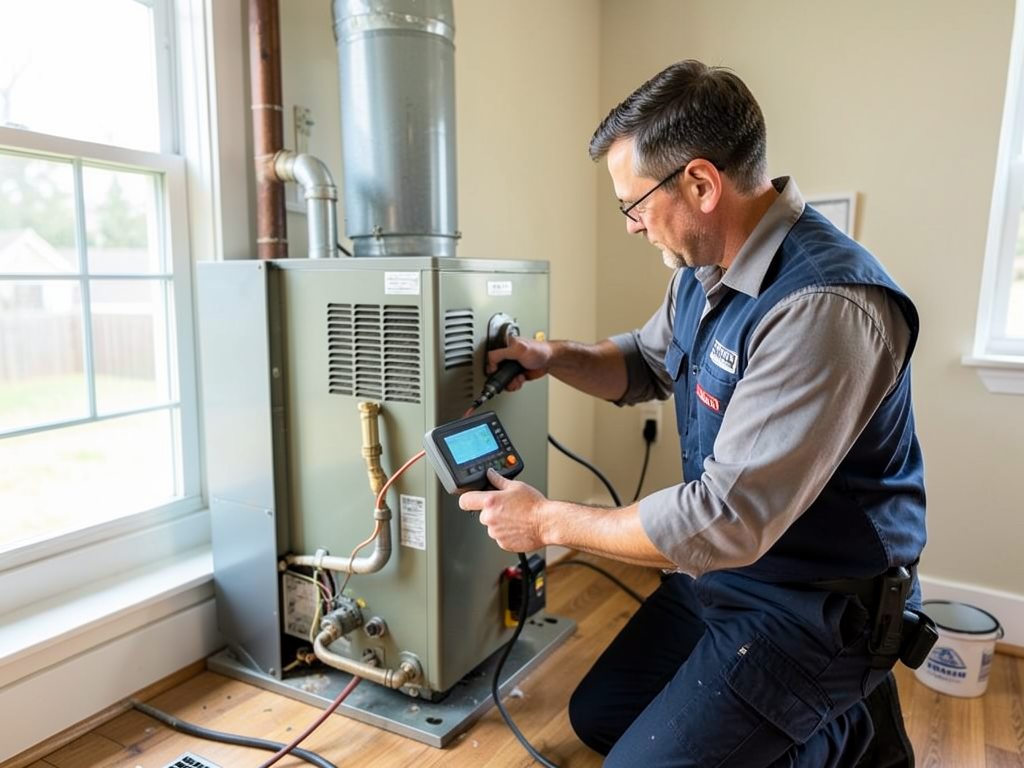
Installation determines whether you achieve rated SEER performance. We follow ACCA Quality Installation protocols, weighing refrigerant charge rather than using approximate pressure readings. Digital manifolds measure superheat and subcooling to within 1°F, ensuring optimal efficiency. Airflow verification across the evaporator coil confirms your system moves the CFM required for rated SEER. We photograph duct connections and electrical terminations. You receive documentation showing your system tested within manufacturer specifications. Poor installation drops a 16 SEER unit to 12 SEER performance. Precision installation protects your investment and delivers promised savings.

Maintaining Peak SEER Performance Over Time

SEER ratings assume perfect maintenance. Dirty filters drop efficiency 5% to 15%. Clogged condensers lose another 10%. We provide maintenance schedules specific to your equipment and Buffalo's environment. Lake Erie pollen loads and cottonwood seed drifts clog outdoor coils faster than in drier climates. Spring and fall cleanings preserve efficiency. Refrigerant charge drifts over time as connections expand and contract through temperature swings. Annual refrigerant verification catches small leaks before they kill efficiency. Our maintenance plans include performance testing, comparing actual efficiency to baseline measurements. You know your system maintains its SEER rating year after year.

Frequently Asked Questions

You Have Questions,
We Have Answers

What is the $5000 rule for HVAC? +

The $5000 rule helps you decide between repair and replacement. Multiply the age of your HVAC system by the repair cost. If the result exceeds $5000, replacement makes more sense than repair. For example, a 12-year-old system needing a $500 repair equals $6000, suggesting replacement. In Buffalo, where freeze-thaw cycles stress equipment, older systems often face declining efficiency. Factor in energy savings from higher SEER models and potential tax credits. This rule is a guideline, not gospel. Consider your system's maintenance history and how Buffalo winters impact longevity when making your final decision.

What is the 3 minute rule for air conditioners? +

The 3-minute rule prevents compressor damage by requiring a minimum wait between on-off cycles. When your air conditioner shuts off, refrigerant pressure needs time to equalize throughout the system. Restarting too quickly forces the compressor to work against high pressure, causing mechanical stress and premature failure. Modern thermostats and control boards enforce this delay automatically. In Buffalo homes, where humidity control matters during summer months, short cycling from an oversized unit can violate this rule repeatedly. If you notice your system cycling rapidly, contact a technician. Ignoring short cycling damages equipment and wastes energy.

How much more efficient is a 20 SEER vs 18 SEER? +

A 20 SEER system uses about 11% less energy than an 18 SEER unit under identical conditions. That translates to roughly $100-150 annual savings for typical Buffalo homes, depending on usage and electricity rates. The payback period often extends beyond 10 years unless you run your AC heavily. Buffalo's moderate summer climate means fewer cooling hours than southern regions, reducing the financial benefit of incremental SEER gains. The jump from 14 SEER to 18 SEER delivers bigger savings than 18 to 20. Consider your budget, how long you plan to stay, and local utility costs when choosing between ratings.

What is the minimum SEER for tax credit 2025? +

For 2025 tax credits under the Energy Efficient Home Improvement Credit, central air conditioners must meet 16 SEER2 and 13.5 EER2 ratings. Heat pumps require 16 SEER2 and 9 HSPF2 ratings. Note the SEER2 designation, which reflects updated testing standards that are slightly more stringent than old SEER ratings. The credit covers 30% of costs up to $600 for qualifying air conditioners and up to $2000 for heat pumps. In Buffalo, where heating matters more than cooling, heat pump credits offer better value. Verify equipment qualifies before purchase and keep manufacturer certification statements for your tax filing.

Is it better to oversize or undersize an AC unit? +

Undersizing is better than oversizing for Buffalo homes. An oversized unit short cycles, running brief bursts that never reach peak efficiency or properly dehumidify. Buffalo summers bring humidity that requires adequate run time to remove moisture. Undersized units run longer cycles, improving dehumidification and efficiency, though they may struggle on the hottest days. Proper sizing requires a Manual J load calculation accounting for insulation, windows, orientation, and local climate data. Most contractors oversize by 20-30% out of caution. Push for accurate sizing. A properly sized 2.5-ton unit outperforms an oversized 3-ton system in comfort and operating cost.

Is a new HVAC system tax deductible in 2025? +

Standard HVAC replacements are not tax deductible as personal expenses, but you may qualify for tax credits. The Energy Efficient Home Improvement Credit offers up to $600 for qualifying air conditioners or $2000 for heat pumps meeting efficiency thresholds. This is a credit, which reduces your tax bill dollar-for-dollar, not a deduction. If the HVAC serves a home office used exclusively for business, you might deduct a proportional amount as a business expense. Rental property owners can depreciate HVAC systems over 27.5 years. Keep receipts and manufacturer certification for qualifying equipment when filing your return.

How cool should my house be if it's 100 outside? +

Aim for 75-78 degrees when outside temperatures hit 100 degrees. Your AC can typically maintain a 15-20 degree differential from outdoor temps without straining. Expecting 68 degrees inside forces your system to run continuously, spiking energy bills and stressing components. Buffalo rarely sees sustained 100-degree heat, but when it happens, close blinds on sun-facing windows and run ceiling fans to improve comfort without lowering the thermostat. Programmable thermostats help by raising temps when you are away. If your system cannot maintain 78 degrees, you may have inadequate insulation, ductwork leaks, or undersized equipment.

How do the amish keep cool in the summer? +

Amish communities in areas near Buffalo use passive cooling strategies you can adapt. They build homes with cross-ventilation, placing windows to capture prevailing breezes. High ceilings and whole-house fans exhaust hot air through attic vents. Covered porches provide shaded outdoor spaces. They plant deciduous trees on south and west exposures for summer shade. Inside, they minimize heat-generating activities during peak heat and use basements as cool retreats. While you likely want to keep your AC, incorporating shade trees, attic ventilation, and strategic window usage reduces cooling loads. These techniques lower energy bills and improve comfort during Buffalo heat waves.

Why is my AC set to 72 but reads 78? +

Your AC shows 78 degrees when set to 72 because the system cannot keep up with heat gain. Common causes include undersized equipment, dirty filters restricting airflow, low refrigerant from leaks, failing compressors, or excessive heat load from poor insulation and air leaks. In Buffalo homes, inadequate attic insulation lets summer heat radiate downward. Check your filter first. If clean, inspect outdoor unit coils for debris blocking airflow. Verify all vents are open and unblocked. If the problem persists, you need a technician to check refrigerant levels, test capacitors, and measure airflow. Ignoring the issue wastes energy and risks equipment damage.

How many sq ft will a 3 ton AC cool? +

A 3-ton AC typically cools 1500-1800 square feet, but square footage alone does not determine proper sizing. Buffalo homes vary widely in insulation quality, window efficiency, ceiling height, and sun exposure. A 1600-square-foot ranch with poor insulation and west-facing windows may need 3.5 tons, while a well-insulated 1800-square-foot home needs only 2.5 tons. Manual J load calculations account for these variables to size equipment correctly. Rules of thumb like 400-600 square feet per ton create sizing errors. Demand a proper load calculation before replacement. Correct sizing improves comfort, efficiency, and equipment longevity in Buffalo's variable climate.

How Buffalo's Lake Erie Humidity Affects SEER Performance

Buffalo's position on Lake Erie's eastern shore creates humidity challenges that impact SEER ratings more than in inland cities. Prevailing southwest winds carry moisture across 240 miles of open water before hitting the metro area. Summer dew points regularly reach 65°F to 70°F, forcing air conditioners into extended runtime to control moisture. The seasonal energy efficiency ratio meaning includes humidity removal, but laboratory tests use lower moisture levels than Buffalo experiences. High-SEER variable-speed systems handle this better by running longer at lower speeds, pulling more moisture per cooling cycle without the energy waste of full-capacity operation.

Understanding SEER ratings requires local expertise because Western New York's building codes and utility rate structures affect system selection. New York State requires 14 SEER minimum for split systems, higher than federal standards. National Grid's electricity rates peaked at $0.20 per kWh during summer 2023, making efficiency upgrades pay back faster than in lower-cost markets. United HVAC Buffalo stays current on Energy Star rebate programs through NYSERDA and local utility incentives that reduce the upfront cost of high-SEER equipment. We help Buffalo homeowners navigate these programs, capturing hundreds in rebates that shorten payback periods.

HVAC Services in The Buffalo Area

We are proud to serve the entire Buffalo area and its surrounding communities with our expert HVAC services. Our centrally located team allows us to respond quickly to your needs, whether you are in the city or a nearby suburb. We are committed to being your local, trusted resource for all things heating and cooling, and we look forward to serving you right where you are.

Address:
United HVAC Buffalo, 360 Delaware Ave, Buffalo, NY, 14202

Additional Services We Offer

Our news updates

Latest Articles & News from The Blogs

Managing Excessive Dust in Your South Buffalo Home During High Wind Events South Buffalo homes face unique dust challenges when…

Managing Excessive Dust in Your South Buffalo Home During High Wind Events

Managing Excessive Dust in Your South Buffalo Home During High Wind Events South Buffalo homes face unique dust challenges when…

Is it Better to Pay for a Monthly HVAC Maintenance Plan or Just Call When Something Breaks?

Is it Better to Pay for a Monthly HVAC Maintenance Plan or Just Call When Something Breaks? When your furnace…

The Homeowners Guide to Buying a New HVAC System for a Rental Property in University Heights

The Homeowners Guide to Buying a New HVAC System for a Rental Property in University Heights University Heights landlords face…

Contact Us

Stop guessing about air conditioner efficiency. Call United HVAC Buffalo at (716) 317-7757 for a no-obligation SEER consultation. We show you exactly how much each efficiency level saves on your National Grid bill and help you choose the right system for Buffalo's climate.